
Three of India’s largest conglomerates — Tata, Reliance, and Adani — are navigating significant leadership and strategic transitions simultaneously, with each development carrying distinct implications for investor sentiment and long-term corporate direction.
Tata: Boardroom Tensions Surface at Bombay House
What had appeared to be a straightforward agenda item — approving a third term for Natarajan Chandrasekaran as chairman of Tata Sons — quickly unraveled at a board meeting on February 24, 2026, at Bombay House, the group’s headquarters in Mumbai. Noel Tata, the head of Tata Trusts, began pressing Chandrasekaran with tough questions, and within two hours the meeting had veered off course.
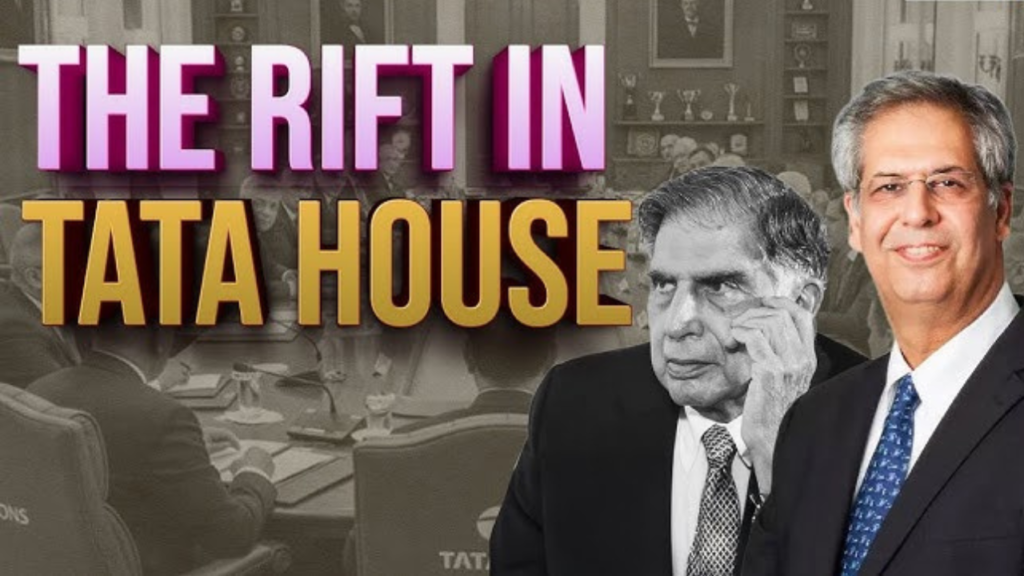
Noel Tata, who chairs Tata Trusts — which owns 66 per cent of Tata Sons — raised concerns about losses in certain group companies and was not in favour of a potential listing of Tata Sons, reportedly seeking a written commitment on the matter. IBEF He laid out four broad conditions for supporting the extension: keeping Tata Sons unlisted, maintaining low or no debt, keeping capital expenditure under control, and managing losses from acquisitions such as Air India and BigBasket. Business Standard
Discussions hit a wall when Chandrasekaran said he could not guarantee a waiver from India’s banking regulator on the listing issue, since that decision lay outside his control. By 3:30 p.m., Chandrasekaran had left the board meeting and, wading through a swarm of television cameras outside, offered a brief statement: “I recommended that it should be deferred.”
As of early March, Business Standard reported that the Tata Trusts resolution recommending a third term for Chandrasekaran, passed unanimously by trustees, remained valid, with sources saying there had been no change in the Trust’s formal position. The World Bank An Extraordinary General Meeting was scheduled for March 6, 2026, to formally approve the reappointment, with TCS’s top management also expected to present an AI roadmap to the board. Press Information Bureau Chandrasekaran’s current term runs until February 2027, meaning no immediate leadership vacuum exists.
The episode has nonetheless re-energised questions about governance continuity at a group that carries significant weight in India’s economy. Tata Sons reported a 24 per cent rise in FY25 revenue to ₹5.92 lakh crore, while net profit fell 17 per cent year-on-year to ₹28,898 crore. Over the past five years the group has nearly doubled revenue and more than tripled net profit and market capitalisation, while investing ₹5.5 lakh crore in building new capacities. Worldbank
The market reaction was swift and two-directional. Shares of Tata Investment Corporation had surged 18 per cent over five consecutive sessions ahead of the February 24 meeting, fuelled by reports that Chandrasekaran was likely to receive a third term, with the stock touching an intraday high of ₹741.70 on February 20. World Bank The subsequent deferral introduced fresh uncertainty that analysts said would keep the stock volatile until the succession question is formally resolved.
Reliance: Jio IPO Runs Into Regulatory Headwinds
At Reliance Industries’ 48th Annual General Meeting in August 2025, Chairman and Managing Director Mukesh Ambani made a public commitment of landmark proportions. Speaking to shareholders, Ambani said: “Today, it is my proud privilege to announce that Jio is making all arrangements for its IPO. We are aiming to list Jio by the first half of 2026, subject to all necessary approvals.”
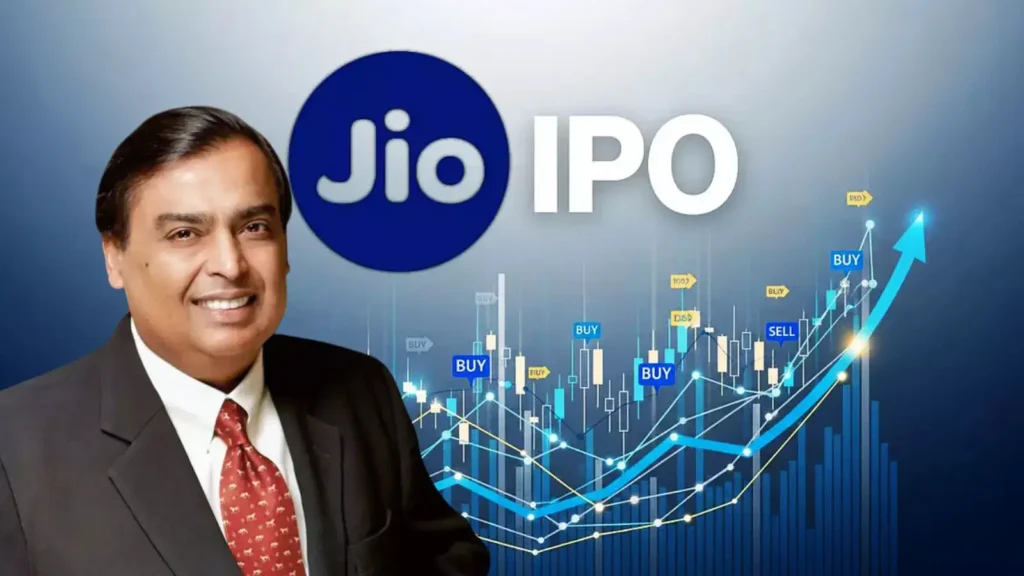
The IPO would be undertaken by Jio Platforms Ltd, the holding company of Reliance Jio Infocomm, which recorded revenues of ₹1.28 lakh crore and EBITDA of ₹64,170 crore in FY25. Reports from investment banks and market analysts put the proposed valuation of Jio Platforms in a range of approximately $130 billion to $170 billion, which would place it among the top two or three listed companies in India by market capitalisation at the higher end of that estimate.
That timeline, however, has encountered an obstacle. Bloomberg reported in early March 2026 that delays by the Indian government in formalising changes to listing rules were threatening to push Reliance past its H1 2026 target for the Jio IPO. Reliance was waiting for the government to formalise regulatory changes backed by the securities regulator before formally appointing bankers and filing a draft prospectus, and was aiming to file the draft before April depending on when the notification is issued. That timeline now appears contingent on regulatory pace rather than corporate readiness.
The broader leadership transition at Reliance is proceeding more quietly. At the same AGM, Isha Ambani announced that Reliance Consumer Products Ltd would become a direct subsidiary of RIL, consolidating all consumer brands under one umbrella, while Anant Ambani detailed the group’s new energy ecosystem — including one of the world’s largest single-site solar projects in Kutch, Gujarat. DD News The next generation of the Ambani family is thus already in operational roles across distinct verticals, even as Mukesh Ambani remains Chairman and Managing Director.
Adani: CFO Takes Centre Stage, Records Reflect Operational Recovery
Gautam Adani remains the Chairman and public face of the Adani Group, but the most visible voice on financial strategy in recent months has been Group CFO Jugeshinder “Robbie” Singh. In the FY25 results compendium released in May 2025, Singh highlighted a return on assets of 16.5 per cent — described as among the highest in global infrastructure businesses — and a cash balance of ₹53,843 crore as of March 31, 2025, equivalent to 18.5 per cent of gross debt and sufficient to cover 21 months of debt servicing requirements.
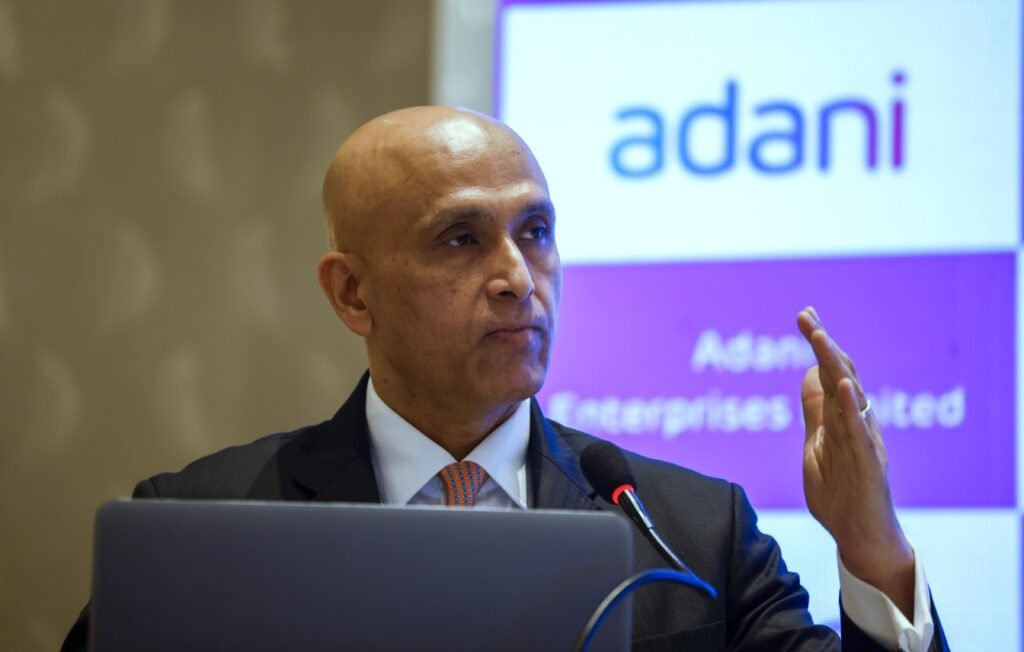
In a March 2026 communication to retail investors, Singh disclosed that the group’s portfolio EBITDA had reached a trailing-twelve-month total of ₹92,943 crore, representing a 20 per cent compounded annual growth rate over the past six years, with 83 per cent of group EBITDA now coming from core infrastructure assets. Net debt-to-EBITDA stood at 3 times, according to Singh’s statement — a metric the group has cited as evidence of improving balance sheet discipline since 2023.
In November 2025, speaking after Adani Enterprises’ first-half FY26 results, Singh said the group expected the next ten years to be its most exciting, with assets currently in a startup or deep investment phase — including Navi Mumbai Airport, inaugurated in October 2025, a 500,000-tonne copper plant, and the Ganga Expressway project, then 90 per cent complete — beginning to transition toward the initial earnings phase.
The group’s share prices remain sensitive to external factors. Adani Enterprises stock was affected earlier in 2026 by global trade uncertainty, though the group has not attributed specific price movements to leadership developments. Market analysts who cover the group have noted that investor focus has progressively shifted from ownership and governance concerns — which dominated the narrative following the January 2023 Hindenburg Research report — toward operational metrics and project execution timelines.
The Broader Picture
Taken together, these developments reflect a moment of simultaneous transition across India’s three most closely watched conglomerates. At Tata, the question of who governs — and under what terms — remains formally unresolved even as operations continue. At Reliance, a generational handover is quietly underway, while the Jio IPO, the most consequential corporate event in India’s capital markets in years, waits on regulatory clearance. At Adani, the group’s CFO has emerged as the primary voice of financial accountability as the conglomerate works to convert ambitious infrastructure investments into earnings. Each story is still developing, and the outcomes will carry consequences well beyond the boardrooms involved.


