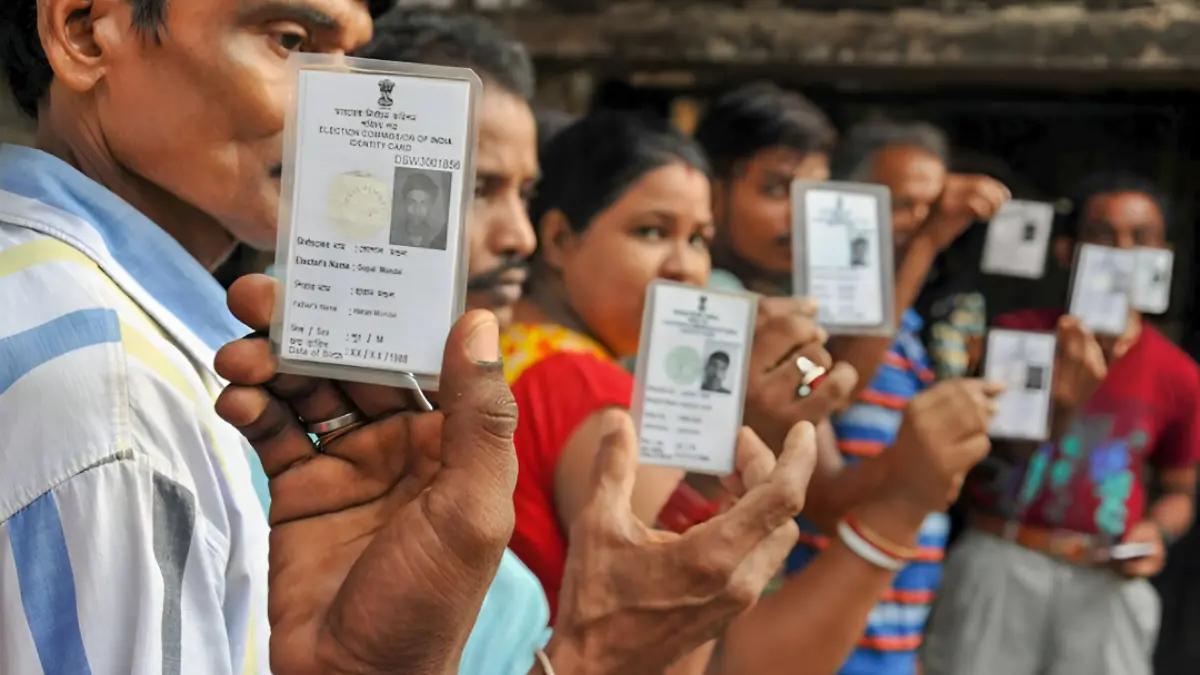


The Election Commission just got reminded it doesn’t operate above the law.
The Supreme Court ruled Tuesday that while the Election Commission holds wide discretion to revise electoral rolls through Special Intensive Revision, those powers cannot be exercised without limits, transparency, or adherence to statutory procedures. The bench emphasized that deviations from established rules must be justified and fair, not arbitrary, as millions of voters face potential exclusion ahead of elections in Bihar and other states.
Chief Justice Surya Kant and Justice Joymalya Bagchi delivered the observations during hearings on petitions challenging the ECI’s sweeping voter verification drive. The court mandated “logical” display of voter lists, accepted Class X certificates as additional proof, and warned against unregulated use of constitutional authority.
“The Election Commission has the widest discretion under Article 324,” CJI Kant stated. “But that discretion cannot be untrammelled or unregulated. There must be fairness, transparency, and adherence to procedure.”
The case centers on SIR, which requires 11 documents for voter inclusion compared to the standard Form 6’s seven documents. The ECI ordered the intensive revision for Bihar on June 24, 2025, with a January 1, 2026 qualifying date, then expanded it nationwide except Assam.
Petitioners including lawyer Ashwini Upadhyay and the Association for Democratic Reforms argued the stringent requirements risk mass disenfranchisement. They presented cases of voters being deleted without proper inquiry or opportunity to appeal.
The Election Commission defended its actions through senior advocate Rakesh Dwivedi, claiming “complete discretion” under Article 324 and Section 21(3) of the Representation of the People Act. Dwivedi argued SIR ensures “purity” of rolls by weeding out non-citizens and duplicate entries.
“Where statutes are silent, the Commission’s plenary powers fill the gap,” Dwivedi told the court. “This is necessary to maintain electoral integrity.”
The bench didn’t buy the unlimited authority argument. Justice Bagchi questioned how the ECI could deviate from Rule 25 of the Conduct of Election Rules, 1961, which specifies standard verification procedures. The court noted that constitutional authority doesn’t mean freedom from procedural safeguards protecting fundamental rights.
Article 326 guarantees adult suffrage to every Indian citizen over 18. The court emphasized that electoral roll revisions, however well-intentioned, cannot undermine that constitutional promise through arbitrary implementation.
The hearings revealed specific problems with SIR execution. Voters reported receiving notices demanding documents they didn’t possess or couldn’t easily obtain. Some faced deletion without receiving notices at all. Appeals processes remained unclear or inaccessible to ordinary citizens.
Bihar presents the most immediate concern. Elections in the state depend on finalized voter rolls, but the SIR deadline already slipped past its original target. The court’s insistence on proper procedures and displays could delay completion further.
Tamil Nadu and West Bengal face similar situations. The nationwide SIR expansion affects tens of millions of voters across states where elections loom within months. Any mass deletions based on documentation requirements could swing close races.
Opposition political parties hailed the court’s intervention as necessary check on executive overreach. Social media erupted with commentary under hashtags like #ECISIR. Bar & Bench’s Instagram and Facebook posts about “untrammelled powers” went viral, accumulating over 72 likes and hundreds of comments.
X (formerly Twitter) debates split between those viewing SIR as voter suppression and defenders arguing it ensures roll accuracy. LiveLaw threads trended with quotes from Chief Justice Kant’s observations. News18 highlighted how timeline delays might affect election schedules.
Reddit’s India politics forums dissected the legal arguments. Users debated whether the ECI’s independence requires absolute discretion or whether checks prevent abuse. Some noted historical cases of voter roll manipulation affecting election outcomes.
The court’s acceptance of Class X certificates as proof addresses practical concerns. Many voters possess school certificates but lack other documents like passports or property deeds that SIR demands. Expanding acceptable proofs reduces exclusion risks.
Ordering logical display of voter lists means the ECI cannot simply publish names. It must organize lists by polling stations and localities so voters can actually verify their inclusion. Previous displays sometimes made verification nearly impossible through poor organization.
The ECI filed an affidavit in September 2025 asserting complete discretion under Article 324. That constitutional provision gives the Commission superintendence, direction, and control of elections. The question before the court was whether that authority extends to overriding statutory procedures.
Article 324 has been interpreted broadly to empower the ECI to act decisively when laws prove inadequate for fair elections. Previous Supreme Court rulings upheld Commission actions that technically violated statutes but served electoral integrity.
This case pushes back on absolute interpretations of those precedents. The bench distinguished between filling statutory gaps and ignoring statutory protections. The ECI can act where laws are silent, but cannot disregard explicit procedural safeguards without compelling justification.
Section 21(3) of the Representation of the People Act, 1950, allows the ECI to direct special revisions when necessary. The Commission cited this as authority for SIR’s expanded documentation requirements. The court agreed the provision grants revision powers but questioned whether it permits abandoning Rule 25’s procedural protections.
Rule 25 specifies how electoral registration officers verify claims and conduct inquiries before deleting voters. The SIR process shortened timelines and reduced inquiry depth, raising concerns about errors. The court indicated procedural shortcuts need explicit statutory authorization.
Citizenship verification proved particularly contentious. Some SIR notices questioned voters’ citizenship based on names or addresses, effectively conducting immigration enforcement through electoral processes. Petitioners argued the ECI lacks authority for citizenship determinations.
The court didn’t rule definitively on citizenship probes but emphasized that any such inquiries must follow due process. Voters cannot be deleted based on suspicion alone. They need notice, opportunity to respond, and clear appeals procedures.
Disenfranchisement fears aren’t hypothetical. Data presented to the court showed thousands of voters deleted in pilot SIR areas, many restored only after extensive appeals. Scaling that nationally could exclude millions, particularly from marginalized communities less likely to possess multiple official documents.
The ECI countered that restoring wrongly deleted voters proves the system works. The court responded that requiring extensive appeals to restore legitimate voters indicates system failure, not success. Processes should prevent incorrect deletions rather than relying on after-the-fact corrections.
Justice Bagchi questioned why standard Form 6 procedures requiring seven documents proved inadequate. The ECI cited cases of fraudulent registrations and non-citizen voting but provided limited data quantifying the problem’s scale. The court suggested remedies should match demonstrated need.
The balance between electoral integrity and voter access defines democratic legitimacy. Rolls riddled with fake voters undermine elections. Excluding legitimate voters through onerous verification equally corrupts democratic processes.
The court sought to establish that balance through enforceable standards. The ECI retains discretion for necessary revisions but must exercise that authority transparently, following procedures that protect voter rights. Deviations require justification beyond asserting plenary powers.
Bihar’s political landscape makes the ruling especially significant. Close electoral margins mean even small vote total changes could determine outcomes. All parties watch roll revisions closely, knowing deletions might favor opponents.
The January 1, 2026 qualifying date means anyone becoming eligible after that date cannot vote in upcoming Bihar elections despite being legal adults. Combined with SIR deletions, the rolls might not reflect actual eligible population accurately.
Tamil Nadu and West Bengal face similar issues. Regional parties in those states expressed concern that SIR disproportionately affects their voter bases. Whether those fears reflect reality or political posturing, the perception of biased implementation damages electoral credibility.
The court’s intervention addresses those legitimacy concerns. By insisting on transparent procedures and limiting arbitrary authority, the ruling makes it harder to manipulate rolls for partisan advantage, whether that was happening or not.
The ECI’s independence remains crucial for democratic functioning. The Commission must resist political pressure and make unpopular decisions when electoral integrity demands them. That requires significant autonomy.
But autonomy differs from unaccountability. The court reinforced that constitutional bodies exercise delegated authority, not sovereign power. They must justify actions affecting fundamental rights, not simply assert discretion.
Implementation challenges loom large. The court’s procedural requirements add time and complexity to SIR completion. Election schedules might shift to accommodate proper list displays and verification processes. Political parties will exploit delays, blaming opponents for obstructing polls.
The ECI must now balance thoroughness with timeliness. Rushing verification invites errors and wrongful deletions. Excessive delays disrupt electoral calendar and create constitutional questions about extending current governments beyond term limits.
The court suggested the Commission could phase SIR implementation rather than attempting nationwide revision simultaneously. Completing Bihar properly before expanding elsewhere might prevent the cascading delays currently threatened.
Accepting Class X certificates helps but doesn’t solve all documentation problems. Millions of Indians, particularly older voters and those from disadvantaged backgrounds, never attended school. They need alternative proofs the SIR framework must accommodate.
Property documents exclude renters and the landless. Utility bills exclude those living in informal housing. Each documentation requirement creates exclusion risks for vulnerable populations. The court’s insistence on fairness demands the ECI address these gaps.
Appeals processes require special attention. Deleted voters need clear information about why they were removed and how to challenge decisions. Rural voters with limited literacy and internet access need accessible remedies, not just online portals.
The broader constitutional question transcends immediate cases. India’s democracy depends on both electoral integrity and universal suffrage. Mechanisms ensuring roll accuracy cannot undermine the fundamental right to vote.
The Supreme Court’s ruling establishes that principle without micromanaging ECI operations. The Commission retains broad authority but must exercise it within constitutional bounds respecting voter rights.
Social media reactions to the ruling reflected political polarization. Government supporters viewed it as judicial overreach constraining the ECI’s necessary independence. Opposition supporters celebrated checks on potential abuse.
Legal experts mostly praised the balanced approach. Constitutional scholars noted the judgment reinforces administrative law principles requiring fairness and transparency from all state bodies, even independent commissions.
The test comes in implementation. Does the ECI modify SIR procedures to comply with the court’s requirements? Do upcoming voter lists reflect the ruling’s emphasis on inclusion and transparency? Do deleted voters receive genuine opportunities to challenge removals?
Those questions won’t be answered immediately. The SIR process continues under new constraints. Election schedules might shift. Voter rolls will eventually be published for public scrutiny.
For now, the Supreme Court reminded the Election Commission that constitutional authority comes with constitutional responsibility. Wide discretion serves democracy only when exercised fairly, transparently, and within legal bounds.
The message applies beyond electoral rolls. Every independent constitutional body in India operates with significant autonomy to ensure impartial functioning. That autonomy enables their missions but doesn’t exempt them from rule of law.
The Election Commission can still conduct special intensive revisions when necessary. It just cannot do so arbitrarily, secretly, or without procedural protections for affected voters.
That’s not a limitation on independence. It’s a safeguard ensuring independence serves democracy rather than undermining it.