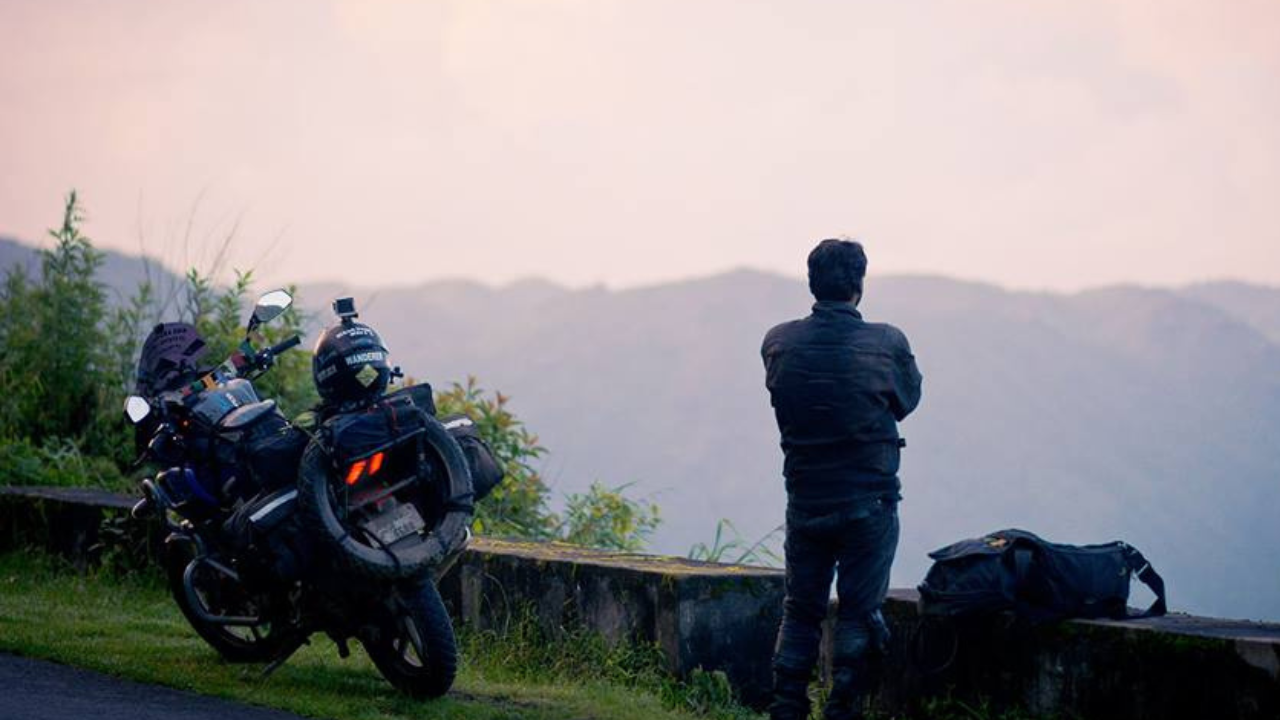


Solo motorcycle riding through remote areas occupies a unique position on the spectrum of two-wheeled risk. The freedom it provides is genuine and documented — riders who have done it consistently describe it as among the most complete forms of travel available. So is the risk. Motorcyclists are 28 times more likely to die in a fatal accident compared to someone in a car, and carry a four times higher injury rate than passenger vehicle occupants, according to data from Forbes and the National Safety Council. In 2023, motorcyclists comprised 15.5% of all U.S. traffic deaths despite motorcycles making up just 3.3% of all registered vehicles and accounting for only 0.6% of all vehicle miles traveled, according to the Bureau of Transportation Statistics citing NHTSA data.
Remote riding amplifies these baseline statistics in a specific way: it removes the proximity to help that urban and suburban riding provides. A mechanical failure, a medical emergency, or an off-road incident that would be manageable on a busy highway can become life-threatening in an area where cellular coverage is absent, the nearest town is hours away, and no other vehicle has passed in the last ninety minutes. The safety framework for solo remote riding must account for this gap between the incident and the response — because in remote terrain, that gap is everything.
The Statistical Context for Remote and Rural Risk
The data on where motorcycle fatalities concentrate is instructive for riders planning remote routes. Alaska recorded the highest increase in motorcycle crash fatalities over a three-year period, at 100% — a figure attributed in part to harsh weather conditions, remote roads, and longer winter seasons that limit riding opportunities. The few motorcyclists on the road during peak seasons face greater risks, with less attention from both riders and other drivers, increasing the likelihood of dangerous crashes.
Curvy and mountainous roads — such as California’s CA-2 (Angeles Crest Highway) and winding routes through North Carolina’s mountains — are among the most dangerous for single-vehicle motorcycle crashes, characterized by sharp turns, steep drop-offs, and little room for error where even minor mistakes can prove fatal. These are precisely the routes that attract solo adventure riders for their scenic and technical challenge. The combination of remote location and demanding road geometry is the defining risk factor for this category of riding.
Data from the National Safety Council shows that 94% of motorcyclist fatalities in 2021 occurred during good weather — a figure that underscores a critical cognitive trap: favorable weather conditions can create a false sense of security that reduces vigilance at the moment it is most needed. Remote riding in clear conditions on a well-maintained road carries risk that the environment’s apparent benignness does not communicate.
The Emergency Communication Layer: The Device That Changes Everything in Remote Areas
For solo riders in remote terrain, the single most consequential safety investment is not a piece of riding gear — it is an emergency communication device capable of operating without cellular infrastructure. This is the layer that separates a manageable emergency from an unwitnessed one.
Two primary device categories exist, and their differences are consequential. A PLB sends a one-way SOS signal on the 406 MHz frequency to a satellite that is then relayed to the local search and rescue authority — there is no two-way communication between the rider and the rescue service. A satellite messenger is a two-way satellite communications device that also alerts local authorities to an SOS call but allows messages to be sent and received between the rider and the responding agency.
PLBs enjoy better satellite communications due to having a 5-watt transmitter, able to push through dense overhead foliage, versus a 1.6-watt transmitter on a satellite messenger. PLBs are not dependent on cellular networks and work around the world. Beginning in 2017, PLBs must transmit a GPS coordinate encoded in the signal, narrowing the search area from two to three miles to less than 100 meters.
PLBs registered in the United States must be registered with NOAA’s SARSAT database free of charge, associating the device’s distress signal with the rider’s name, address, emergency contacts, and medical information — data that can speed rescuer response time significantly. The critical limitation of a standard PLB is its one-way nature: once activated, a rider cannot communicate the severity or specific nature of the emergency, cannot cancel a false alarm, and cannot receive confirmation that the signal was received.
Satellite messengers address these limitations by offering two-way communication, meaning a rider can call for emergency help and communicate with the response center. These devices commonly offer tracking functions allowing friends and family to monitor route progress in non-emergency situations, weather reporting, and location sharing — additional functionality that provides meaningful daily value on a remote tour rather than serving only as an emergency backup.
Independent testing of satellite communicator performance conducted by OutdoorGearLab assessed 13 devices across emergency and non-emergency messaging, signal coverage, and ease of use. The Garmin inReach Messenger Plus was identified as the top performer for nearly flawless emergency and non-emergency messaging capabilities, while the Ocean Signal rescueME PLB1 was identified as the best value for pure SOS emergency signaling with no subscription requirement. For riders who want daily communication capability and route tracking, satellite messengers justify their subscription cost. For riders whose primary requirement is a reliable emergency signal with no ongoing fees, a registered PLB provides that function at lower total cost.
The Trip Communication Protocol: Before You Leave
Emergency device ownership is necessary but not sufficient. The device must be paired with a trip communication protocol that tells someone exactly where to look if the signal is never activated but the rider does not return.
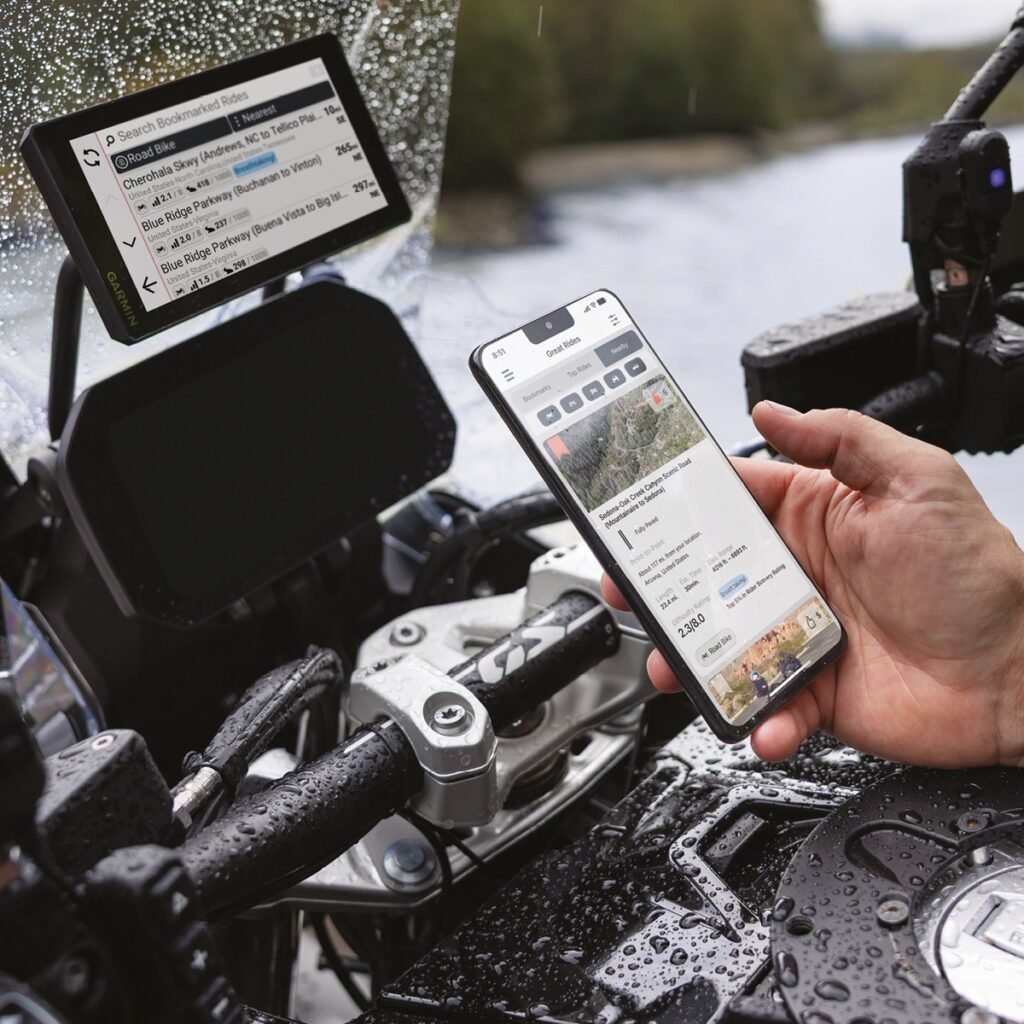
Before any solo remote ride, leaving a detailed trip plan with a trusted contact is fundamental — including the planned route, daily stopping points, accommodation details where applicable, expected return time, and specific instructions for when to contact authorities if no check-in is received. The specificity of this plan determines its value: a contact told only “I’m riding through Montana this week” cannot trigger an effective search. A contact with a day-by-day itinerary, a specific return window, and the rider’s satellite communicator ID can initiate a geographically targeted response within hours.
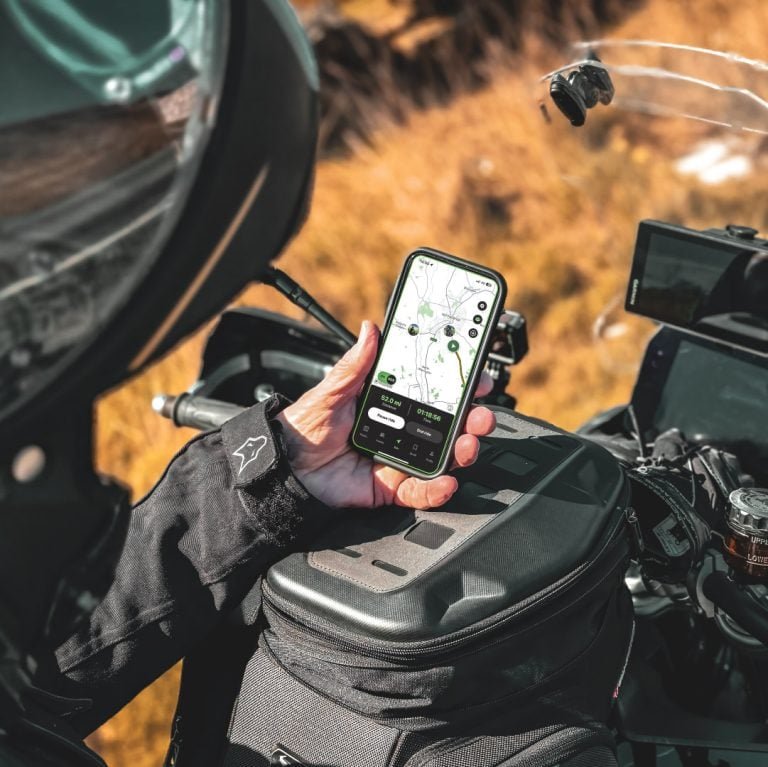
Crash detection applications available for smartphones can send automatic alerts with GPS coordinates to emergency contacts when a fall is detected by the phone’s sensors — providing an additional layer of notification that operates through cellular networks where coverage exists. These applications supplement but do not replace a dedicated satellite communicator in areas without cellular coverage.
Weather: The Remote Rider’s Most Dynamic Risk Variable
Weather conditions affect motorcycle safety across multiple dimensions simultaneously. Rain reduces tire traction and creates oil-surface slick conditions in the first minutes of rainfall. Extreme temperatures cause tire pressure to fluctuate, affecting handling and braking. Heat increases fatigue, slowing reaction times and affecting concentration. Strong winds can push motorcycles off their intended path, especially on bridges and open highways.
For remote riding specifically, the weather risk has a compounding dimension: conditions that would prompt an urban rider to pull off and wait under shelter may have no immediate shelter option in remote terrain, and the next town may be 60 miles away on a road that is deteriorating as the storm advances.
The first few minutes of rainfall represent the most hazardous phase for motorcyclists. Water mixes with oil residue on the pavement, creating a slick surface that reduces traction before the rain has had time to wash the road clean. If lightning is visible or thunder is audible, stopping is mandatory — a motorcycle’s tires do not ground the rider, making the machine effectively a moving lightning rod.
Checking weather forecasts before departure and periodically checking radar on a smartphone during the ride to identify conditions ahead is a practice that experienced solo remote riders treat as mandatory rather than optional. Weather applications that provide hourly radar along a planned route — rather than just a destination forecast — are more operationally useful for riding decisions than general regional forecasts. Knowing that a storm cell is stationary 40 miles ahead is a different piece of information from knowing that one is 40 miles ahead and moving toward the rider at 25 mph.
Fatigue: The Hidden Risk That Remote Riding Amplifies
According to the National Sleep Foundation, drowsy driving can be as dangerous as drunk driving. Motorcyclists are especially at risk because staying balanced, maintaining proper posture, and scanning the road require constant attention and alertness. Long rides, irregular sleep schedules, and riding during late hours all contribute to fatigue.
Remote riding amplifies fatigue risk in ways that urban riding does not, because the visual monotony of long straight roads in open terrain — common in the American West, the Australian Outback, and Central Asian steppe routes — generates a form of highway hypnosis that reduces alertness independently of physical tiredness. Heat peaks between noon and 5pm on summer riding days. Adjusting schedule by starting earlier in the morning, taking extended breaks in shaded or air-conditioned areas, and avoiding pushing through fatigue to “make time” are the three core management strategies for heat-related fatigue on remote tours.
Earplugs provide a dual benefit for long-distance solo riders: they protect against wind-induced hearing damage at sustained highway speeds, and paradoxically, they reduce fatigue by eliminating the constant sensory load of wind and road noise — while simultaneously allowing mechanical sounds from the bike to register more clearly against the quieter background.
Riding at 70 Percent: The Skill Buffer That Remote Terrain Demands
One of the most consistently cited principles across motorcycle safety guidance is to ride at approximately 70% of skill level — consistently driving at 100% of ability level leaves little time to react when the unexpected occurs, and in remote terrain where road surfaces, wildlife crossings, and visibility conditions change without warning, that margin of error is not a luxury.
The SEE process — Search, Evaluate, Execute — provides a structured framework for maintaining situational awareness on remote roads. Search means actively scanning ahead, to the sides, and behind to identify potential hazards while considering available space and stopping time. Evaluate means predicting how a hazard might impact the rider, understanding its speed, distance, and direction. Execute means acting on that assessment — adjusting speed, lane position, and direction of travel. In remote riding, the Search phase expands in scope: livestock crossing points, unmarked gravel transitions, wildlife corridors, and seasonal road damage are all hazards that urban riding does not routinely require scanning for.
Railroad track crossings require a specific technique: crossing at a 90-degree angle prevents tires from sliding along the track surface. Gravel roads and loose surfaces demand reduced speed and smooth, deliberate inputs rather than the reactive braking and steering adjustments that paved road riding develops as reflex.
The Remote Riding Preparation Hierarchy
The preparation framework for solo remote riding operates in a clear priority order. Emergency communication capability — a registered satellite device with a trusted contact holding a detailed trip plan — comes first because it addresses the consequence of every other failure. Mechanical preparation — a complete T-CLOCS inspection, functional tire repair kit, basic tool kit, and sufficient fuel range for the longest gap between fuel points on the route — comes second because mechanical failure is the most common cause of remote riding disruption. Weather preparation — checking forecasts, carrying rain gear, planning route segments around weather windows — comes third because weather is the most dynamic uncontrollable variable.
A first-aid kit for minor injuries, a tire repair kit and pump, rain gear, and tools for minor mechanical repairs represent the minimum physical kit for remote solo riding. Each addresses a specific failure mode that, in remote terrain, cannot be resolved by waiting for assistance that may be hours away.
What cannot be packed or purchased is the judgment to stop when conditions deteriorate, the discipline to ride within skill rather than at its edge, and the willingness to prioritize the next check-in over the next milestone. Remote solo riding rewards exactly that judgment — and penalizes its absence at a rate that the surrounding scenery, however extraordinary, does not temper.