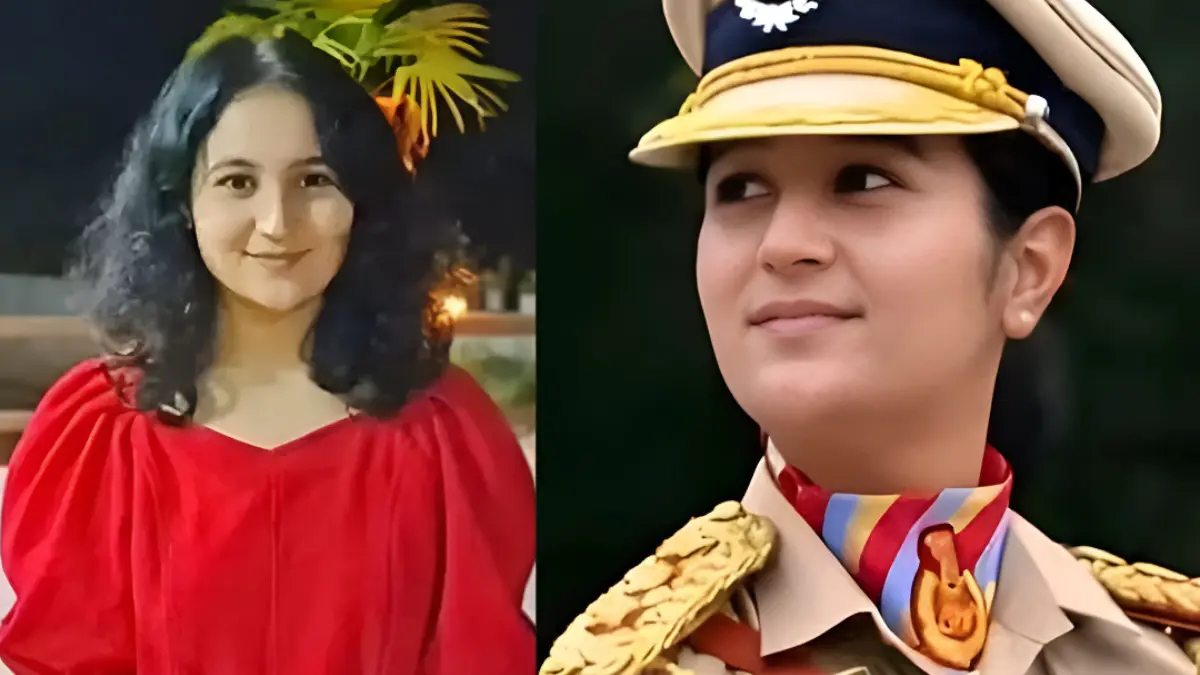


Simran Bala just shattered another glass ceiling in India’s paramilitary forces. She didn’t ask for special treatment to do it.
The 26-year-old Assistant Commandant from Jammu and Kashmir will become the first woman to lead an all-male Central Reserve Police Force contingent of over 140 personnel at India’s 76th Republic Day parade on Sunday. CRPF leadership selected her purely on merit after she excelled during months of intensive rehearsals in Delhi.
“I never thought about being the first woman,” Bala told reporters this week. “I just focused on doing my job well.”
That focus earned her command of 144 male jawans who will march down Kartavya Path in New Delhi during the January 26 celebrations. The appointment marks a milestone for India’s largest paramilitary force, which employs over 313,000 personnel but traditionally featured women only in mixed-gender or female-led units at national parades.
Senior CRPF officers said Bala’s selection came down to drill precision and confidence demonstrated during rehearsals. She outperformed competitors through technical execution, not symbolic gestures toward gender representation.
“Merit was the only criterion,” a CRPF official involved in the selection told India Today. “Her performance spoke for itself.”
Bala grew up in Nowshera, a border town in Rajouri district where Pakistani shelling periodically disrupts daily life. She completed her political science degree before joining the CRPF in 2024 as an Assistant Commandant through the direct entry process for graduate officers.
Her training at the Gurugram academy earned her awards for best officer and public speaking. The academy posted her to the Bastariya Battalion in Chhattisgarh, where CRPF units conduct anti-Naxal operations in dense forests against Maoist insurgents.
That operational posting preceded her Republic Day assignment. Mid-2025, CRPF leadership selected personnel for the ceremonial contingent and began intensive drill training. Bala spent months perfecting synchronized marching, rifle handling, and commands that 144 troops must execute flawlessly before the nation.
The announcement broke January 19-20 through India Today and NDTV coverage. Media highlighted her background from a conflict zone and the historic nature of commanding an all-male unit. Social media erupted with celebration and nationalist pride.
Instagram reels from accounts like @ssbcrack and @pirpanjaltalkies portrayed Bala as a “barrier-breaker,” accumulating thousands of likes and shares. Facebook posts celebrated “women power” under trending hashtags like #SimranBala. YouTube videos in Hindi with titles like “Kaun Hain Simran Bala” went viral, recounting her journey.
The patriotic fervor dominated X, formerly Twitter, where users posted photos from rehearsals showing Bala in command. Comments ranged from congratulations to debates about women in combat roles. Most responses skewed overwhelmingly positive.
Women comprise roughly 14% of India’s central armed police forces, up from single digits a decade ago. The increase reflects deliberate recruitment drives and changing social attitudes about appropriate roles for women in uniform.
But representation in ceremonial leadership lagged operational integration. Women officers served in CRPF battalions and commanded female personnel, yet Republic Day contingents remained male-dominated showcases. Bala’s appointment signals that gap closing.
The CRPF traces its origins to the Crown Representative’s Police in 1939. It evolved into India’s primary internal security force, handling counter-insurgency, election security, disaster response, and law enforcement support. The force operates across all states and union territories.
Republic Day parades feature CRPF contingents annually, demonstrating discipline and capability to the nation. The visual spectacle of perfectly synchronized troops marching past dignitaries emphasizes professionalism and readiness.
Commanding such a contingent carries prestige within the force. Officers selected for the role gain visibility and recognition that can benefit careers. The responsibility also brings pressure—any mistake plays out before millions watching live and on television.
Bala’s 144-member unit spent months preparing. Rehearsals began in summer heat and continued through winter cold. Troops practiced for hours daily, perfecting timing so every step hits simultaneously. Commanders drilled rifle movements until every angle matched exactly.
The physical demands test endurance and mental toughness. Marching in formation for extended periods while maintaining perfect posture requires strength and stamina. Bala matches those requirements while projecting command presence that keeps 144 men synchronized.
Her Nowshera upbringing amid border tensions shaped resilience that training honed into leadership. Growing up hearing artillery exchanges and experiencing displacement during escalations built mental toughness that military academies reinforce.
“The border teaches you not to fear challenges,” Bala said in one interview. “You learn to stay calm and focused no matter what’s happening around you.”
That mindset translated to excelling at the CRPF academy, where she won recognition for public speaking alongside best officer honors. The combination of technical competence and communication skills marked her as potential leader early in her career.
Her Chhattisgarh posting to the Bastariya Battalion provided operational experience. Anti-Naxal operations involve patrolling hostile terrain where ambushes can occur. Officers must make quick decisions affecting troop safety while accomplishing security objectives.
That operational background distinguishes Bala from purely ceremonial appointments. She commands respect partly because troops know she’s served in active areas, not just training grounds. Combat veterans respond better to leaders with field experience.
The Republic Day selection process evaluates numerous candidates through rehearsal performance. Officers don’t automatically command contingents based on seniority or connections. Demonstrated capability during practice drills determines assignments.
Bala’s superiors noted her precision executing complex drill movements and clarity issuing commands that troops understand instantly. In synchronized marching, delayed responses or confusion show immediately. Her contingent responded crisply to every instruction.
Confidence matters enormously in ceremonial leadership. Officers who project uncertainty or hesitation undermine unit cohesion. Bala’s bearing during rehearsals convinced selectors she could handle the pressure of performing before the President, Prime Minister, and foreign dignitaries.
Some observers question whether her selection carries political overtones. The Modi government emphasizes women’s empowerment and regularly highlights female achievers in traditionally male domains. Showcasing a woman commanding CRPF troops at Republic Day fits that narrative.
CRPF officials reject suggestions of tokenism. They emphasize that merit-based selection protects the parade’s integrity. Any officer who can’t execute flawlessly risks embarrassing the force nationally. Nobody gets ceremonial commands as favors.
“We don’t gamble with the Republic Day parade,” one senior officer stated. “If she wasn’t the best candidate, she wouldn’t lead the contingent.”
The broader context includes India’s push for gender integration across military and paramilitary services. The Army recently opened combat roles to women. The Navy assigns women to warships. The Air Force trains female fighter pilots.
Those changes reflect evolving social attitudes and practical needs. India’s security forces require talent wherever they find it. Excluding half the population from leadership roles wastes human capital that modernization demands.
Resistance persists in some quarters. Traditional views about women’s physical limitations and appropriate roles die slowly. But younger officers like Bala demonstrating competence accelerate cultural shifts more effectively than policy mandates alone.
Her success leading the Republic Day contingent will influence future appointments. If the performance goes smoothly, it validates merit-based selection regardless of gender. That precedent makes similar appointments easier to defend.
If problems occur, critics will seize on them as evidence women can’t handle such roles. The pressure on Bala extends beyond personal performance to broader implications for women officers across services.
She appears ready for that responsibility. Media interviews show her focusing on the task, not the symbolism. She discusses drill precision and unit cohesion, not gender politics. That professional focus likely contributes to her selection.
The 144 male personnel under her command must now execute flawlessly on January 26. They’ve trained together for months, building the trust and coordination that synchronized marching requires. Their discipline reflects on their commander as much as her orders reflect on their response.
Republic Day features multiple contingents from different services marching sequentially. The CRPF unit will take its place among Army regiments, Navy sailors, Air Force personnel, and other paramilitary forces. Each contingent represents its service’s standards.
Television coverage broadcasts the parade live across India and internationally. Millions watch the spectacle of military might and cultural diversity. The CRPF contingent led by Bala will draw particular attention this year given the historic nature.
Social media will explode with commentary during and after the march. Supporters will celebrate the milestone. Critics will scrutinize performance for any flaws. Bala and her troops must deliver excellence to satisfy both.
The rehearsals suggest they’re prepared. Videos from practice runs show crisp movements and precise timing. The contingent looks ready for the main event. Sunday will reveal whether months of preparation produce the flawless performance required.
For Bala personally, the experience represents both achievement and opportunity. At 26, she’s already making history. How she handles the pressure and performs under scrutiny will shape her career trajectory and influence prospects for women officers behind her.
For the CRPF, the appointment signals institutional evolution. The force that protects India’s internal security is demonstrating that leadership capability transcends gender. Operational effectiveness matters more than outdated assumptions about who can command.
For India, the image of a young woman from a conflict zone commanding over 140 men at the national parade symbolizes progress toward genuine equality. Not equality of outcomes mandated by quotas, but equality of opportunity validated by merit.
The real test comes Sunday morning when Simran Bala leads her contingent down Kartavya Path before the assembled nation. The execution must be perfect. The message will be unmistakable.
India’s paramilitary forces are changing. One synchronized march at a time.