

The threat environment facing cryptocurrency holders changed significantly in 2025 and has intensified further in 2026. While DeFi protocol hacks grabbed headlines through 2023 and 2024, attackers in 2025 and 2026 have pivoted to a softer target: individual wallet holders. Blockchain analytics firms report that personal wallet compromises now account for over 60% of stolen cryptocurrency value — a dramatic reversal from just three years ago. The reason is simple economics: DeFi protocols have hardened their defenses with formal verification, bug bounties, and audit requirements, while millions of retail holders store significant wealth with insufficient security practices.
More than $3.4 billion was stolen in the first 11 months of 2025, with a single incident at Bybit accounting for nearly half the total. Hackers are using increasingly sophisticated tactics including address poisoning, fake login pages, and malicious keyloggers. These attacks often lead to permanent loss of funds, as crypto transactions are irreversible and there is no mechanism to recover lost private keys or seed phrases. Chainalysis data showed that crypto scam losses hit a record $17 billion in 2025, driven by AI impersonations that surged 1,400% year over year.
This guide explains the verified security framework every crypto holder should implement — from storage architecture to seed phrase protection to defending against AI-powered social engineering.
The Single Most Important Decision: Hardware Wallet vs. Hot Wallet
The most consequential security decision a crypto holder makes is where private keys are stored. This choice determines the entire attack surface of your holdings.
Hot wallets — exchange wallets and browser-based wallets such as MetaMask or Phantom — are connected to the internet, making them accessible for daily transactions but vulnerable to hacking. Hot wallets are relatively easy to hack since malware installed on a computer can perform transactions by brute-forcing the wallet’s password without requiring the specific seed phrase. The key advantage is convenience; the trade-off is substantially higher breach risk compared to offline storage solutions.
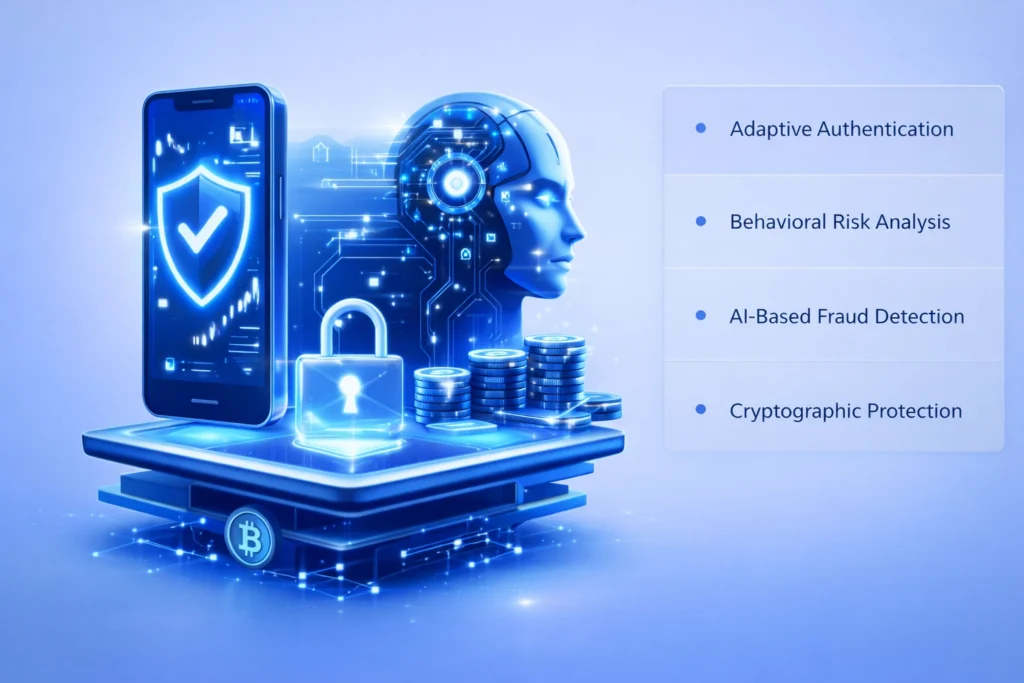
The professional security standard for any significant holding is a hardware wallet — a physical device that stores private keys offline and signs transactions in an isolated hardware environment. The only way to keep assets safe from malware and hacks is to keep private keys in an environment isolated from the internet. A hardware wallet such as a Ledger device achieves this by ensuring that private keys never leave the device and all transaction signing occurs in the secure hardware environment, not on the potentially compromised computer it is connected to.
The practical rule is: use a hot wallet only for funds actively used for trading or daily transactions. Store any holdings intended for more than a few weeks in a hardware wallet. Keep a “Vault Wallet” — ideally a hardware wallet — for long-term savings, and a separate “Exploration Wallet” with only small funds for new DeFi or NFT activities. If a new dApp is a scam, only the small amount in the exploration wallet is at risk.
Protecting Your Seed Phrase: The Absolute Priority
The 12 or 24-word seed phrase (also called a recovery phrase or secret recovery phrase) is the master key to every account generated from a wallet. Anyone who has this phrase has complete, irrecoverable access to all associated funds.
Your seed phrase should never be stored online, in a photo on cloud storage, or in any digital format. Even recording it digitally leaves it vulnerable to malware. The best option is to record it manually and keep it in a physical and safe location, away from any potential thieves or onlookers.
The 3-2-1 backup strategy is the current best practice: store three copies of your wallet backup in two different locations, with one copy offsite. This approach minimizes the risk of total loss due to fire, theft, or disaster. For critical holdings, metal seed phrase storage products — stainless steel plates on which you stamp or engrave your seed words — protect against fire and water damage that paper cannot withstand. These products are commercially available from hardware wallet manufacturers and security supply companies.
Never save your seed phrase digitally — no screenshots, no cloud notebooks, no typed notes. Never type it on any online device unless performing a wallet recovery you have deliberately initiated. Any unsolicited request for your seed phrase — from a “support representative,” a popup, an email, or a social media message — is a scam without exception. No legitimate wallet provider, exchange, or support team will ever ask for your seed phrase.
Multi-Factor Authentication: Replacing SMS With Authenticator Apps
Two-factor authentication substantially reduces the risk of account compromise on exchanges and custodial platforms. However, not all 2FA methods are equally secure. The best practice is to use an authenticator app rather than SMS-based 2FA. SMS 2FA is vulnerable to SIM swapping attacks, in which attackers convince a mobile carrier to transfer your phone number to their device, giving them access to your one-time codes.
Hardware-bound MFA solutions such as YubiKeys neutralize 90% of account takeover attempts including SIM swap attacks, by requiring physical possession of the key device. This is the current gold standard for high-value account protection. Authenticator apps such as Google Authenticator or Authy represent a significant improvement over SMS and are the minimum standard for any exchange account holding meaningful value.
The AI Threat: How Attackers Are Using Artificial Intelligence
In 2026, AI tools have become double-edged swords in crypto security. Attackers now use AI to create highly convincing phishing messages, automated scam agents, and deepfake content that can impersonate real people or brands with alarming fidelity. AI agents adapt their tactics in real time based on user responses.
The primary threat has evolved from simple phishing to AI-driven social engineering. Attackers use AI to generate personalized scam messages tailored to the target’s specific holdings, transaction history (scraped from public blockchain data), and social media presence — creating a level of apparent legitimacy that generic phishing could never achieve.
The defense against AI-powered social engineering is behavioral rather than technical. Establish a personal rule: no transaction and no seed phrase or private key disclosure is ever initiated in response to an inbound communication, regardless of how legitimate the sender appears. Legitimate interactions are initiated by you — you navigate to an exchange’s official URL, you initiate a support conversation, you verify a hardware wallet update directly through the manufacturer’s official website. An urgent message claiming your account is at risk and requiring immediate action is, by that very urgency, likely to be an attack.
Smart Contract and DeFi Permissions: Regular Revocation
Every time you connect a wallet to a DeFi application or approve a token spend, you grant that application permissions to interact with your wallet. These permissions accumulate over time, and malicious contracts can exploit old, forgotten approvals to drain assets.
Regularly review and revoke unnecessary permissions using wallet management tools — Trust Wallet’s allowance manager and similar features in other wallets allow you to see all outstanding approvals and revoke those you no longer use or do not recognize. Tools such as Revoke.cash allow users to audit and revoke ERC-20 token approvals across Ethereum and compatible networks. This maintenance task, performed quarterly, eliminates a significant category of attack surface.
Exchange Security: Diversification and Not Your Keys
The principle “not your keys, not your crypto” reflects a fundamental architectural reality: funds held on an exchange are held by the exchange, not by you. When an exchange is hacked, users lose funds they cannot unilaterally recover. The Bybit hack of early 2025, which accounted for approximately $1.5 billion of that year’s record losses, illustrated this risk at scale.
For funds necessarily held on exchanges — for active trading — choose regulated, transparent exchanges with established security track records and verifiable proof of reserves. Do not concentrate holdings across a single exchange. For funds not actively being traded, transfer to your hardware wallet.
The Physical Security Dimension
Physical security has become a key concern as scams evolve to include “wrench attacks” — situations in which attackers physically take control of a wallet device or compel the owner to transfer funds through coercion. Many investors are reevaluating storage strategies to ensure both digital and physical protection of their assets. For holders of substantial cryptocurrency, physical security — who knows about your holdings, where hardware wallets are stored, and how access is restricted — is not separate from digital security. Operational security (not publicly disclosing holdings or wallet details on social media) is part of the same risk framework.
The cryptocurrency ecosystem offers holders unprecedented control over their financial assets. That control is inseparable from personal responsibility for security. The attacks targeting individual holders in 2026 are more sophisticated than any previous generation of crypto crime. The defenses — hardware wallets, offline seed phrase storage, authenticator-app 2FA, behavioral skepticism toward inbound communications, and regular permission revocation — are well established, accessible, and effective. The gap between those who implement them and those who do not is the gap between most holders who never experience a compromise and those who lose everything.