

The claim that travel is good for mental health has circulated in popular culture for long enough that it risks becoming an unexamined assumption — something people repeat because it feels true rather than because the evidence has been rigorously interrogated. In 2025 and 2026, that evidence exists in greater depth than at any previous point, drawn from peer-reviewed journals, longitudinal studies, and systematic literature reviews that examine the psychophysiological effects of travel with a precision that earlier decades of tourism research could not match. The findings are substantive, specific, and — crucially — conditional. Travel benefits mental health under identifiable conditions, through identifiable mechanisms, and within identifiable limits. Understanding those conditions, mechanisms, and limits is the difference between mindful wandering and the pursuit of a geography-based cure that does not exist.
The Scale of the Market That Has Grown Around This Idea
Before the science, the scale. The global wellness tourism market was valued at $945.5 billion in 2024 and is projected to grow from $1.03 trillion in 2025 to $2.04 trillion by 2033, growing at a compound annual growth rate of 8.9%. That figure represents the institutionalized response to a documented human need — the need to step outside the conditions that generate chronic stress and find, temporarily or sustainably, an environment that supports recovery, reflection, and renewal.
Travelers today are increasingly intentional about well-being, prioritizing mental health, resilience, and recovery. The rise of remote work, digital nomads, and wellness-focused business travel is increasing demand for wellness experiences in both traditional and non-traditional hospitality settings. Wellness tourists spent 41% more than average international travelers in 2022, and domestic wellness travelers spent 175% more than standard domestic travelers. The market numbers confirm what the research documents: the appetite for travel as a mental health tool is both large and growing. The question is whether the appetite is warranted.
What Peer-Reviewed Research Documents About Travel and Psychological Well-Being
A systematic literature review published in Tourism Review in February 2025, which analyzed more than 2,100 papers on the psychophysiological effects of travel, provides the most comprehensive synthesis currently available. Evidence from multiple studies found well-being to be a primary benefit of travel. Holiday-taking respondents reported higher well-being including happiness and life satisfaction than non-holiday-taking respondents. Tourists experienced an overall increase in psychological well-being and happiness after their trips compared to pre-trip baselines. Research confirmed that travel reduces both perceived and actual stress, and that taking more vacations has the ability to make people healthier.
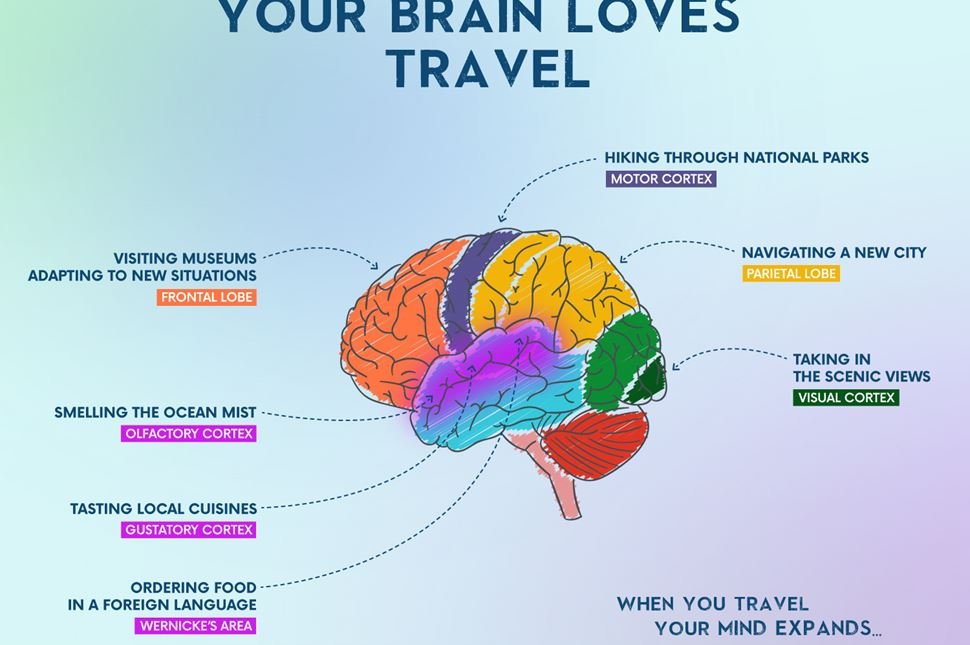
The stress-reduction finding has been measured at the physiological level, not just through self-report. Researchers measuring cruise passengers’ actual stress using wearable heart rate devices found that actual and perceived stress changed during the cruise, resulting in strengthened hearts and improved ability to handle stress. Separately, stress reduction was found to be caused by environmental changes due to tourism, which further triggered positive emotional and cognitive reactions, along with social and spiritual benefits through increased social interaction and broadened horizons.
For older adults specifically, the data is particularly robust. Long-distance travel is positively related to higher cognitive function and a reduction in depressive symptoms, along with lower levels of loneliness, reinforcing the notion that leisure travel can potentially act as a catalyst for improved cognitive and mental health by offering opportunities for enhancing social connections and forming new relationships, according to research using nationally representative data from the Health and Retirement Study.
A study published in BMC Psychology in August 2025, drawing on data from 947 healthcare professionals, found a specific mediation pathway worth noting. The frequency of leisure travel was positively and significantly associated with psychological well-being, with perceived stress and social support independently mediating this relationship. A sequential mediation pathway was also observed wherein leisure travel was linked to lower perceived stress, which in turn enhanced social support — suggesting that travel improves well-being partly by reducing stress and partly by strengthening social connection.
Research published in 2026 examining the broaden-and-build theory of positive emotions found that the relationship between leisure travel frequency and quality of life operates through happiness and psychological resilience as mediating mechanisms, with more vulnerable individuals showing greater levels of quality-of-life improvements associated with more frequent leisure travel.
The Critical Limitation: Duration and Decay
The most important qualification in the research — and the one most systematically absent from wellness travel marketing — is the temporal limitation of travel’s mental health benefits. The stress-reducing effects of traveling may be short-lived. While frequent travel can boost mood and positively impact mental health, the reduced stress and increased feelings of happiness after a vacation typically last less than one month.
A controlled study published in Sustainability in January 2025 examined the impact of nature-based tourism on depression, anxiety, and stress among 67 university students with extremely severe levels of these disorders. The nature tourism experience produced significant reductions in depression, anxiety, and stress levels, with large and clinically relevant effect sizes. However, a six-month follow-up indicated that these long-term benefits diminished and no longer held clinical significance, suggesting the need for more frequent interventions to sustain positive effects.
Research on vacation length adds a further dimension. The effects of annual vacations on work stress and burnout were found to be similar whether the vacation was shorter — seven to ten days — or longer — more than ten days — suggesting that frequency of travel, rather than duration of individual trips, may be the more consequential variable for sustained psychological benefit. The implication is direct: a single annual two-week holiday cannot produce the sustained mental health benefit that regular shorter trips, spread across the year, can generate.
The Anticipation Effect: Why Planning a Trip Produces Benefits Before Departure
One of the most practically actionable findings in travel psychology is the documented mental health benefit of anticipation — the period between booking a trip and taking it. A 2014 Cornell University study found that the anticipation of an experience like a trip can increase a person’s happiness substantially — much more so than the anticipation of buying material goods. An earlier study published by the University of Surrey in 2002 found that people are at their happiest when they have a vacation planned.

The mechanism behind this effect is partly social. The benefits are less about obsessing over the finer details of an itinerary than they are about connecting with other people — travelers end up talking to people more about their experiences than they talk about material purchases, and this social sharing amplifies the anticipatory benefit. For people whose travel opportunities are constrained by finances or circumstances, this finding carries practical significance: the mental health return on travel begins at the planning stage, not at departure.
The Mindfulness Dimension: How Travel Becomes a Therapeutic Practice
The distinction between ordinary travel and mindful travel is not semantic — it has a documented neurological and psychological basis. Research supports the idea that mindful experiences promote better emotional regulation, increased self-awareness, and greater resilience. A 2019 review published in Clinical Psychology Review showed that mindfulness-based interventions reduced symptoms of anxiety and depression and improved overall emotional wellbeing. Travel adds a layer of richness to this — mindful travel opens travelers to new perspectives through exposure to other cultures and lifestyles, gratitude and awe evoked by nature and architecture, present-moment awareness activated by novel sensory experiences, and connection with locals or travel companions as a protective factor for mental health.
Generally, mindfulness is concerned with being mentally present, alert, and in the moment. This heightened awareness is a powerful force of well-being. Research confirms that mindfulness alleviates symptoms of depression and anxiety, improves memory, and boosts cognition, focus, and resilience. Travel makes people happy, but traveling mindfully is a gateway to experiences that help people make connections and learn more about themselves and the world.
The practical application of mindfulness to travel behavior involves specific choices rather than general attitude. Slowing down the itinerary — spending three days in one place rather than one day in three places — allows sensory and cognitive engagement to deepen rather than skim. Eating without a phone on the table. Walking a neighborhood without destination. Sitting with discomfort when something unfamiliar is confusing rather than immediately retreating to familiar infrastructure.
Nature-Based Travel: The Evidence Base
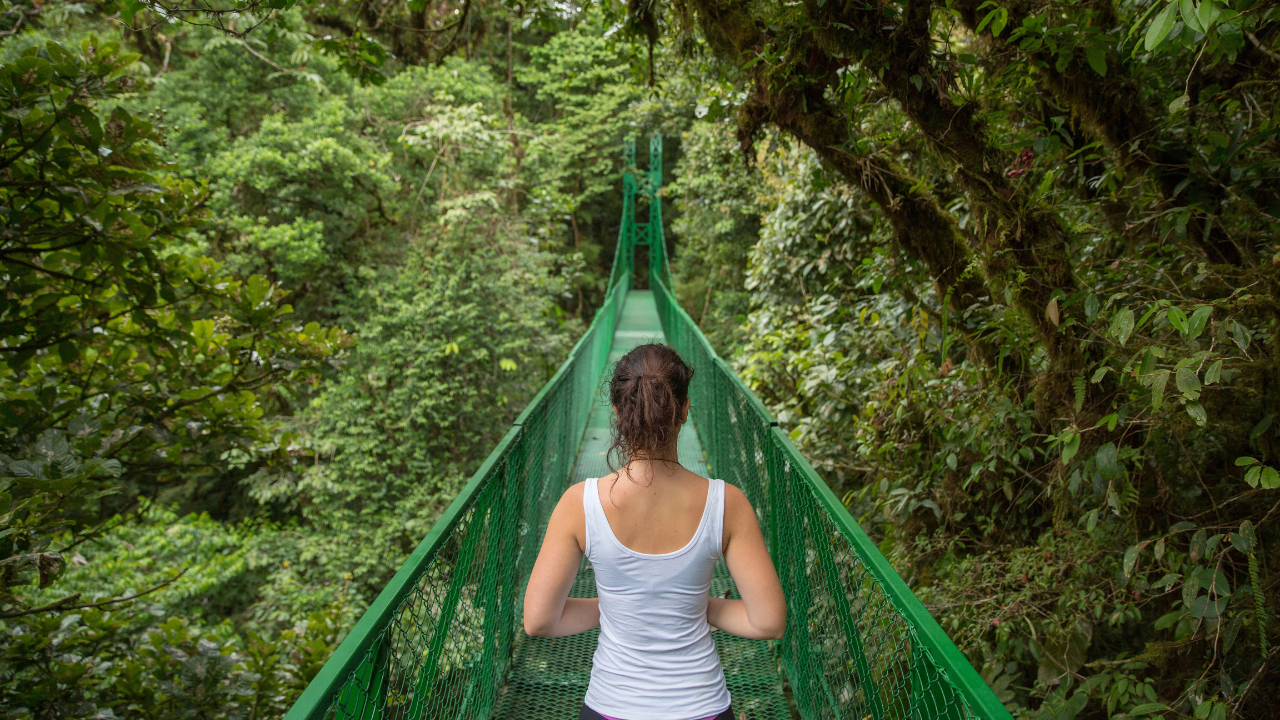
Nature immersion carries one of the strongest evidence bases in the broader travel-and-mental-health literature. Scientific studies show that nature immersion reduces cortisol levels — the primary hormonal marker of stress. Destinations like Banff National Park offer guided forest bathing walks specifically to reduce anxiety and improve focus, practices grounded in the Japanese concept of Shinrin-yoku, which has been validated in multiple clinical studies for its stress-reducing and immune-supporting effects.
Digital-free tourism offers profound mental health benefits, reducing stress and encouraging mindfulness. When combined with slow travel, it creates an experience that is both rejuvenating and deeply fulfilling. The key concept driving this approach is the shift from Fear of Missing Out to Joy of Missing Out — screen-free holidays help travelers embrace the joy of presence. As of January 2025, global screen time averages 6 hours and 40 minutes per day, with Americans spending over 7 hours daily and Gen Z averaging 9 hours of screen exposure. This excessive digital consumption has fueled demand for retreats that offer an escape from technology, allowing individuals to reconnect with nature, practice mindfulness, and improve mental wellness.
The Honest Limitation: When Travel Worsens Mental Health
The evidence base for travel as a mental health tool does not support the conclusion that travel is universally beneficial — and responsible treatment of this topic requires acknowledging what the CDC and peer-reviewed literature say about the risks.
Travel can be a relaxing escape, but it can also be stressful and affect mental health. Travel-related stress can spark mood changes, depression, and anxiety. Travel can worsen symptoms in people with existing mental illness. As many as 11.3% of travelers experience some mental health issues during travel, most often symptoms of anxiety. Navigating culture shock and isolation can be a challenge, as can the inherent unpredictability of travel. Other risk factors for experiencing mental health concerns on the road include jet lag, increased alcohol consumption, high-altitude destinations, and underlying mental health conditions.
The CDC’s official travel health guidance is explicit on this point: travelers should discuss their mental health history and concerns with a healthcare provider at least four to six weeks before departure, and should bring copies of prescriptions and medications in original containers. For travelers managing existing mental health conditions — anxiety disorders, depression, bipolar disorder — the assumption that travel will improve their condition without professional guidance and preparation is not supported by the evidence. Travel changes the environment. It does not change the underlying condition.
The Framework for Using Travel Intentionally
The research converges on a consistent framework for travelers seeking to use wandering as a genuine mental health tool rather than as an escape that resets briefly before the same conditions reconstitute themselves on return.
Travel frequently in shorter increments rather than infrequently in longer ones — the frequency variable produces more sustained benefit than duration. Choose nature-immersive destinations when the primary goal is stress reduction, because the cortisol-reduction evidence for natural environments is among the strongest in the literature. Build in genuine unscheduled time rather than optimizing every day for maximum sightseeing, because the cognitive benefits of novel environments are activated by engagement rather than consumption. Reduce screen time during travel deliberately rather than accidentally — the mental health benefit of being present in an unfamiliar environment cannot compete with the ambient anxiety of a continuously monitored notification feed.
And return with the recognition that travel’s benefits are real, documented, and temporary — which makes them a tool rather than a solution. Meaningful travel experiences and reflections can contribute to tourists’ personal growth and well-being, and overcoming challenges during travel helps reaffirm identity and enhance well-being. The clarity that travel sometimes produces is not a product of the geography. It is a product of the temporary removal of the conditions that prevent clarity — routine, obligation, digital noise, the accumulated weight of a life lived in a single place. The insight, once produced, travels home. The conditions that suppressed it will reconstitute unless something changes other than the passport stamps.
That is not an argument against travel. It is an argument for using it with the intentionality that the research suggests it deserves.