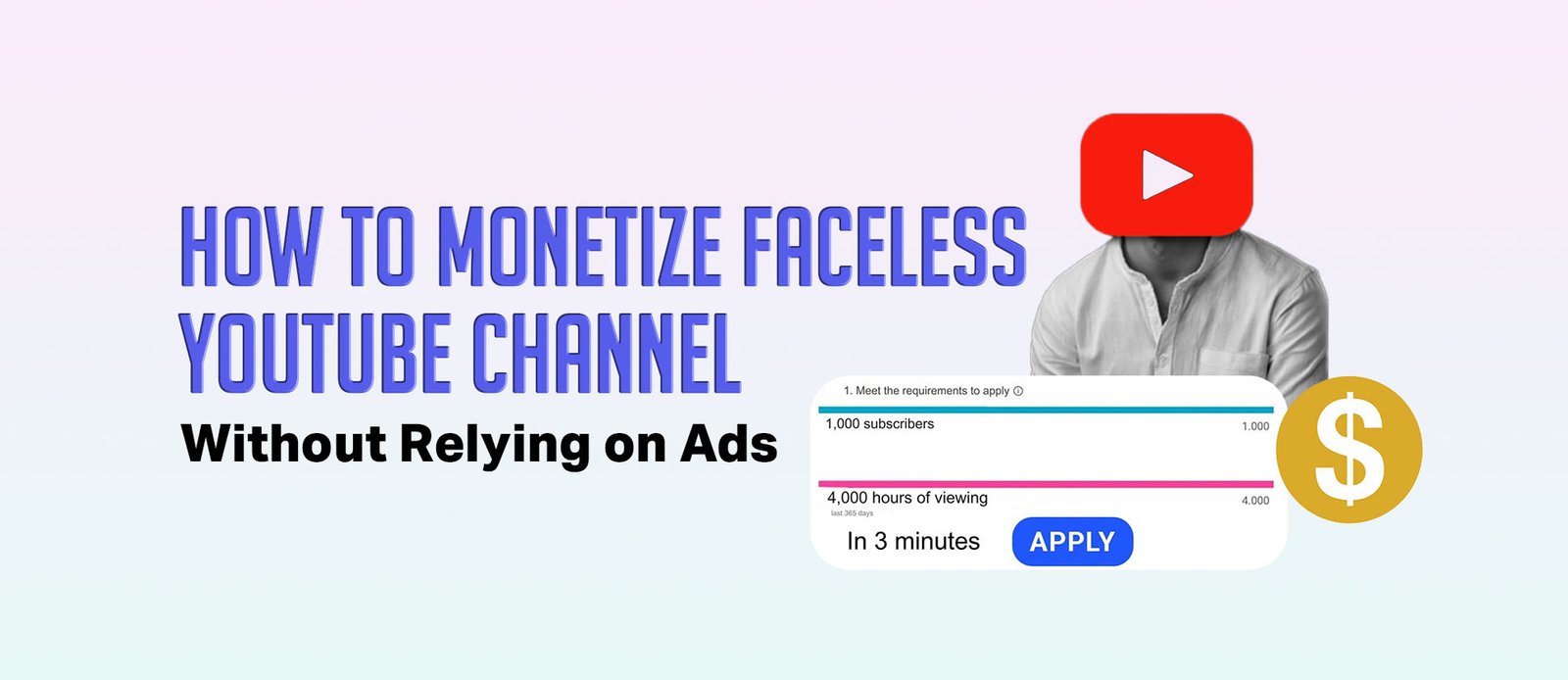


A faceless YouTube channel — one in which the creator never appears on screen, using AI-generated voiceovers, stock footage, animated visuals, or on-screen text instead — has become one of the most accessible business models on the internet for individuals who want to build an income without developing a personal brand on camera. The model is not new, but AI tools available in 2026 have reduced production time by approximately 90% compared to manual production, lowered the cost of starting to near zero, and raised output quality to levels that compete with channels produced by small teams. Faceless YouTube channels can generate an average annual income ranging from $12,000 to $120,000 without revealing the creator’s identity. At the top end of the scale, established channels in high-CPM niches earn significantly more. This guide explains the verified step-by-step process to build one — along with the critical rules that now govern what YouTube will and will not monetize.
Step 1: Niche Selection — The Most Important Decision You Will Make
The niche you choose determines your CPM (cost per thousand ad impressions), your competition level, your growth rate, and your long-term earning potential. The mistake most new faceless channel creators make is choosing a niche that is too broad.

The most lucrative niches for faceless YouTube channels include finance and investing — personal finance, stock market, crypto, and passive income strategies — which carry high CPMs; technology and software tutorials covering AI tools, app reviews, and coding; health and wellness including fitness, mental health, and nutrition; online business and entrepreneurship; and motivation and self-improvement.
Finance, tech, and business carry the highest CPMs. True crime and mystery generate longer watch times, which means more ad impressions per viewer. Channels covering these niches in high-RPM ranges of $12 to $20 per thousand views earn substantially more per view than general entertainment channels.
The practical guidance is to go specific. Instead of “cooking,” choose “one-pot vegan meals.” Instead of “motivation,” choose “billionaire success habits.” Narrow wins. Competition in specific sub-niches is dramatically lower than in broad categories.
Before creating any content, spend time studying 10 to 15 successful channels in your chosen niche. Analyze which video formats, thumbnail styles, titles, and topics generate the most views and watch time. This research phase directly informs your content strategy and prevents the most common early-stage failure: producing content that no audience wants to watch.
Step 2: Your AI Production Workflow — The Complete Tool Stack
The complete tech stack for a faceless YouTube channel in 2026 consists of: ChatGPT or Claude for scripting and research; ElevenLabs for AI voiceover generation, which produces natural-sounding narration with emotional nuance indistinguishable from human narration; Pictory for transforming scripts into complete videos with automatically matched stock footage, subtitles, and captions; and Midjourney or Ideogram for custom thumbnail images. For royalty-free background music, Suno and Beatoven.ai generate original tracks that avoid copyright claims.
Scripting: Open ChatGPT or Claude and prompt: “I’m creating a faceless YouTube video for a personal finance channel. My target audience is working professionals aged 25–40 in India. Write a 10-minute video script on the topic ‘How to build a ₹1 crore emergency fund in 5 years.’ Use a conversational tone, include specific actionable steps, and structure it with a hook, three main sections, and a call to action.” Edit the AI-generated draft for accuracy, add specific data points from credible sources, and ensure the content reflects genuine insight rather than generic advice. This is the human layer that keeps content eligible for monetization.
Voiceover: Paste your finalized script into ElevenLabs. Select a voice from the library or clone your own voice — which creates a consistent brand voice without requiring you to record anything after the initial clone. Adjust pacing and emphasis using the platform’s controls. Export the audio file in MP3 format.
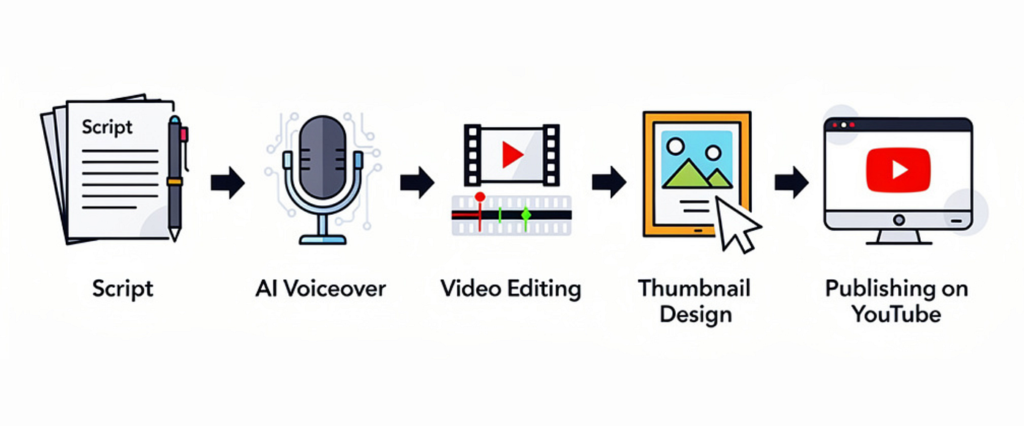
Video: Import your voiceover into Pictory. The platform automatically matches your script to relevant stock footage, adds synchronized captions, and produces a complete video within minutes. Review the automatically selected footage and replace any clips that don’t fit the topic with more relevant alternatives from the built-in library. Export at 1080p minimum.
Thumbnail: Create a thumbnail using Midjourney for the background image and Canva for text overlay. Faceless thumbnails work best with high-contrast images, bright colors, a single clear focal point, and text of four words or fewer. Spend as much time on the thumbnail as on the video itself — it is the primary variable that determines whether someone clicks.
Step 3: YouTube Partner Program Requirements and the Monetization Timeline
Monetization requires 1,000 subscribers and 4,000 public watch hours in the previous 12 months, or 10 million Shorts views in 90 days for the Shorts-specific pathway. Posting two to four videos per week is the growth cadence most associated with reaching monetization within three to six months.
Make videos between 8 and 15 minutes long to maximize watch time and ad opportunities. Use strong hooks in the first 30 seconds to retain viewers. Add end screens directing viewers to other videos on your channel. YouTube rewards channels that keep viewers on the platform.
Step 4: The AI Disclosure Rule — Non-Negotiable
YouTube’s 2026 policies on AI-generated content carry significant compliance consequences that every creator in this space must understand. YouTube permits AI-generated narration as long as the content is original, provides genuine value, and is not mass-produced. You must disclose AI-generated content in your video description. Failing to disclose can result in suspension from the Partner Program. In early 2026, thousands of faceless AI channels had monetization suspended under the inauthentic content policy. YouTube’s AI detection systems can now identify patterns behind mass-generated videos. AI narration is allowed. AI-assisted editing is allowed. What is not allowed is using AI to mass-produce content with no original thought, research, or creative direction.
Under the 2026 Mandatory Disclosure Policy, creators must check the ‘Altered or Synthetic Content’ box for any realistic AI voice or video. Failing to do so can lead to permanent ineligibility for the Partner Program or a community strike.
Step 5: Monetization Beyond AdSense
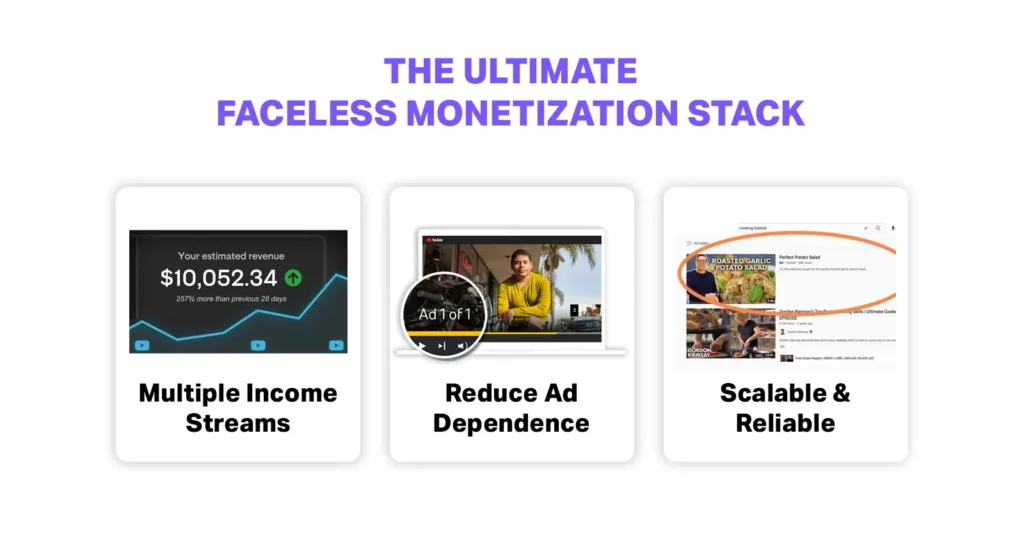
The real money comes when you go beyond AdSense. Affiliate marketing is well suited to faceless channels — recommend products relevant to your audience and earn commission when viewers purchase. Finance channels can promote budgeting apps, investment platforms, and financial services. Tech channels promote software tools, hosting services, and courses. Once a channel reaches meaningful size, brands will pay hundreds to thousands of dollars for a sponsorship mention within a video.
A monetized channel with 100,000 monthly views can earn $200 to $2,000 or more in AdSense alone, depending on niche. The tools used to produce the channel pay for themselves quickly once monetization is active. Layering affiliate income on top of AdSense is typically the path to the $3,000 to $10,000 per month range that experienced faceless channel operators report.
The Honest Timeline
The average faceless channel operates at a loss for 6 to 12 months before becoming profitable. Budget accordingly and treat it as a business investment. Earnings range widely: small channels earn $50 to $500 per month after reaching monetization, while top performers earn six figures. Most successful solo creators running two to three channels target $5,000 to $10,000 per month combined after 12 to 18 months of consistent work. The word “passive” describes what the income becomes after the initial period of consistent, active content creation — not what it is from day one.