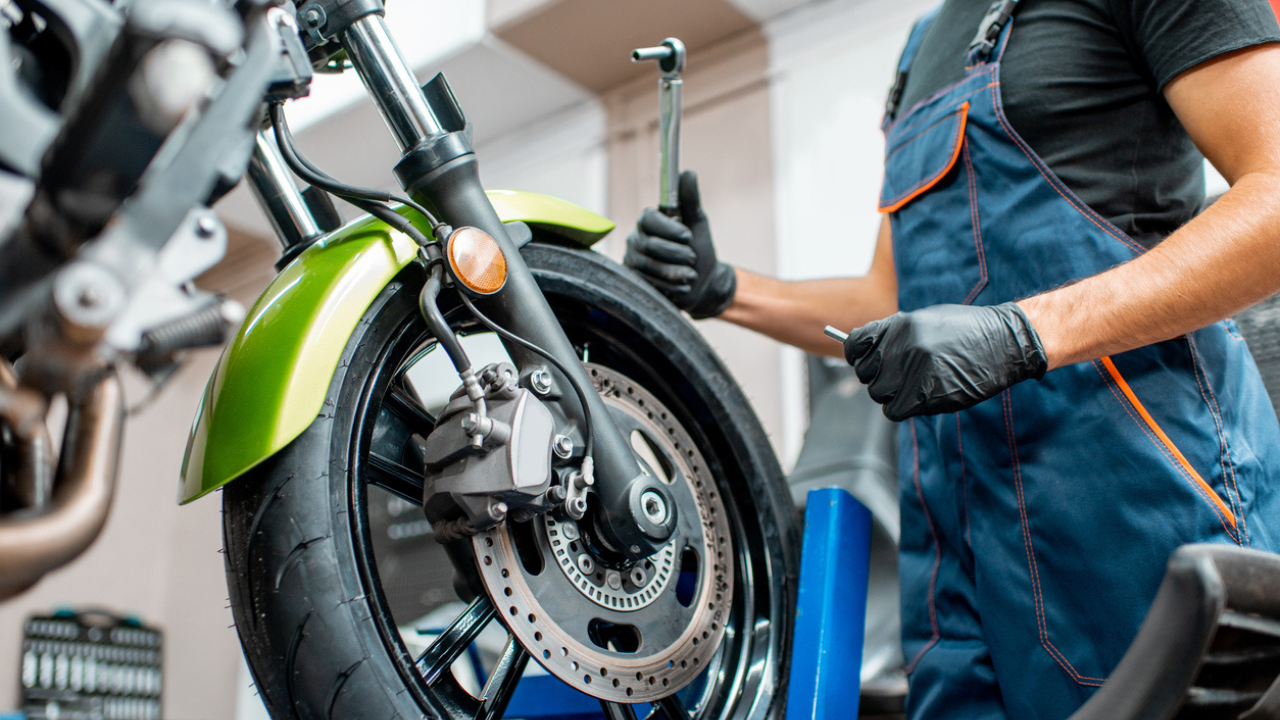


A motorcycle is a mechanically unforgiving machine. Unlike a car, which can often absorb neglected maintenance for thousands of miles before a consequence materializes, a motorcycle operating with a worn tire, a loose chain, or deteriorating brake fluid can present a life-threatening failure with no warning and no margin for recovery. The difference between a road trip that unfolds as planned and one that ends on the shoulder of a highway — or worse — is frequently determined by what was checked, adjusted, and replaced in the days before departure.
The Motorcycle Safety Foundation, the federally endorsed organization that has trained millions of American riders since its founding, addresses this directly. MSF’s director of special projects, Ken Glaser, has compared a pre-ride inspection to a pilot’s pre-flight check: detecting a minor change on a bike during an inspection today can prevent a costly repair or a serious safety incident tomorrow. The framework the MSF has developed to systematize that inspection — and the maintenance protocols that support it — form the foundation of what every rider should understand before any long-distance road trip.
The T-CLOCS Framework: The MSF’s Official Inspection Standard
The Motorcycle Safety Foundation’s pre-ride inspection system is built around a six-category acronym that structures the inspection process from front to back and top to bottom. T-CLOCS stands for Tires and Wheels, Controls, Lights and Electrics, Oil and Fluids, Chassis, and Stands — representing a step-by-step guide to performing a complete pre-ride inspection.
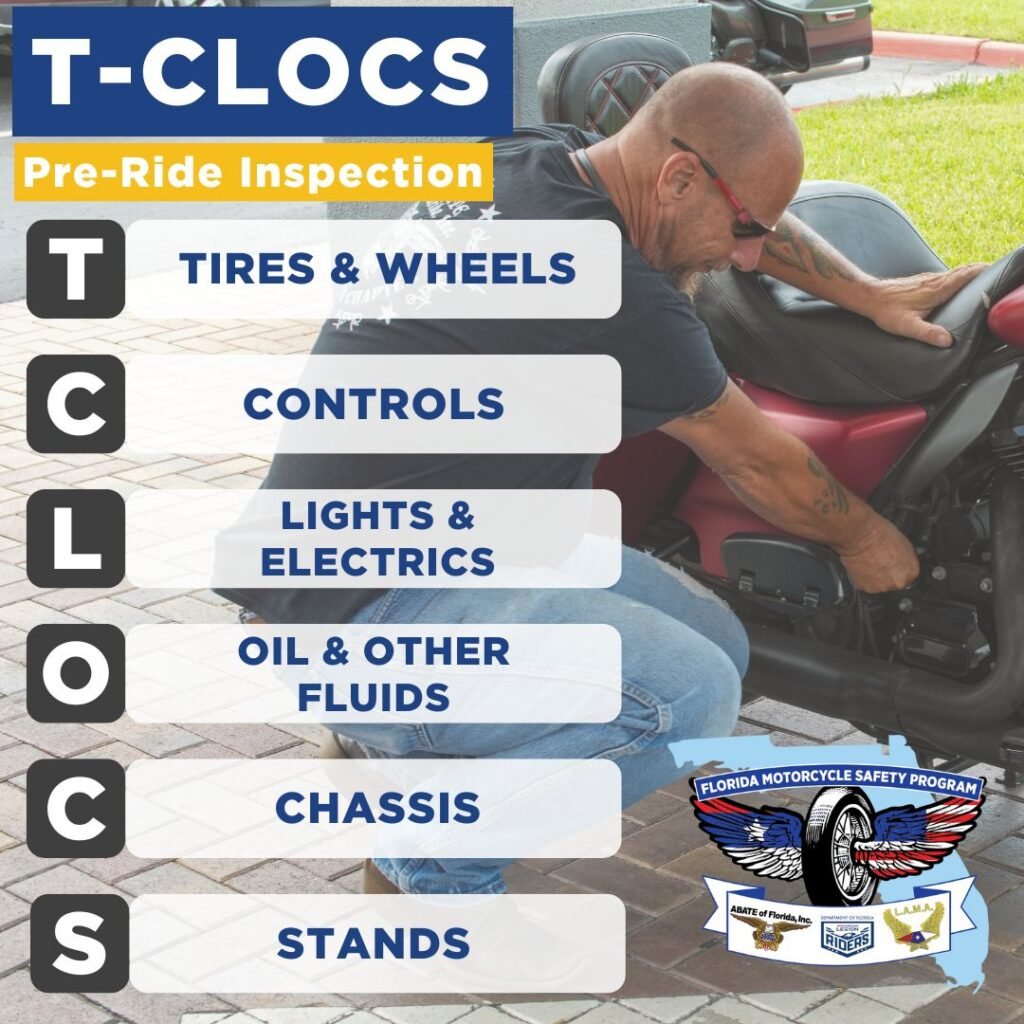
T-CLOCS is considered so central to rider safety that a tear-out version of the checklist is included in every MSF Basic RiderCourse Rider Handbook given to students, and a free PDF version is available on the MSF website. While running through the full T-CLOCS checklist before every single ride may not be practical for all riders, completing the full inspection at least monthly and before long road trips is strongly recommended by safety organizations.
What follows breaks the T-CLOCS categories down into the five areas that carry the greatest consequence for road trip safety — and provides the verified technical standards that define what acceptable condition actually means.
T — Tires and Wheels: The Only Contact Between You and the Road
Tires represent the most critical single safety system on a motorcycle because they are, in their entirety, the interface between the machine and the surface it travels on. Every braking force, every steering input, and every cornering load passes through a contact patch roughly the size of a hand.
Tire pressure is the first check — and it must be performed cold, before riding. The motorcycle manufacturer’s recommended cold inflation pressure is the only figure that should be used. The pressures stamped on the sidewall of the tire represent maximum load pressures only, not the correct riding pressure. If tire pressure is 20% below the recommended level, it requires immediate attention. Underinflated tires produce poor handling, increased wear, and a higher risk of punctures or tire failure, with notably compromised side-to-side performance.
Tread depth is the second check — and the legal and safety thresholds are distinct. The U.S. Department of Transportation requires a minimum tread depth of 2/32 of an inch for motorcycles and specialty vehicles. State-level requirements vary: New York and Texas, for example, require a 2/32-inch minimum for motorcycle tires, with both shoulder wear and tread wear taken into consideration. The legal minimum, however, is not the safety recommendation. Most safety experts recommend replacing tires at 3/32 to 4/32 of an inch rather than waiting for the legal minimum, and the DOT-required minimum of 2/32 of an inch is technically legal but not considered safe by industry standards.
The penny test provides a quick field check: insert a penny into the tread groove with Lincoln’s head facing down. If the top of his head is visible, tread depth has reached 2/32 of an inch — replacement time. The quarter test offers an earlier warning: insert a quarter with Washington’s head facing down. If the tread does not cover his head, depth is below 4/32 of an inch and replacement should be planned soon.
Tire age is a factor independent of tread depth that most riders underestimate. A good rule of thumb is to replace tires five years after the manufacture date, even with low mileage and minimal visible wear. The four-digit code on the tire sidewall identifies manufacture date: the first two digits represent the week of the year, and the second two digits represent the year. Rubber compounds degrade with age regardless of use, and a structurally compromised tire may appear visually acceptable until it fails under load.
C — Controls: Throttle, Brakes, Clutch, and Cables
Every item in the controls category should be checked before every ride: throttle should not be sticky and must snap back at both full lock positions, brake levers should have good feel with no softness indicating air in the brake lines, brake bolts must be visibly secure, and reservoir caps should be tight.
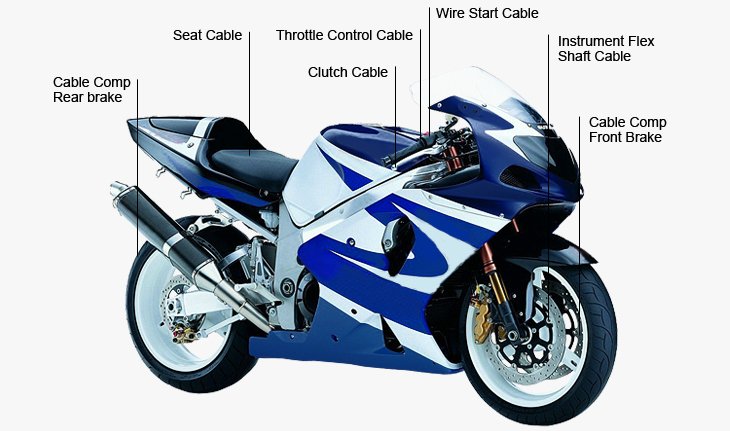
Clutch lever must move freely, indicating the cable or pivot is properly lubricated — though some clutches are hydraulic. Levers must not hit bodywork at either lock, and handlebars must not be loose. A sticky throttle at speed is among the most dangerous control failures a rider can encounter, and it is among the most preventable. Testing throttle snap-back at both steering locks — with the engine running — takes approximately ten seconds.
For brake fluid specifically, the interval consideration matters more than most riders realize. Cloudy or dark brake fluid indicates it has absorbed moisture. Contaminated fluid can lead to brake fade under sustained use because moisture-saturated fluid has a lower boiling point than fresh fluid, meaning heat generated during hard braking can vaporize the fluid and cause brake failure. Most manufacturers recommend brake fluid replacement every one to two years regardless of appearance, and before any long-distance trip where sustained mountain descents or heavy traffic braking are anticipated.
L — Lights and Electrics: Visibility in Both Directions
The lights inspection covers battery condition, headlamp function, brake lamp activation from both the front lever and rear pedal independently, turn signal operation in all four positions, mirror adjustment from the riding position, and reflector condition. NerdWallet The brake lamp check has a specific nuance: each brake — front lever and rear pedal — should be tested independently because each activates a separate switch. If one switch fails, the other provides a backup — but only if both are confirmed functional before departure.
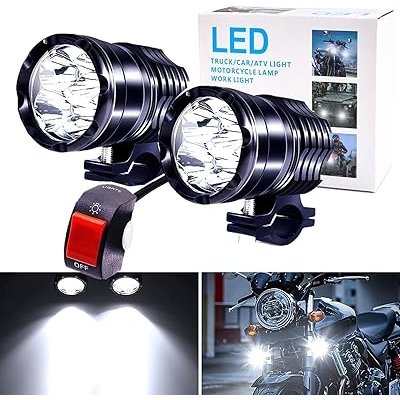
For long-distance touring specifically, carrying spare bulbs and fuses adds negligible weight and resolves a failure that would otherwise require waiting for roadside assistance or a parts run in an unfamiliar location. LED lighting has extended bulb life significantly relative to incandescent alternatives, but LED assemblies can still fail, and budget or aftermarket LEDs carry higher failure rates than OEM units.
O — Oil and Fluids: The Engine’s Internal Condition
Engine oil is the lifeblood of a motorcycle, and unlike cars, most motorcycles use a single oil system for the engine, transmission, and clutch — making oil quality and change intervals even more critical than in automotive applications. Oil level should be checked with the bike on level ground and, depending on manufacturer guidance, either on the center stand or held upright. Milky coolant indicates a likely head gasket issue. Fluid levels should be checked cold, and any signs of leaks noted before departure.
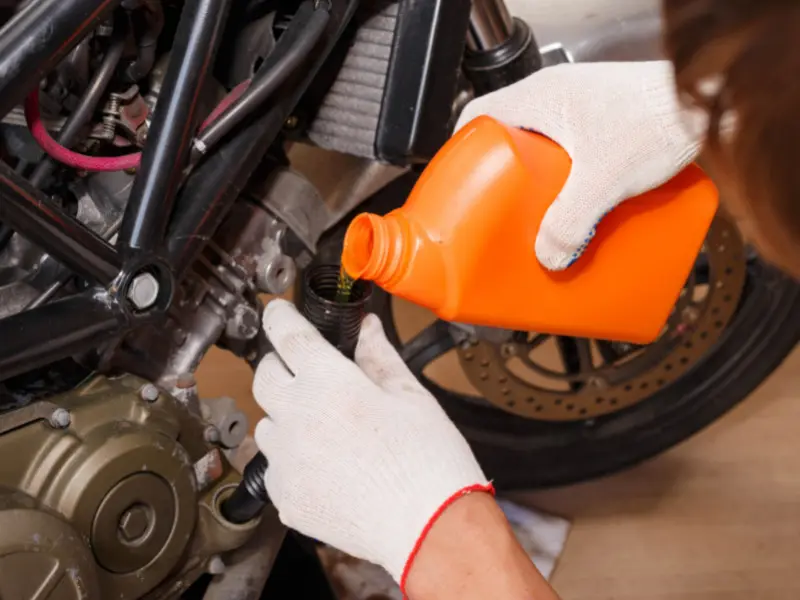
Automotive oils contain additives that can cause clutch slippage in motorcycles with wet clutch systems. Motorcycle-specific oil is required — not a preference. Oil change intervals are specified in the owner’s manual and vary by engine type, oil specification, and manufacturer. A road trip that begins immediately after an oil change provides the maximum interval before the next service is due. A road trip that begins with oil approaching its change interval creates the possibility of needing a service mid-trip in an area where the correct oil specification may not be available.
Chain — The Mechanical Link Between Engine and Rear Wheel
For chain-drive motorcycles — the majority of motorcycles outside of shaft-drive touring bikes — the drive chain is among the highest-maintenance components on the machine and among the most consequential when neglected. A well-maintained chain ensures smooth power delivery, better handling, and safer rides. Neglecting chain maintenance can lead to chain stretch, uneven wear, and dangerous failures while riding.
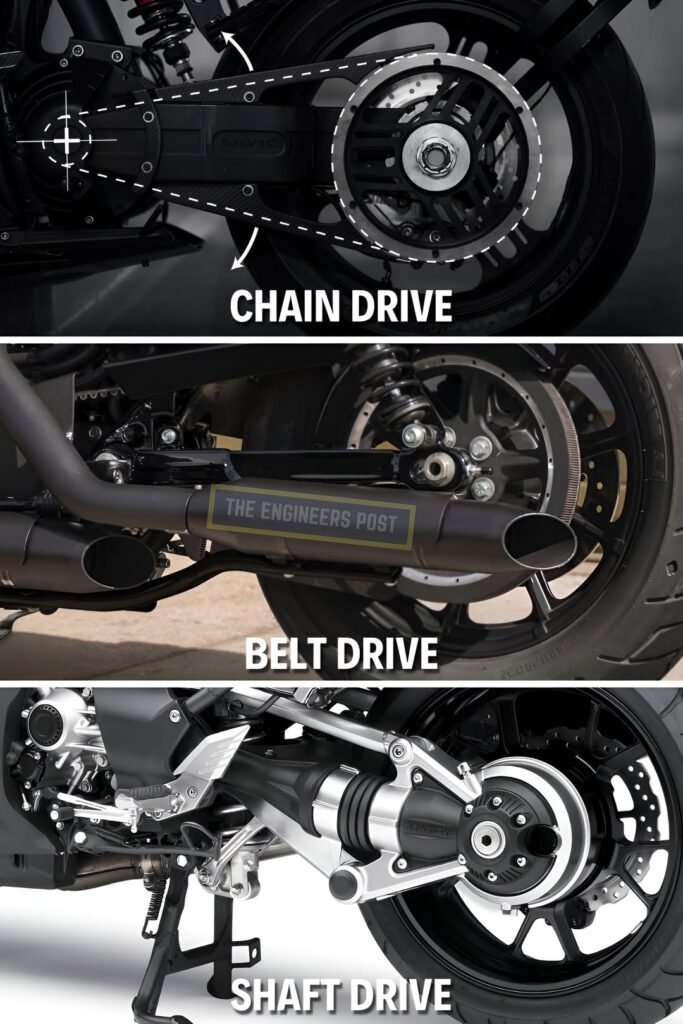
Chain tension specification is mandatory — not a general guideline. Chain slack should be measured at the tightest point of chain travel, typically with the bike on its center stand. Most chains require 20 to 30mm of free play, but specifications vary significantly between models and manufacturers. A chain that is too tight will bind on the sprockets, accelerating wear of both chain and sprockets, and may damage the countershaft seal over time. A chain with excessive slack can jump off the sprockets at speed — a rear wheel lockup event at highway speed.
Chain cleaning and lubrication frequency has a verified industry standard. Harley-Davidson’s official guidance recommends cleaning and lubricating the chain at least every 500 miles, with inspection after rides in wet conditions or whenever the chain appears dry. DID Chain, one of the world’s largest chain manufacturers, recommends cleaning every 300 miles and lubricating every other use with an O-ring or X-ring safe lubricant.
The choice of lubricant has a documented consequence that many riders overlook. Standard spray lube is tacky by design — it must adhere to the chain between maintenance intervals. However, that same tackiness attracts road grit and dirt, which amalgamates with the lube to form a grinding paste that damages O-ring seals and accelerates wear on both chain and sprockets. This is why chain manufacturers universally recommend thoroughly cleaning the chain of all existing lube before applying fresh lubricant. WD-40 is a solvent, not a lubricant, and should not be used as a chain lubricant — it is, however, effective as a cleaning agent prior to applying dedicated chain lube.
Chain replacement timing follows measurable criteria. DID Chain recommends replacement when sealed chains have stretched 1% of their overall length, and non-sealed chains at 2% stretch. Chains and sprockets should be replaced as a set when wear becomes excessive, as a new chain on worn sprockets accelerates wear on the new chain significantly.
S — Stands and Chassis: The Structure Holding Everything Together
The chassis and stands inspection covers the frame for visible cracks or damage, the swingarm for play, the front forks for smooth operation and absence of oil leaks, the rear suspension for smooth operation, the center and side stands for cracks and proper spring function, and all chassis fasteners for security. Side stand spring failure — which causes the stand to drop unexpectedly while riding — represents a low-probability but high-consequence failure mode that takes approximately three seconds to check and eliminate.
The Owner’s Manual Is the Primary Source
Every maintenance interval, fluid specification, torque value, and adjustment measurement referenced in this guide carries one important qualifier: the motorcycle owner’s manual takes precedence over general guidance for every specific figure. The MSF explicitly states that the primary source for details on inspecting a motorcycle and performing routine maintenance remains the bike’s owner’s manual. General industry standards provide the framework. The owner’s manual provides the numbers specific to the machine being ridden. Before any road trip, both should be consulted — and neither should be substituted for the other.