

Motorcycle camping sits at the intersection of two disciplines that each demand their own form of preparation — touring and wilderness camping — and it rewards the rider who respects both. The appeal is genuine and documented: no accommodation budget, no check-in time, complete route flexibility, and the particular quality of silence that comes from falling asleep somewhere a hotel cannot reach. The learning curve, however, is real. Gear that works for car camping fails on a motorcycle because weight and volume are no longer negotiable. Techniques that work in a campground fail in dispersed backcountry because infrastructure no longer exists to compensate for poor preparation. This guide addresses both disciplines in the sequence that a first-time moto camper needs them: shelter, sleep system, cooking, tools, campsite selection, and the environmental framework that governs all of it.
The Foundational Constraint: A Motorcycle Is Not a Truck
Every gear decision in motorcycle camping is subordinate to a single physical reality that has no workaround: a motorcycle carries a fraction of the volume and payload that a car or truck does, and every additional kilogram affects handling, fuel range, and rider fatigue. Motorcycles aren’t pickup trucks, so space is tight. Balance is key — load too much on one side and handling degrades. Heavier items should be stashed low and close to the bike’s center for stability, and compression sacks or vacuum-sealed bags are essential tools for reducing sleeping bag and clothing volume.
The practical implication is that motorcycle camping gear must be selected from backpacking categories — not general camping categories. If you already own full-size camping gear, you may need to downsize and pick up more saddlebag-friendly versions of the essentials. Look for camping items designed for backpacking, as these are more likely to fit within the space constraints a motorcycle imposes. A tent designed for car camping may weigh four kilograms and pack to the size of a duffel bag. Its backpacking equivalent covers the same sleeping area, weighs under 1.5 kilograms, and compresses to the size of a water bottle. For motorcycle camping, only the second option is viable.
Shelter: The Tent Decision and the Motorcycle-Specific Option
The tent is the largest single item in a moto camping kit and the one that most directly determines sleep quality, weather protection, and morning morale after a long riding day.
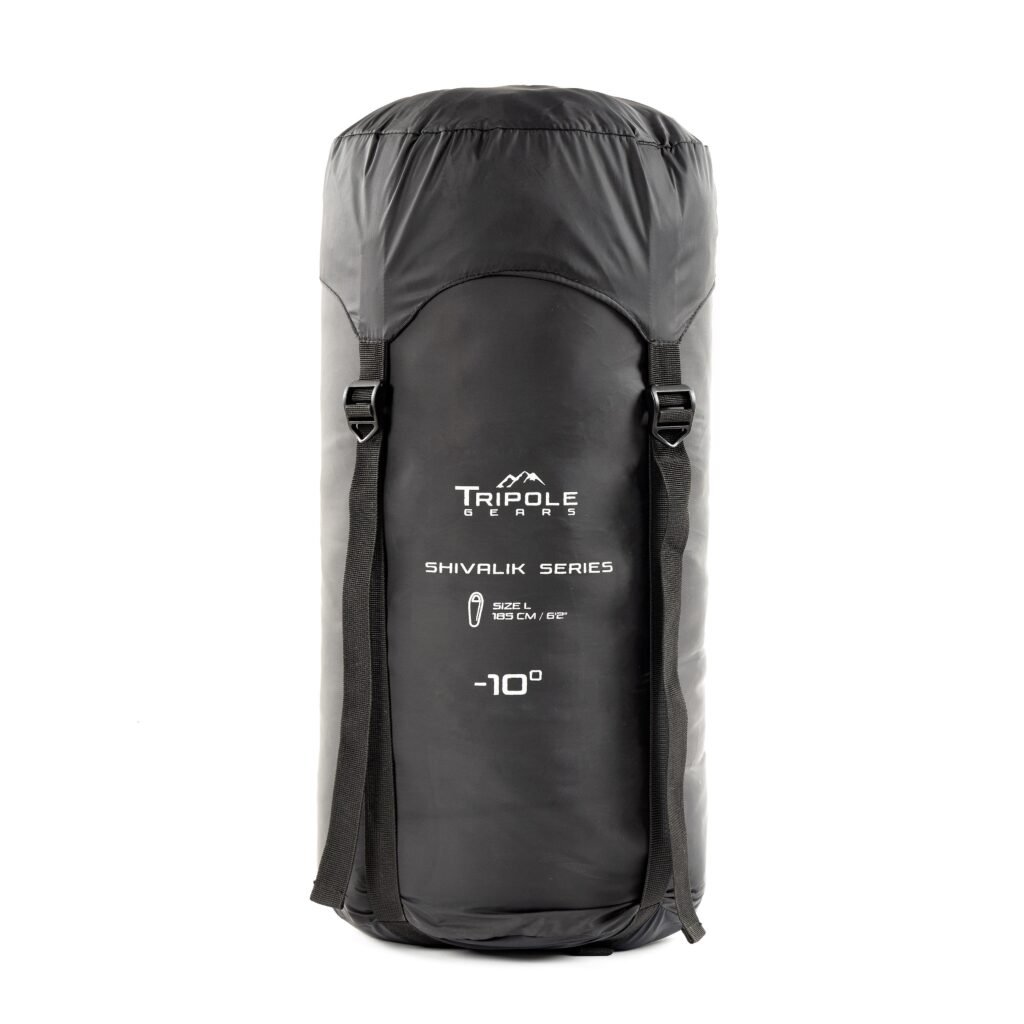
Sleeping gear will be the bulkiest items in motorcycle luggage. A tent, sleeping bag, and roll mat take up enough space without adding extras. The aim is to get low-volume and lightweight kit that can be compressed to make it as small as possible. For solo riders, a two-person backpacking tent is the most practical configuration: a two-person tent is ideal for a solo rider — roomy enough for the rider and all their gear without feeling cramped. Compression bags are a game-changer for packing, saving a surprising amount of space when used for both the tent and sleeping bag.
Freestanding tents — those that hold their structure without requiring ground stakes — carry a specific advantage for motorcycle camping. A freestanding tent does not need to be pegged into the ground to erect it, making it functional on hard or rocky surfaces where stakes cannot be driven. This matters in dispersed camping contexts where the ideal site may be on compacted dirt, gravel, or rock rather than soft soil.
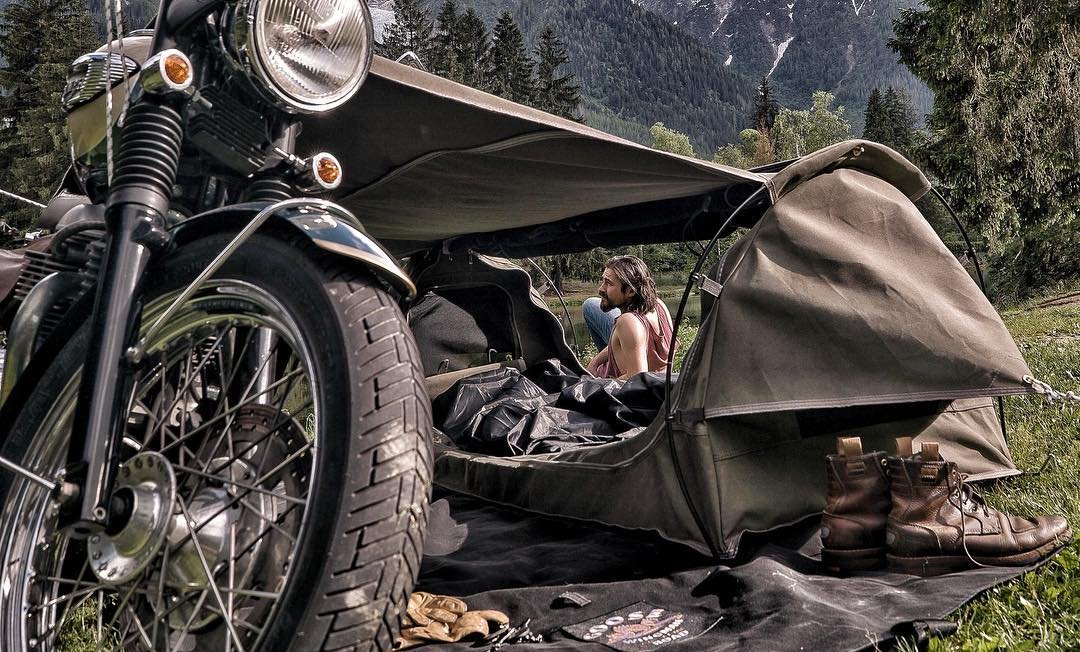
A motorcycle-specific tent category has developed in recent years that addresses a problem no standard backpacking tent solves. Motorcycle-specific tents add a separate garage outside the front door, providing a safe space to store the bike out of the elements and away from opportunistic theft while sleeping. These tents also provide a sheltered area to work on the bike if mid-trip repairs are needed — a function that standard tents do not accommodate. The trade-off is weight and packed volume: motorcycle-specific tents are considerably heavier and bulkier than equivalent backpacking options, making them more appropriate for riders whose itineraries include multiple consecutive camping nights than for those camping occasionally across a road trip.
The Sleep System: Understanding ISO Ratings Before You Buy
After shelter, the sleeping bag and sleeping pad form a system — not two independent items — and purchasing one without understanding the other produces a sleep system that performs below its specified rating in the field.
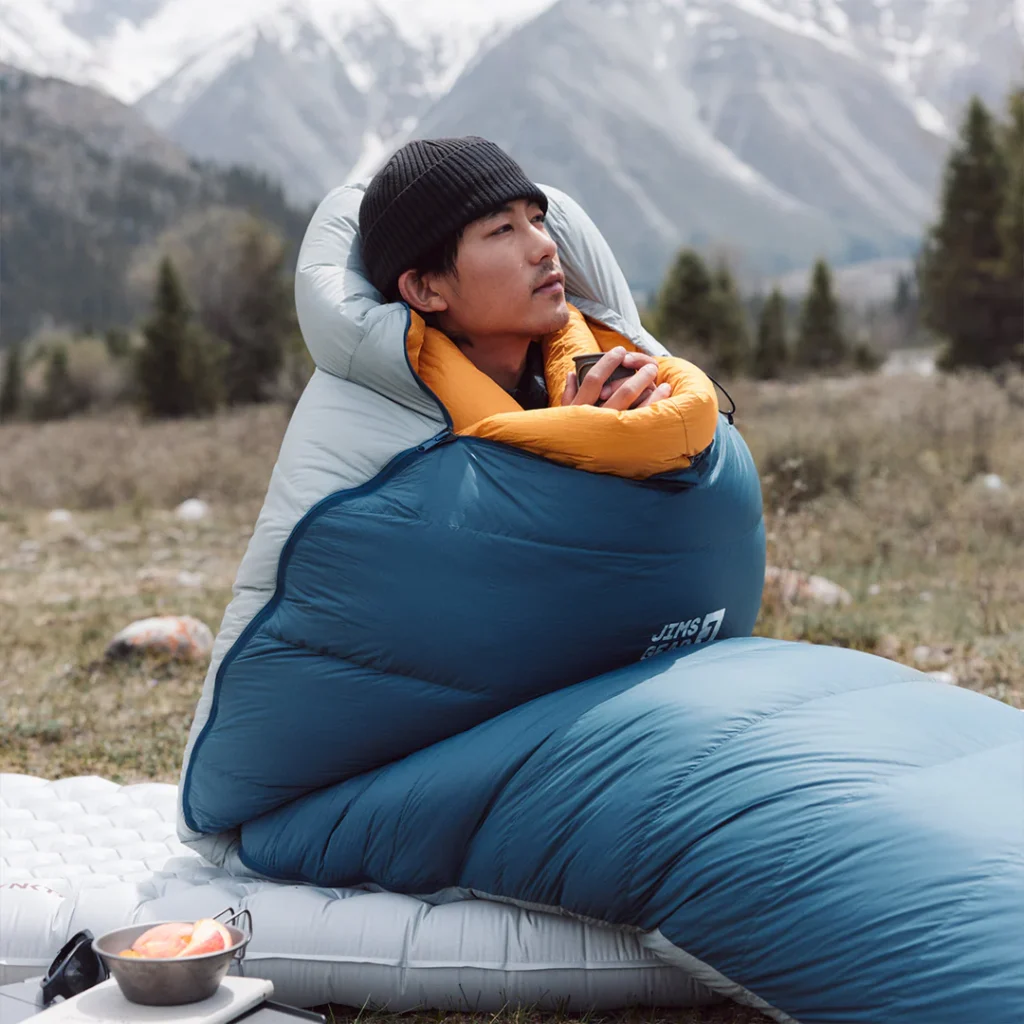
The temperature rating on a sleeping bag is only meaningful if it carries a standardized certification. ISO 23537-1:2022 is the current international testing standard for sleeping bags, replacing the earlier EN 13537 and ISO 23537-1:2016 standards. It makes it possible to compare the warmth of sleeping bags from different manufacturers with certainty, because all bags tested under this standard are assessed in exactly the same conditions using exactly the same procedures. Without this certification, a temperature rating printed on a tag is a marketing claim, not a verified performance specification.
The ISO standard produces three temperature ratings for each bag: the Comfort Rating — the minimum temperature at which an individual can sleep in a relaxed position; the Limit of Comfort Rating — the temperature range where an individual in a curled position can still sleep through the night; and the Extreme Rating — the minimum temperature for an emergency scenario where hypothermia risk is real. The Extreme Rating should never be used as a target temperature for planning — it represents a survival scenario, not a comfortable night’s sleep. Always buy based on the Comfort or Limit rating, never the Extreme.
The sleeping pad is the second half of the system and the one most frequently under-specified. When lying in a sleeping bag, the insulation underneath the body gets compressed flat. Once compressed, it provides almost no insulation — meaning the sleeping pad stops conductive heat loss to the ground while the sleeping bag traps radiant heat around the body. Your mat stops heat loss that your bag cannot compensate for regardless of its temperature rating. or temperatures below 30°F, a sleeping pad with an R-value of at least 4.5 is recommended. Inflatable sleeping pads provide the best warmth-to-packed-volume ratio for motorcycle camping, compressing to a fraction of the size of foam alternatives at equivalent insulation levels.
On the choice between down and synthetic fill for moto camping specifically, the conditions of use matter more than the general performance hierarchy. Due to the rough and tumble nature of motorcycle camping, synthetic-filled bags are generally recommended over down, because synthetic insulation retains its thermal performance when wet — a condition that is more likely in motorcycle camping than in controlled backpacking where weather management is easier. Down provides superior warmth-to-weight ratio in dry conditions but loses most of its insulating capacity when saturated.
The Cooking System: Fuel Availability as the Primary Decision Variable
Cooking equipment for moto camping ranges from nothing — relying entirely on purchased food — to a full stove-and-cookset system capable of preparing hot meals from scratch. The decision depends on trip length, camping frequency, and fuel logistics.
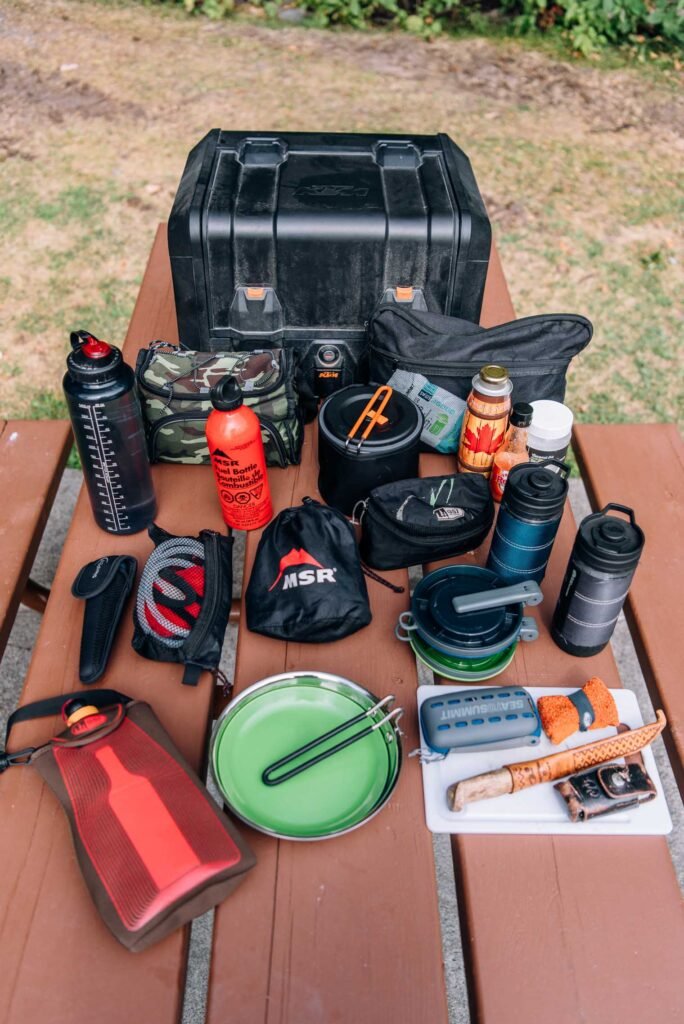
For riders who camp regularly across extended international routes, fuel canister availability becomes the critical constraint. For long international travels, a petrol stove is strongly recommended because unlike gas cartridges, petrol is available almost everywhere in the world. In a fuel emergency, a small amount can even be transferred from the motorcycle’s own tank to get to the next fuel source. The trade-off is operational complexity: petrol stoves require priming, produce odor, and offer less precise heat control than canister alternatives. For shorter domestic trips where isobutane canisters are available at most outdoor retailers, canister stoves provide simpler and more controlled cooking with less maintenance.
A portable stove should be lightweight and compact. Pack extra fuel, and test the stove before departure — discovering a malfunction mid-trip when hungry after a long riding day is a preventable problem. Cookware should be titanium or aluminum — lightweight, durable, and heat-efficient. A titanium or aluminum pot and pan, a spork rather than a full utensil set, and a small cutting board represent the functional minimum for a moto camping cook kit. A tarp carried as a cooking shelter — not as a sleeping shelter — provides a functional rain cover for the stove on wet evenings. A sheet of tarpaulin is extremely versatile when motorcycle camping: it can be used as an additional shelter to cook under in rain, as a large ground mat, as a ground sheet when working on the bike, or as a motorcycle cover.
Tools and Mechanical Contingency
A motorcycle camping kit that addresses shelter and sleep but neglects mechanical contingency is incomplete in the way that matters most in remote locations. A motorcycle flat kit and multi-tool are essential, plus spare bulbs and a few spare fuses — these are the items most likely to be needed when no auto repair station is available on the road.
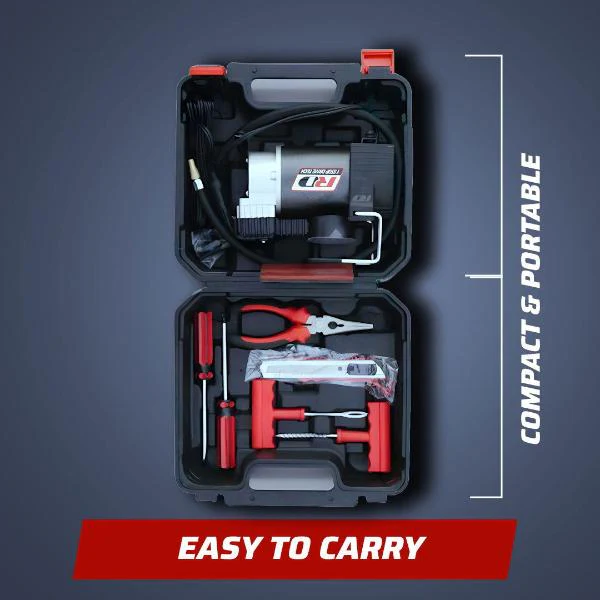
Experienced moto campers consistently recommend carrying the motorcycle’s owner manual, especially on long trips — it is invaluable when troubleshooting a problem while tired after a long day in an unfamiliar location. Packable tire irons, a portable air compressor or CO₂ inflators, and a puncture repair kit address the most common mechanical failure that strands moto campers. A solar charger power bank or a 12V USB charging cable tapped from the motorcycle’s electrical system keeps navigation devices, communication tools, and cameras operational across multi-day routes where mains power is unavailable.
Security at camp deserves specific attention. A motorcycle alarm disk lock prevents opportunistic interference when the bike is left unattended at the campsite overnight. A cable lock through the helmet and jacket provides a secondary deterrent when the rider is away from the campsite on foot.
Campsite Selection: The Legal and Environmental Framework
Before pitching a tent anywhere in the United States, a rider must understand the framework that governs where camping is and is not permitted — because the consequences of getting this wrong range from a fine to environmental damage that takes years to repair.
Dispersed camping in national forests is usually allowed for up to 14 days at a time, and typically permitted in any previously-used campsite off any forest service road. Critical distance requirements shape site selection: camping areas must be established at least 100 feet — approximately 35 adult steps — away from water sources, trails, or roads, though some forests require greater setbacks. Motorized vehicle use for dispersed camping is only allowed within 150 feet of any designated route. Fire permits may be required for any open flame use, including portable stoves and lanterns. Current fire restriction levels should be checked through local dispatch offices, as conditions change rapidly during dry periods.
The Leave No Trace framework, developed jointly by the U.S. Forest Service, National Park Service, and Bureau of Land Management, provides the ethical standard for site behavior once a legal location is identified. Its seven principles are not suggestions — they are the framework that land management agencies use to assess responsible use. The U.S. Fish and Wildlife Service identifies the core LNT camping requirements as: camping on durable surfaces including established trails and campsites, rock, gravel, dry grasses, or snow; protecting riparian areas by camping at least 200 feet from lakes and streams; packing out all trash, leftover food, and litter; and minimizing campfire impacts by using a lightweight stove where fires are not permitted, and using only established fire rings where fires are allowed.
The National Park Service specifies that campfires should burn all wood and coals to ash before being put out completely and cool ashes scattered. Wildlife should be observed from a distance and never fed — feeding wildlife damages their health, alters natural behaviors, and exposes them to predators and other dangers.
Selecting an appropriate campsite is perhaps the most critical aspect of low-impact backcountry use. It requires judgment and information, and often involves trade-offs between minimizing ecological and social impacts. Avoid camping close to water and trails, and select a site that is not easily visible to others.
The Honest Trade-off Between Comfort and Practicality
Comfort items are non-essential by definition — they make camping life easier, but if space and weight are limited they are the first to go. Folding camp chairs are a category where long-term moto travelers consistently report abandoning them early and regretting it months later — but also consistently report that they did not miss them enough to justify the space they occupied on the bike.
The weight-versus-comfort calculation is personal, route-specific, and bike-specific. A large adventure tourer with a GVWR that allows 50 extra kilograms of payload can carry more comfort items than a mid-size dual-sport operating near its weight limit. The calculation should be made explicitly — with actual weights recorded and total payload verified against the motorcycle’s specifications — rather than resolved by packing everything that seems useful and hoping it fits.
What does not vary across bike types, rider experience levels, or trip lengths is the underlying principle: motorcycle camping is about adventure outdoors, pursued safely and respectfully. Pack small, camp easy. The rider who arrives at a backcountry campsite with gear selected for weight and function, pitched within LNT and legal distance requirements, with a stove that works and a sleeping system rated for actual overnight temperatures, is equipped for the experience that motorcycle camping uniquely provides. Everything else is optional.