
For individual taxpayers in India, March 31, 2026, marks the hard close of Financial Year 2025-26 — the final date by which investments and expenditures must be made to qualify for deductions applicable against this year’s income. The deadline carries different weight depending on which tax regime a taxpayer has chosen or intends to choose, and with nine days remaining, the decision between the old and new regime is now an immediate one.
The Foundational Choice: Old Regime or New
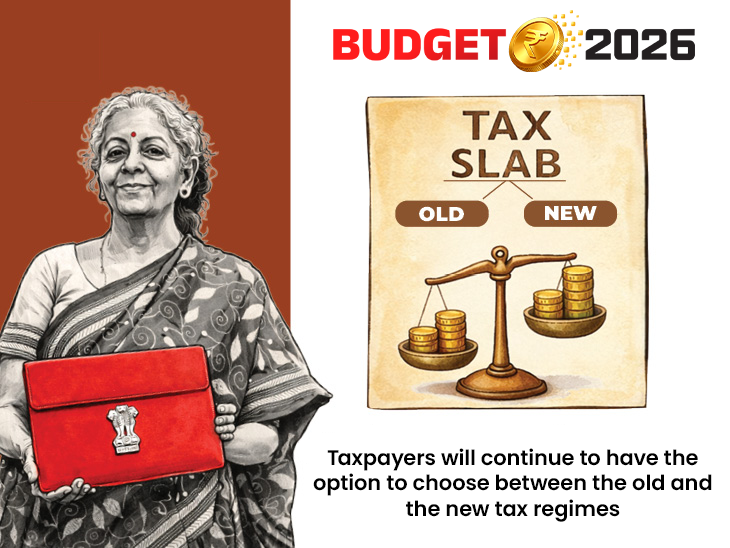
The new tax regime, introduced under Section 115BAC of the Income Tax Act, 1961, is the default regime from FY 2025-26 onwards. Individual taxpayers without business income may opt for the old regime each financial year, with the choice exercised at the time of filing the Income Tax Return.
Finance Minister Nirmala Sitharaman, presenting the Union Budget 2025, announced that there would be no income tax payable on income up to ₹12 lakh under the new regime — equivalent to an average monthly income of ₹1 lakh. For salaried taxpayers, this limit extends to ₹12.75 lakh, accounting for the standard deduction of ₹75,000. International Monetary Fund
The mechanism through which this zero-tax outcome is achieved is a tax rebate under Section 87A. Under the new regime, the maximum rebate available under Section 87A has been enhanced to ₹60,000, completely offsetting the tax liability for resident individuals with net taxable income up to ₹12 lakh. The rebate applies after tax is calculated on income — it is not an exemption — and it is not available on income taxed at special rates, such as capital gains under Sections 111A and 112A. International Monetary Fund
Under the new regime, the income tax slabs for FY 2025-26 are structured as follows: income up to ₹4 lakh attracts no tax; ₹4 to ₹8 lakh is taxed at 5 per cent; ₹8 to ₹12 lakh at 10 per cent; ₹12 to ₹16 lakh at 15 per cent; ₹16 to ₹20 lakh at 20 per cent; ₹20 to ₹24 lakh at 25 per cent; and income above ₹24 lakh at 30 per cent. Business Today
The old regime, by contrast, retains its longstanding slab structure — nil up to ₹2.5 lakh, 5 per cent from ₹2.5 to ₹5 lakh, 20 per cent from ₹5 to ₹10 lakh, and 30 per cent above ₹10 lakh — but permits taxpayers to reduce their taxable income through a range of deductions and exemptions, including those under Section 80C, 80D, HRA, and home loan interest.
For taxpayers with no significant investments or eligible expenses, the new regime’s lower slab rates, higher rebate, and reduced compliance burden make it a natural choice. The old regime remains advantageous for those who can claim substantial deductions that, in aggregate, bring their effective tax rate below what the new regime would impose. Business Today A precise break-even calculation depends on individual income, deduction profile, and filing circumstances.
Section 80C: The Core Deduction, Available Only Under the Old Regime
Under the old tax regime, Section 80C of the Income Tax Act allows a deduction of up to ₹1.5 lakh per financial year from gross taxable income. Eligible instruments include contributions to the Employees’ Provident Fund, Public Provident Fund, Equity Linked Savings Schemes, Life Insurance premiums, five-year tax-saving fixed deposits, Sukanya Samriddhi Yojana, National Savings Certificate, repayment of home loan principal, and payment of tuition fees for up to two children. Business Standard All such investments or expenditures must be made on or before March 31, 2026, to be counted in FY 2025-26.
Among 80C instruments, the principal distinctions are lock-in period and return character. ELSS mutual funds carry a three-year lock-in and market-linked returns; PPF has a 15-year tenure with the current interest rate at 7.1 per cent per annum, with the interest tax-exempt; and Sukanya Samriddhi Yojana, available for girl children below 10 years of age, offers 8.2 per cent interest per annum, also tax-exempt, with the account maturing when the girl turns 21. Business Today Five-year tax-saving fixed deposits typically offer 6.5 to 7.5 per cent, but the interest earned is taxable.
Taxpayers who hold PPF or SSY accounts should note that a minimum deposit of ₹500 per year is required to keep the account active; the March 31 deadline applies to this minimum contribution as well.
Beyond 80C: Additional Deduction Avenues
For taxpayers under the old regime who have already utilised the ₹1.5 lakh 80C limit, several supplementary provisions allow further reduction in taxable income.
Section 80CCD(1B) permits an additional deduction of up to ₹50,000 for voluntary contributions to the National Pension System Tier-1 account, over and above the ₹1.5 lakh 80C ceiling. The combined maximum from 80C and 80CCD(1B) is therefore ₹2 lakh for a taxpayer who maximises both.
Section 80D provides deductions on health insurance premiums paid. The limits are ₹25,000 for premiums covering self, spouse, and dependent children; an additional ₹25,000 where parents below 60 years are covered; and an additional ₹50,000 where parents are senior citizens. Preventive health check-up expenses up to ₹5,000 are included within these overall limits, not in addition to them.
Section 24(b) permits a deduction of up to ₹2 lakh per year on interest paid on a home loan for a self-occupied property. This is a deduction from income under the head “Income from House Property,” applicable only under the old regime.
Advance Tax and Pending Obligations
The last instalment of advance tax for FY 2025-26 was due on March 15. Taxpayers with outstanding tax liability should be aware that delay in payment attracts interest under Sections 234B and 234C of the Income Tax Act, calculated at 1 per cent per month. The Income Tax Department’s e-filing portal and annual information statement allow taxpayers to verify Tax Deducted at Source already credited against their PAN before computing any remaining liability.
For taxpayers who miss the ITR filing deadline — which for AY 2026-27 is July 31, 2026, for most salaried individuals — interest under Section 234A accrues at 1 per cent per month on unpaid tax, and a late filing fee of ₹5,000 applies for returns filed after the due date but before December 31, 2026. IMF
The Practical Decision Before March 31
For most taxpayers, the critical action before March 31 is not regime selection — that is made at the time of filing — but ensuring that any investments intended to support an old regime deduction claim are actually executed before the financial year closes. ELSS units purchased on or after April 1 will count for FY 2026-27, not FY 2025-26, regardless of intent.
Taxpayers whose aggregate deductions under the old regime — including 80C, 80D, HRA exemption, and home loan interest — amount to less than approximately ₹3.75 lakh to ₹4 lakh will in most cases find the new regime produces a lower tax outgo at current slab structures. Those with higher deduction claims should run a comparative calculation, or seek the assistance of a qualified tax professional, before the financial year closes.
Note to reader: This article presents factual information on provisions of the Income Tax Act, 1961, and Finance Act 2025 as they apply to FY 2025-26. It does not constitute financial or tax advice. Individual tax liability depends on personal circumstances; readers should consult a qualified Chartered Accountant or tax advisor before making investment or regime-selection decisions.


