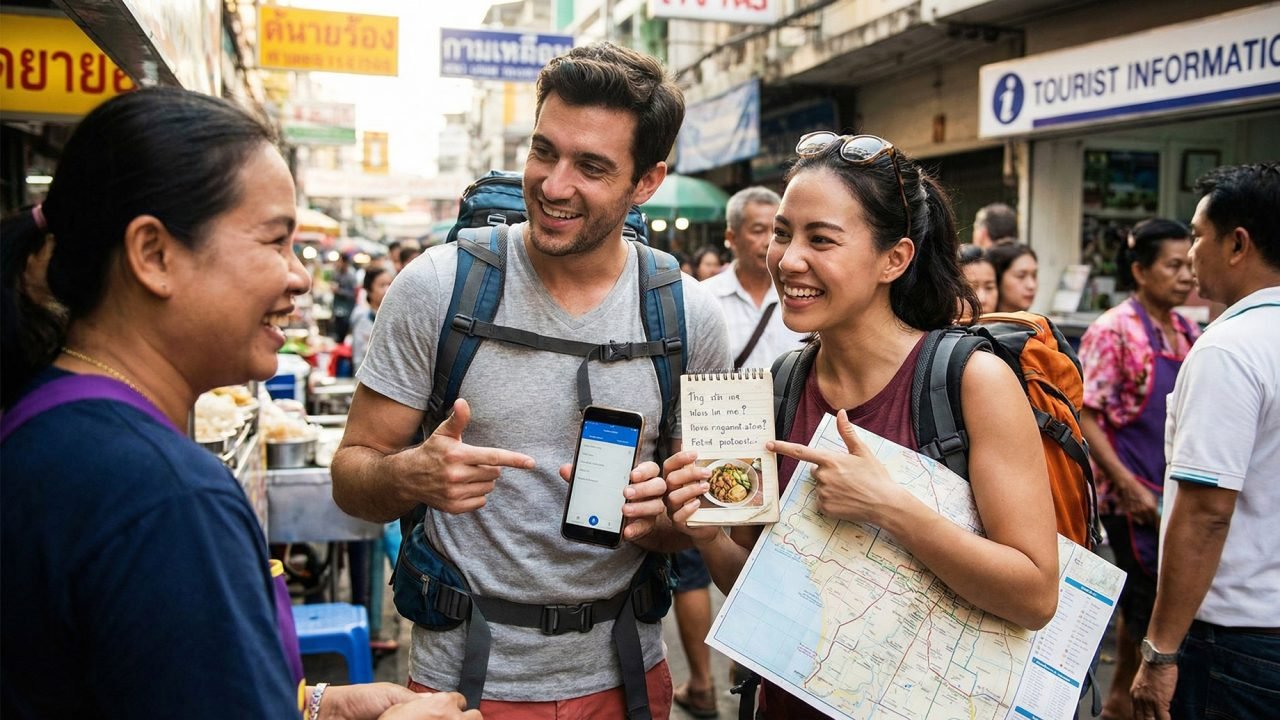


The assumption that English is sufficient to navigate most of the world is one of the most persistent myths in international travel — and one that the data does not support. Approximately 1.53 billion people worldwide speak English, according to Ethnologue’s 2025 estimates, representing just over 18% of the global population of 8.23 billion. That means roughly four out of every five people on the planet do not speak English at any functional level. For travelers venturing beyond English-dominant countries and the most heavily touristed corridors of Western Europe, the language barrier is not an inconvenience — it is a structural feature of the journey that requires deliberate preparation.
The consequences of that gap are not merely social. When travelers cannot communicate effectively, they struggle to navigate unfamiliar places, read signs and menus, and interact with locals. This leads to missed opportunities, misunderstandings, and a general sense of discomfort that can define the quality of an entire trip. Research published in the Journal of Tourism and Cultural Change in April 2025 found that while a foreign language is only a small barrier to travel intentions, technical support — in the form of translation tools — is an essential element for travel activities abroad, and can largely resolve the limitations that language barriers otherwise impose.
The tools and strategies to manage language barriers have never been more accessible. Using them effectively, however, requires understanding what each one actually does — and where it falls short.
The Verified Landscape of English Proficiency by Region
Not all non-English-speaking destinations present the same challenge. Understanding where English penetrates and where it does not allows travelers to calibrate their preparation accordingly.
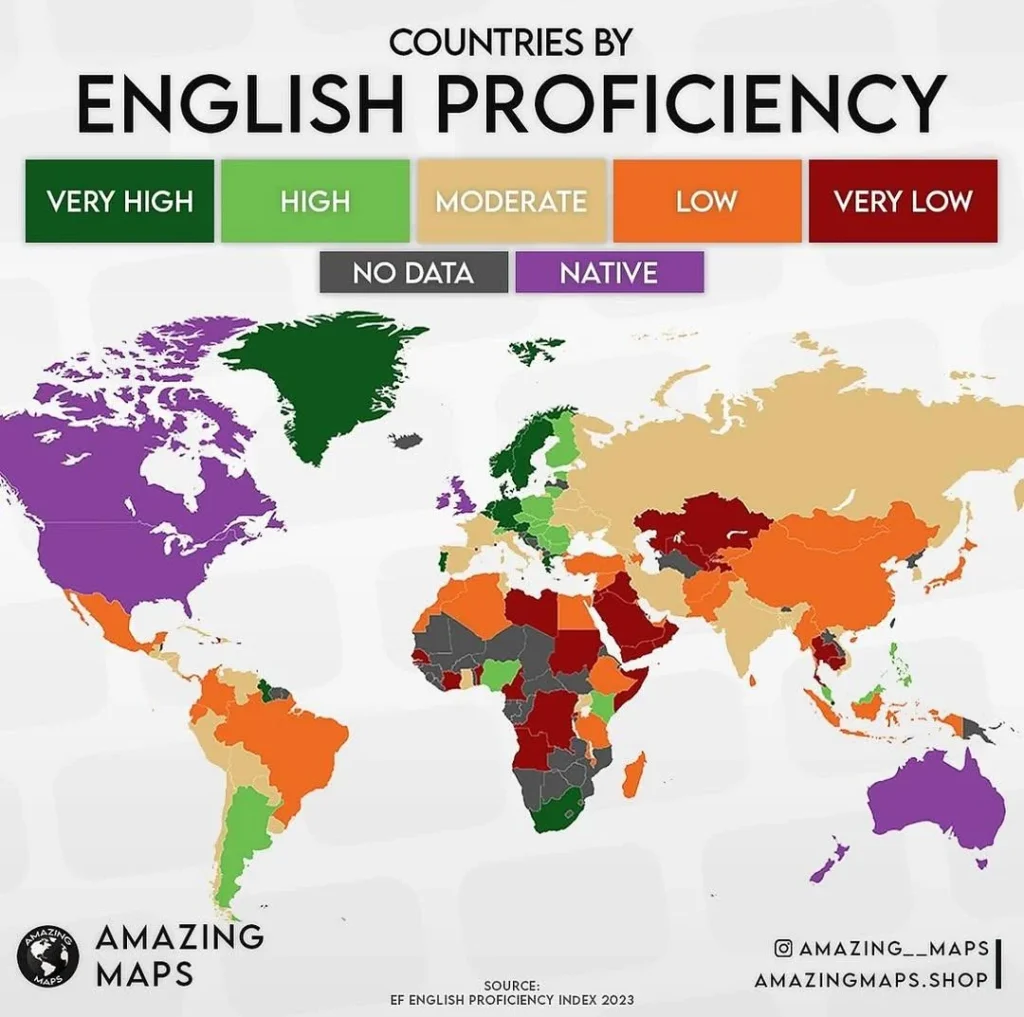
A 2024 Eurobarometer survey found that half of the European population speaks English as a second language. U.S. Travel Association Within Europe, however, the distribution is highly uneven. Northern European nations such as the Netherlands, Sweden, and Denmark rank among the highest in English proficiency globally, with widespread fluency across society. Southern and eastern European regions are improving but remain uneven. Mighty Travels
In Asia, the picture shifts considerably. Japan’s official language is Japanese, and it is estimated that approximately 30% of the population can speak English at any level — with only 2% considered fluent. In much of rural Southeast Asia, Central Asia, and large parts of Africa, English penetration at the conversational level remains limited outside urban centers and tourist infrastructure. Travelers heading to these regions without any language preparation — and without reliable translation tools — are operating at a significant disadvantage.
The Primary Tool: What Google Translate Actually Does in 2026
Google Translate has become the default first tool for most travelers encountering a language barrier. Understanding its genuine capabilities — and its documented limitations — is essential to using it correctly.
As of March 2026, Google Translate supports 249 languages and language varieties at various levels, and serves over 500 million users daily, processing more than 100 billion words per day. The platform supports text, voice, camera-based translation, and offline use across more than 50 languages when language packs are downloaded in advance.
On accuracy, the data is consistent but conditional. Google Translate’s accuracy rate varies greatly across supported language pairs — from 55% to 94% — with an overall accuracy rate of approximately 82.5%, according to a study that measured meaning preservation across multiple languages. The variance is not random. Google Translate performs well for widely used languages, often reaching over 90% accuracy, but results vary significantly for less common languages. Indie Traveller A separate report found that Google Translate made errors in up to 80% of cases when translating certain lower-resource languages including Georgian, Kurdish, Nepali, Urdu, and Uzbek — largely due to limited linguistic training data for those language pairs. Topologica
For travelers, the practical implication is that Google Translate is highly reliable for Spanish, French, German, Italian, Portuguese, and the major European languages — and considerably less reliable for less digitally resourced languages in Central Asia, parts of Africa, and some regional languages in South and Southeast Asia. Google Translate also continues to struggle with idiomatic expressions and cultural nuances, which can lead to less accurate translations in conversational contexts where literal rendering misses the intended meaning.
The camera translation feature — which allows users to point a smartphone at a sign, menu, or printed text and receive an overlay translation — functions reliably for high-resource languages and represents one of the most practically useful travel applications of the technology. Real-time conversation mode supports 45 languages within the Google Translate app, and average voice translation latency is under 2.5 seconds.
The Specialist Tools: When Google Translate Is Not Enough
For specific use cases and destinations, several alternative tools demonstrably outperform Google Translate on the dimensions that matter most to travelers.
DeepL offers the highest accuracy and most natural-sounding output for European language pairs — specifically French, German, Spanish, Italian, Dutch, and Polish — and is the preferred tool for travelers who need to translate longer written text, formal documents, or accommodation rental agreements with precision. Its significant limitation for travel use is the absence of a camera translation feature and its dependence on an internet connection.
For travelers heading to East Asia — specifically Japan, South Korea, China, and Taiwan — Papago, developed by Naver (South Korea’s dominant technology company), consistently outperforms other translation tools for Korean and Japanese, with superior cultural context handling for those specific language pairs. Travelers consistently report that Papago handles the honorific register complexity of Japanese and Korean more accurately than Google Translate, which tends to flatten formality distinctions that carry social weight in those cultures.
Microsoft Translator is the strongest option for group travel scenarios requiring real-time multilingual conversation. Its split-screen and multi-device conversation mode allows multiple participants, each speaking different languages, to communicate simultaneously — with translations displayed in each person’s chosen language in real time. Critically, Microsoft Translator’s offline language packs are available at no cost, unlike some competitors that place offline functionality behind a paid subscription.
For iPhone users with privacy concerns, Apple’s built-in Translate app processes all translations on-device when using its On-Device Mode, ensuring maximum privacy with no data transmitted to external servers. NerdWallet Language coverage is narrower than Google Translate, but for supported languages it provides a seamless, private alternative.
The Offline Imperative: Downloading Before Departure
One of the most consistent and avoidable failures in travel translation preparation is arriving at a destination without offline language packs downloaded. Internet access is unreliable or expensive in precisely the places where translation needs are most acute — rural areas, border crossings, public transport in lower-infrastructure regions, and the first hours of arrival before a local SIM card is purchased.
Google Translate and iTranslate Pro provide the most comprehensive offline features among available apps. However, camera translation and voice features typically require internet connectivity for optimal results, with offline performance somewhat reduced compared to the online version. The practical recommendation from multiple travel technology sources is consistent: download offline packs for every destination language before departure, not after landing. A typical offline language pack requires between 50 and 150 megabytes of storage — a trivial cost relative to the communication failures it prevents.
Beyond Apps: The Human and Cultural Layer
Technology addresses the functional dimension of language barriers — signs, menus, directions, transactions. It does not address the relational dimension, which is where the most meaningful travel experiences typically occur and where the most significant misunderstandings can also arise.
Learning essential words and phrases in the local language — including greetings, expressions of thanks, and basic requests — shows an effort to connect with locals that is recognized and appreciated across cultures. Common phrases in the local language can also prove crucial in emergencies, when translation app access may not be reliable or immediate. The investment of one to two hours of basic phrase learning before departure — using Duolingo, Babbel, or a phrasebook — provides a foundation that technology alone cannot replicate.
Cultural communication extends beyond vocabulary. Using plain language and short sentences helps convey messages more clearly in cross-language interactions. Speaking slowly and enunciating clearly improves comprehension even when pronunciation is imperfect, and non-verbal communication — gestures, pointing, showing images on a phone screen — provides a reliable fallback when verbal communication reaches its limits.
Physical phrasebooks retain relevance precisely because they function without battery, connectivity, or screen glare — conditions that are common in exactly the remote, high-interest destinations where digital tools are most likely to fail. For travelers heading to destinations with limited English penetration and unreliable infrastructure, a pocket phrasebook is not an anachronism. It is a contingency tool with zero failure modes.
The Honest Limitation of Machine Translation in High-Stakes Situations
For the vast majority of daily travel interactions — ordering food, asking for directions, purchasing transport tickets, reading signage — current translation technology performs reliably enough to resolve communication barriers effectively. The documented accuracy rates for major language pairs support this assessment.
The limitation becomes consequential in high-stakes scenarios: medical emergencies, legal situations, police interactions, and complex negotiations. Google Translate is not suitable for professional, legal, or medical purposes, where even a grammatically correct translation that misses nuance or alters tone can lead to misunderstandings with serious consequences. In these situations, seeking a human interpreter — through a hotel concierge, an embassy contact, or an on-demand interpreter service — is not an abundance of caution. It is the appropriate calibration of a tool’s known limitations against the stakes involved.
The gap between what machine translation can do in 2026 and what it could do a decade ago is substantial. The gap between what it can do and what human linguistic and cultural competence provides remains real, measurable, and consequential in precisely the moments when communication accuracy matters most.