
Two of the most consequential regulatory events in India’s corporate sustainability landscape took effect simultaneously in early 2026: the European Union’s Carbon Border Adjustment Mechanism entered its definitive enforcement phase on January 1, directly exposing Indian steel and aluminium exporters to carbon-linked cost increases for the first time, while India’s own Carbon Credit Trading Scheme moved into its first compliance year, imposing legally binding emission intensity targets on approximately 740 industrial entities across nine sectors.
For large Indian companies, the convergence of external trade pressure and domestic regulatory obligation has made sustainability reporting and carbon management matters of financial consequence — not just of corporate communications.
The EU Carbon Tax: A Cost That Has Now Arrived
The EU Carbon Border Adjustment Mechanism, after a transitional reporting-only phase that ran from October 2023 through December 2025, entered its definitive regime on January 1, 2026. From that date, EU importers of CBAM-covered goods — cement, iron and steel, aluminium, fertilisers, electricity, and hydrogen — are required to purchase CBAM certificates corresponding to the embedded carbon emissions of goods they import. The revenue from these certificates accrues to the EU’s general budget.
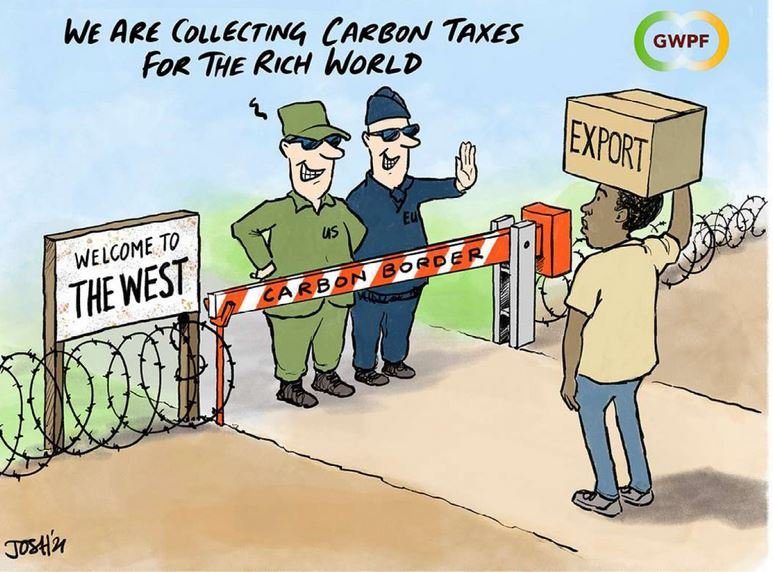
For India’s exporters, the practical consequence is immediate. The Global Trade Research Initiative has estimated that Indian steel and aluminium exporters may need to absorb a price reduction of 15 to 22 per cent to compensate EU buyers for the cost of CBAM certificates. The World Bank India’s iron and steel sector constitutes approximately 90 per cent of the country’s CBAM-exposed exports to the EU, with total CBAM commodity exports — steel, aluminium, fertilisers, and cement — accounting for roughly 0.2 per cent of India’s GDP.
The steel sector faces the starkest adjustment. Indian steel producers are characterised by higher carbon emission intensities than their EU counterparts, and industry analyses have projected a decline in profit margins of between $65 and $160 per metric tonne of steel exported to the EU over the period 2026 to 2036, with overall profitability of Indian steel companies exporting to Europe projected to fall by 25 to 30 per cent post-CBAM implementation. United Nations
Finance Minister Nirmala Sitharaman has publicly described CBAM as unilateral, arbitrary, and a trade barrier, stating that such measures undermine energy transition efforts. India has formally conveyed its concerns to the European Union. The World Bank The criticism reflects a broader developing-economy argument that CBAM imposes carbon costs without accounting for different levels of industrial development and historical responsibility for emissions — a dispute that has not been resolved through negotiations.
A modelling exercise by the Centre for Social and Economic Progress estimated that, in a pure CBAM scenario, India’s GDP would decline by between 0.02 and 0.03 per cent as carbon tax revenues flow to the EU rather than being retained domestically. However, a hybrid scenario incorporating a domestic carbon tax — with part of the revenue retained in India — was projected to produce a marginal GDP gain in later years, as domestic revenue offsets the external cost burden. Worldbank
India’s Own Carbon Market: Compliance Has Begun
The domestic regulatory response to CBAM, and to India’s broader climate commitments, has taken concrete form through the Carbon Credit Trading Scheme. In October 2025, the Ministry of Environment, Forest and Climate Change issued finalised greenhouse gas emission intensity targets for all nine sectors to be covered in the first compliance phase of the CCTS. These included aluminium, cement, chlor-alkali, pulp and paper, iron and steel, fertilisers, petroleum refining, petrochemicals, and textiles. Approximately 740 industrial entities now have legally binding emission intensity targets for FY2025-26 and FY2026-27, using FY2023-24 as the baseline year. The scheme is expected to cover over 700 million tonnes of CO₂ equivalent, placing India among the world’s largest emissions trading systems by coverage. The CSR Journal
Under the compliance mechanism, entities that reduce their emission intensity below their assigned targets earn Carbon Credit Certificates, which can be traded on India’s power exchanges. Entities that fail to meet targets must purchase and surrender certificates to ensure compliance. The Indian Carbon Market — encompassing both the compliance mechanism and a voluntary offset framework — is expected to be officially launched by mid-2026, according to an announcement by Power Minister Manohar Lal Khattar at the Prakriti 2025 International Conference on Carbon Markets.
Proponents of the CCTS have argued that a functioning domestic carbon price serves a dual purpose: it advances India’s Nationally Determined Contributions under the Paris Agreement — including a 45 per cent reduction in emission intensity by 2030 relative to 2005 levels — and provides Indian exporters with a mechanism to demonstrate carbon pricing compliance to EU authorities, potentially reducing their CBAM certificate burden. Without a recognised domestic carbon price, exporters pay the full CBAM cost to Brussels; with one, they may be able to offset a portion against payments already made domestically. Business Today
SEBI’s Disclosure Regime: From Reporting to Verification
The mandatory sustainability disclosure framework for listed companies has been progressively tightened since its introduction. SEBI’s Business Responsibility and Sustainability Reporting framework, mandatory for India’s top 1,000 listed companies by market capitalisation since FY2022-23, requires comprehensive disclosures across approximately 140 environmental, social, and governance parameters. In July 2023, SEBI introduced BRSR Core — a subset of 49 key performance indicators covering absolute and intensity-based greenhouse gas emissions, renewable energy share, water use, and gender diversity — with third-party assessment requirements phased in by company size. The BRSR Core glide path requires mandatory third-party assessment to extend to all top 1,000 listed firms by FY2026-27. International Monetary Fund

In December 2024, SEBI issued Industry Standards on Reporting of BRSR Core, developed in collaboration with ASSOCHAM, FICCI, and CII. The standards specify how companies should calculate greenhouse gas emission intensity ratios — including guidance on Purchasing Power Parity adjustments and output-based intensity calculations for Scope 1 and 2 emissions — and are applicable from FY2024-25 onwards. Business Today
Separately, emissions reporting under the CCTS compliance carbon market is enforceable from FY2026 onwards for obligated entities. Several regulated entities covered by CCTS also fall within BRSR filing requirements, creating overlapping but not yet fully harmonised disclosure obligations across two regulatory frameworks.
The Investment Dimension
The regulatory tightening is accompanied by a broader shift in how capital markets price ESG performance. Bloomberg Intelligence has projected that global ESG-labelled assets under management could exceed $50 trillion by 2025-26, representing approximately one-third of projected total global assets under management — though this figure reflects assets in funds that use ESG criteria in their selection process, not assets in companies with verified sustainability performance, and should be interpreted accordingly.
SEBI has also mandated that ESG mutual funds invest a minimum of 65 per cent of their assets under management in BRSR-compliant companies, creating a direct link between a company’s regulatory disclosure performance and its inclusion in dedicated ESG investment vehicles. International Monetary Fund For the top 1,000 listed Indian companies, exclusion from ESG fund eligibility now carries a measurable cost of capital consequence.
The Adjustment Ahead
India’s large industrial companies face a sustainability transition that is no longer voluntary or reputational in character. The CBAM has converted carbon intensity into a direct export cost for companies in steel, aluminium, cement, and fertilisers. The CCTS has imposed binding emission targets on approximately 740 entities with consequences for non-compliance. SEBI’s BRSR framework is moving from disclosure to verified assurance. And investor allocation frameworks are beginning to price ESG performance into capital costs.
The companies best positioned for this transition are those that have already invested in energy efficiency, renewable procurement, and emissions monitoring infrastructure. Those that have not face the prospect of adjusting to multiple simultaneous regulatory demands — domestic and international — without the benefit of a transition runway that the phased-in frameworks were designed to provide.


