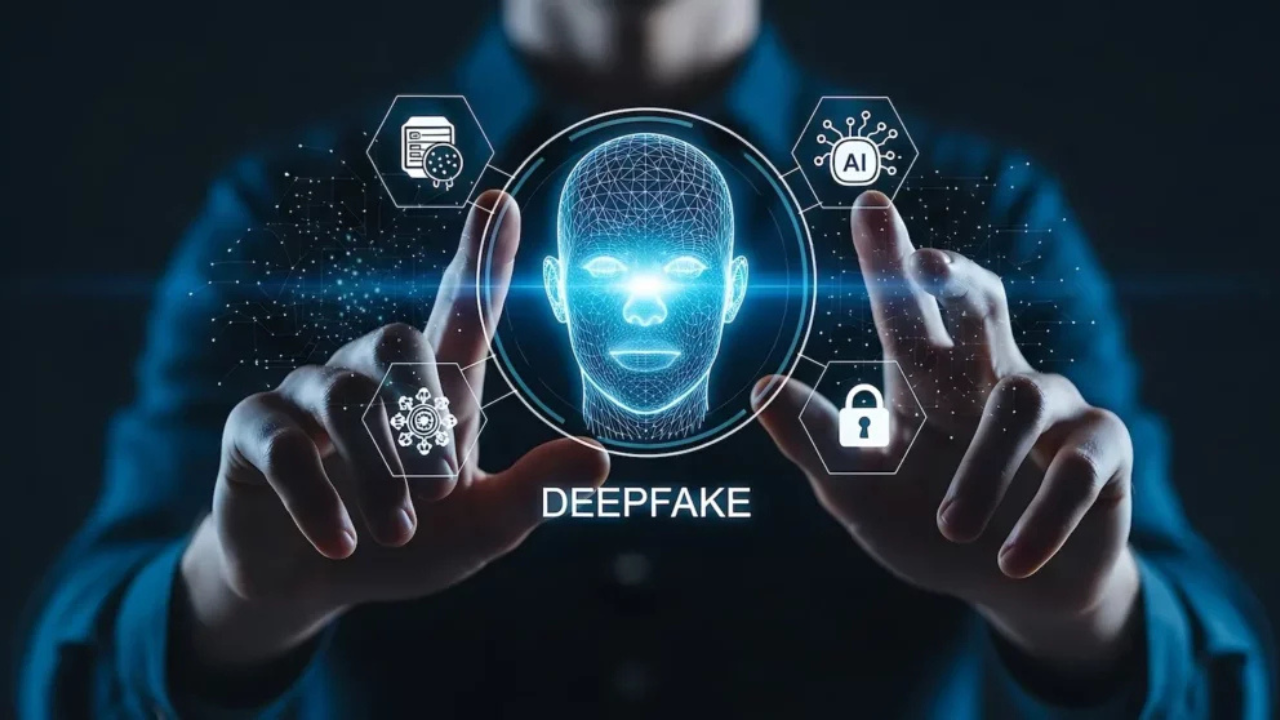


A decent consumer-grade graphics card, a widely available open-source AI model, and approximately three seconds of a person’s voice from a social media post. That is the current cost of entry for creating a convincing synthetic video of a real person saying something they never said, in their own voice, with their own face. The technology that once required film industry budgets and specialist visual effects teams has been democratized so thoroughly that it is now accessible to anyone with a moderately powerful laptop and basic technical curiosity. In 2026, deepfakes are not a theoretical future threat — they are a present operational reality affecting individuals, businesses, elections, and the information environment that democratic societies depend on to function. Understanding how this technology works, how it is being regulated, and — most practically — how to detect it, has become a civic and personal necessity.
What Deepfakes Are and How They Are Made
Deepfakes are synthetic media — video, audio, or images — created using artificial intelligence to make a real person appear to say or do something they did not. The term originates from “deep learning” and “fake,” and first emerged as a category of concern in 2017 when face-swapping algorithms began circulating on online platforms. Originally developed for creative purposes such as enhancing films or creating digital characters, deepfake technology has become increasingly accessible. Today, even basic technical skills and free tools can generate convincing deepfakes.
Creating a deepfake takes seconds and costs pennies. Proving it is fake can require hours of forensic analysis and specialized expertise. A decent gaming PC with an RTX 4090 can generate 4K deepfakes at 50 frames per second with synchronized audio. Models like LTX-2 are now open source — anyone can download and run them on consumer hardware. Someone with basic technical skills can clone a person’s voice from a three-second audio clip harvested from an Instagram story. Detection is getting harder, not easier.
The scale of harm is no longer hypothetical. Non-consensual deepfake pornography — synthetic intimate images of real people created without their knowledge or consent — has proliferated across platforms. Voice-cloned fraud has resulted in documented financial losses when employees transferred funds after receiving AI-generated audio of a superior’s voice authorizing the transaction. Political deepfakes targeting electoral candidates circulated in multiple national election campaigns in 2024 and 2025. The technology does not distinguish between high-profile targets and private individuals.
The Regulatory Response: Legislation Moves at Different Speeds
The most significant piece of US legislation targeting deepfakes signed into law in 2025 is the TAKE IT DOWN Act. According to the law, if someone finds an explicit deepfake of themselves, online platforms are now required by federal law to remove it within 48 hours of a report. By May 2026, any platform that hosts user content and could contain intimate images must have a clear notice-and-takedown system in place.
The DEFIANCE Act, passed unanimously by the US Senate in January 2026, would establish a federal right of action allowing victims of non-consensual, sexually explicit deepfakes to sue creators, distributors, and those who knowingly host such content. Statutory damages could reach up to $150,000, or $250,000 when linked to sexual assault, stalking, or harassment. The bill has advanced to the House of Representatives.
In Europe, the regulatory framework is more comprehensive. The EU AI Act regulates deepfakes through transparency requirements, mandatory labeling, and technical obligations. The Digital Services Act imposes additional transparency obligations on platforms, requiring identification and labeling of manipulated content and cooperation with fact-checkers and researchers. In early 2026, the European Commission published the first draft of a Code of Practice on Transparency of AI-Generated Content, expected to be finalized in May to June 2026. The Code provides guidance on labeling, watermarking, metadata, and technical measures to enable users to identify AI-generated and manipulated content.
China has implemented rules mandating the labeling of deepfake content and, under its Deep Synthesis Provisions which took effect in January 2023, requires deepfake service providers to identify users and review their content. The fragmented global regulatory landscape means that a deepfake legal in one jurisdiction may violate laws in another — a challenge that has no clean technical solution.
The Detection Arms Race
The real-world effectiveness of detection technologies, often claimed to have over 90% accuracy, is still unproven at scale according to UC Berkeley experts. Creators of deepfakes exploit the very tools designed to detect them, creating an ongoing arms race where each improvement in detection capability drives corresponding improvement in generation quality.
Key technical mitigation strategies include AI-powered detection, provenance tracking, and watermarking. The Coalition for Content Provenance and Authenticity (C2PA) has established media authentication standards that embed cryptographic provenance data into digital files at the point of creation, allowing downstream verification of whether content originated from a trusted source and whether it has been modified. Google applies SynthID watermarking to all outputs from its Veo video generation model. Adobe’s Content Credentials system, integrated into Adobe’s creative tools, attaches verifiable metadata to AI-generated content.
These technical standards work when content remains in systems that support them. They break down when content is downloaded, re-uploaded, screenshotted, or shared through platforms that strip metadata. The provenance infrastructure is being built, but its effectiveness depends on near-universal platform adoption that does not yet exist.
How to Detect a Deepfake: A Practical Guide
The old detection advice — look for blurry edges, check if lighting seems off, count the fingers — has been largely invalidated by the current generation of AI video models. Modern deepfakes have resolved most of the obvious artifacts that characterized earlier systems. The reliable detection signals in 2026 are subtler.
Watch the eyes. Real humans blink spontaneously every 2 to 10 seconds. AI-generated faces often stare without blinking for unnaturally long periods. When they do blink, it looks mechanical, lacking the subtle muscle movements around the eyes that accompany genuine blinks. Observe head movements — most deepfake models train primarily on front-facing data. When a synthetic face rotates to a full profile, the rendering can break down: the ear may blur, the jawline may detach from the neck, glasses may appear to melt into skin. Listen for the breath — human speech includes natural breathing patterns, and AI audio often inserts breath sounds at syntactically wrong moments or loops identical breath sounds. If someone is supposedly speaking outdoors but the audio sounds studio-clean, that discrepancy is a signal.
Behavioral verification is the most reliable check when technical indicators are ambiguous. Ask the person on video to perform an unexpected action — turn fully to one side, hold up both hands simultaneously, or respond to a real-time question that could not have been anticipated in advance. Individuals can limit public availability of long-form personal audio and video, monitor platforms for unauthorized use of their likeness, and verify suspicious requests for money or sensitive data through a second communication channel entirely separate from the one through which the request arrived.
For information consumers evaluating whether a piece of video content is authentic, the most reliable approach is cross-reference: has the same content been reported by multiple independent news organizations? Does the video appear on the subject’s verified official accounts? Does the claimed context match verifiable facts about that person’s known schedule and location? A deepfake optimized for emotional impact — outrage, fear, or urgency — should itself be treated as a flag for heightened scrutiny. Build verification protocols into your personal and professional life. Question what you see and hear, especially if it triggers a strong emotional response. Stay skeptical.
The honest assessment of where deepfake technology stands in 2026 is uncomfortable: the tools to create convincing synthetic media are more accessible than the tools to reliably detect it, the regulatory frameworks are incomplete and uneven across jurisdictions, and the detection arms race has no foreseeable resolution. What individuals, organizations, and societies can do is invest in media literacy, support technical provenance standards, demand platform enforcement, and treat any emotionally compelling digital content that cannot be independently verified as potentially synthetic until proven otherwise.