

The nature of the cybersecurity threat facing ordinary users changed qualitatively in 2025 and 2026. The tools required to impersonate a person’s voice, generate a convincing phishing email tailored to their specific work context, or bypass multi-factor authentication have become accessible at low cost and are now in active use by criminal organizations. The surface area of individual digital identity has expanded simultaneously: more accounts, more devices, more services holding financial, health, and personal information. Understanding how to protect yourself in this environment requires no specialist knowledge — but it does require deliberate habit formation and an accurate picture of where the real risks lie.
The Threat Landscape: What Has Changed
By 2026, it is broadly accepted within the cybersecurity industry that breaches are no longer primarily about “getting in” through firewalls — they are about logging in. Cyber adversaries have learned that exploiting human trust, onboarding workflows, help desks, and identity recovery processes is far more reliable than exploiting software vulnerabilities.
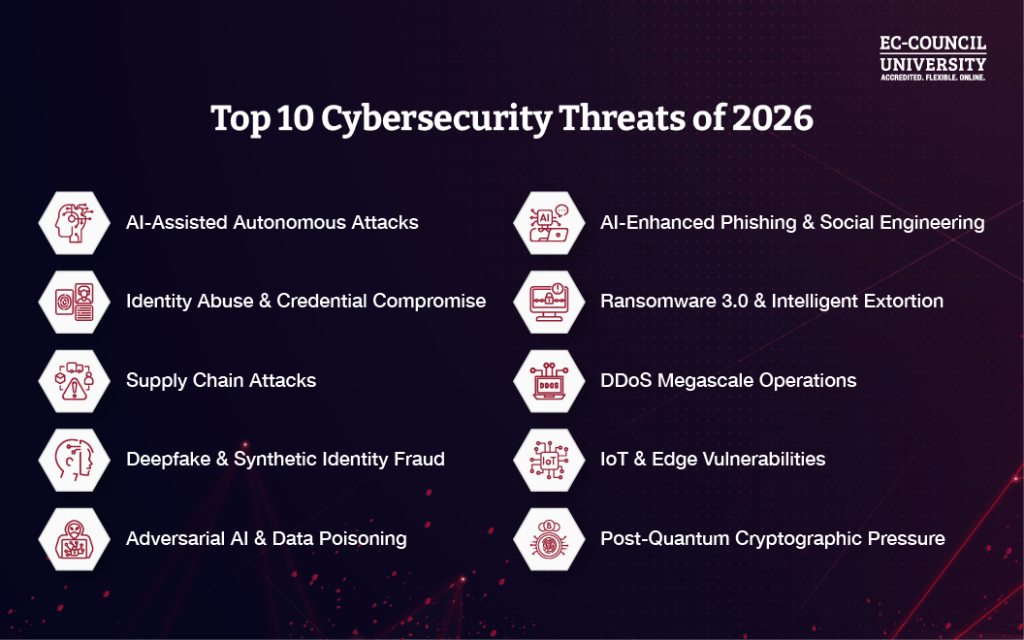
Attackers routinely use generative AI to scale highly personalized phishing, deepfake-enabled social engineering, and real-time voice impersonation attacks. In a striking demonstration, a journalist recently cloned her own voice using an inexpensive AI tool and successfully fooled her bank’s phone system.
Social engineering threats have become more sophisticated, personalized, and harder to detect as threat actors integrate AI into their attacks. AI-powered multi-channel attacks employ multiple communication channels in a coordinated manner — for instance, a highly personalized phishing email followed by a phone call using AI-generated deepfake audio impersonating an executive or trusted individual.
Ransomware, which encrypts a victim’s data and demands payment for its return, has evolved. Advanced ransomware now employs double extortion: attackers leak sensitive information if payment is not made, creating pressure beyond mere data loss. MFA bypass techniques including SIM swapping, session hijacking, and MFA fatigue attacks — in which users are bombarded with authentication requests until they approve one inadvertently — have become standard tools in the attacker’s playbook.
The Foundation: Password Management and Multi-Factor Authentication
The single highest-impact action any individual can take for their digital security is using a password manager and enabling multi-factor authentication on every account that supports it. The US Cybersecurity and Infrastructure Security Agency (CISA) lists MFA as a top recommended protective step, noting that it prevents unauthorized account access by requiring a second verification method even when a password has been compromised.
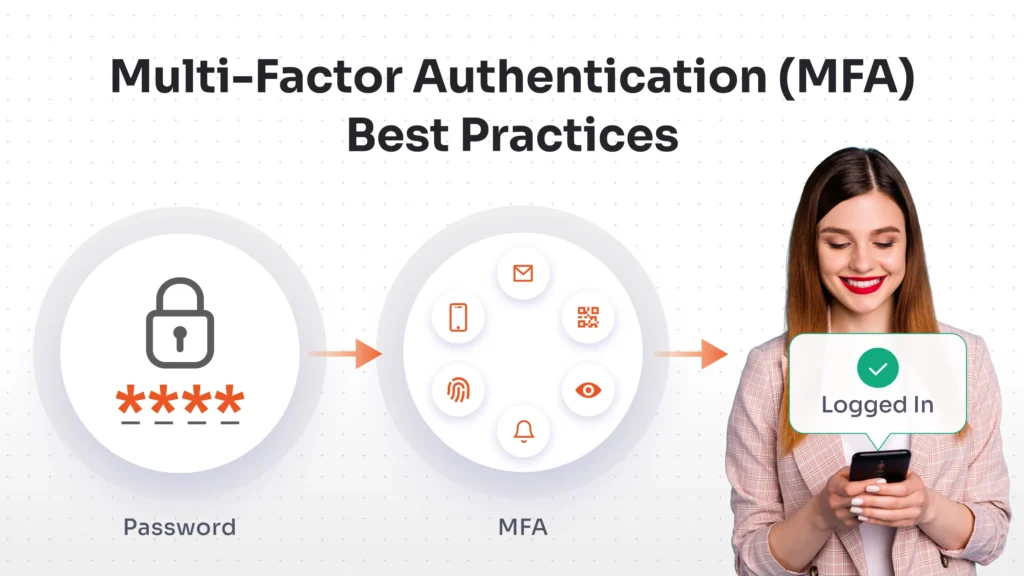
Passkeys, authenticator apps, and hardware security keys protect accounts from 99.9% of takeover attempts through multi-factor authentication. A layered approach across authentication, device management, network security, and identity monitoring is the framework that defines effective personal cybersecurity in 2026.
A password manager generates and stores unique, complex passwords for every account, eliminating the dangerous practice of password reuse — the single largest contributor to credential compromise. When one service is breached and passwords are exposed, attackers systematically try those credentials on hundreds of other services in a process called credential stuffing. Unique passwords eliminate this attack vector entirely.
Passkeys, a newer authentication standard supported by major technology platforms, represent the most phishing-resistant option currently available. Unlike passwords, a passkey cannot be stolen through a phishing site — it is cryptographically bound to the specific website or service for which it was created, and never leaves the user’s device.
Practical Steps Every Person Should Take
Securing a home network requires enabling WPA3 encryption on the router, changing default manufacturer passwords, and segmenting IoT devices on a separate network using VLANs. Firmware updates for routers and smart devices should be applied promptly. Disabling UPnP reduces network exposure to external threats.
Data backup follows the 3-2-1 rule: maintain three copies of important data, across two different storage mediums, with one copy stored offline or offsite. This structure means a ransomware attack that encrypts one copy cannot simultaneously destroy all copies. Backup integrity should be verified periodically, not merely assumed.
Credit freezing and dark web monitoring are increasingly recommended for individuals as well as organizations. Regular credit freezes prevent unauthorized financial accounts from being opened in a victim’s name. Dark web monitoring alerts users when their credentials appear in breach datasets, enabling rapid password changes before attackers exploit the information.
For email, the most important protective habit is verification before action. Phishing emails in 2026 exploit urgency, emotional manipulation, and fabricated authority — an email appearing to come from a bank, employer, or government agency instructing immediate action on a financial or account matter should be verified through a channel independent of the email itself before any links are clicked or attachments opened. Hovering over links to inspect the actual destination URL before clicking remains a reliable first check.
The Deepfake Problem and Voice Verification
The emergence of accessible AI voice cloning creates a specific new risk: receiving a phone call that sounds exactly like a known person — a family member, a colleague, or an official — making a request. Organizations are advised to establish pre-agreed code words with trusted contacts to verify identity in high-stakes communications, particularly financial transactions. Individuals can adopt the same practice with family members for verifying emergency requests.
Bank and financial institution phone systems that rely on voice recognition for authentication are increasingly vulnerable. Customers should inquire about their financial institutions’ authentication policies and, where possible, opt for app-based or token-based authentication rather than phone-based voice verification.
Keeping Software Updated
The most exploited vulnerabilities are those for which patches already exist but have not been applied. Enabling automatic updates across all devices — operating system, applications, and firmware — closes known security gaps without requiring the user to track update cycles manually. Devices that have reached end-of-life status and no longer receive security updates from manufacturers represent elevated risk and should be replaced.
The 2026 cybersecurity environment is more technically sophisticated than its predecessors, but the most effective defenses remain fundamentally behavioral: unique passwords, enabled MFA, skepticism toward unsolicited communications, and timely software updates. These habits collectively address the vast majority of threats that target ordinary individuals, before more advanced protective measures become necessary.