
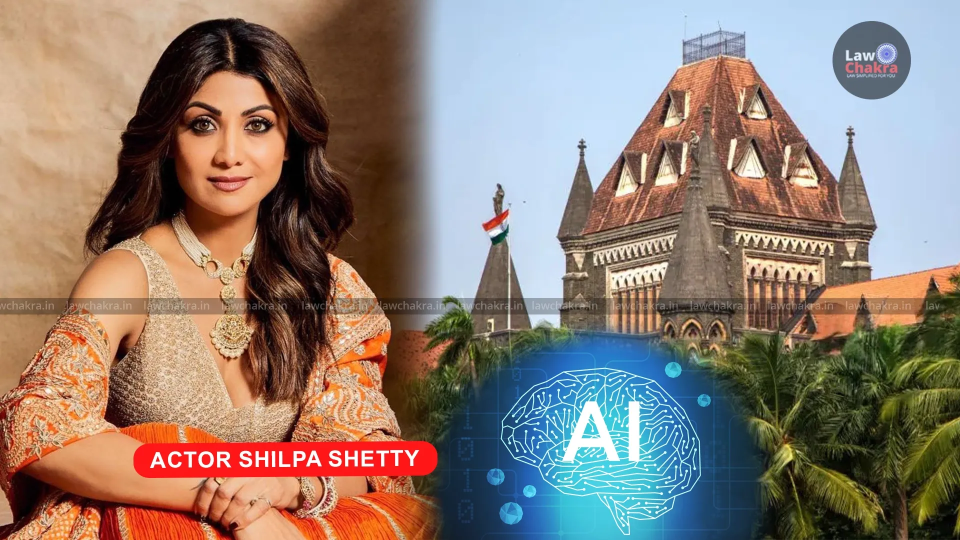
Five days ago, in a Bombay High Court courtroom, Justice Sharmila Deshmukh asked a question that cut to the centre of one of the most consequential legal debates in India’s entertainment industry. The case before her — Shilpa Shetty Kundra v. getoutlive.in & Ors — concerned AI platforms permitting users to simulate conversations with the actor’s digital replica. The judge’s question was direct: without the permission of the personality, can you use an AI to chat with anybody, in any manner?
No one in the room offered a satisfying answer. That absence of an answer is precisely the problem.
What Is Happening in Court
The Bombay High Court raised significant questions about the legality of AI tools that simulate celebrity personalities without consent, during the hearing of a personality rights suit filed by Shilpa Shetty Kundra. The matter, titled Shilpa Shetty v. getoutlive.in & Ors, concerns the alleged misuse of the actor’s image, voice, and likeness through morphed visuals, deepfake content, and AI-generated interactions. Justice Deshmukh questioned how online platforms could permit users to have a simulated chat with an AI version of a celebrity without obtaining consent from the individual concerned. CBT News
This was not the first intervention in the case. In December 2025, a vacation bench had already ordered the immediate takedown of morphed and AI-generated content misusing Shetty’s likeness across platforms. On March 5, the court considered broader reliefs sought by the actor to restrain more than 30 platforms — including AI services and e-commerce websites — from hosting unauthorised content. Counsel for Google, Tenor, and an AI chatbot entity submitted that infringing URLs had been removed upon notice.
The Shetty case does not stand alone. It arrives at the apex of a wave of personality rights litigation in Indian courts that has been building since 2023, each case adding another brick to a legal architecture that India’s legislature has not yet formally constructed.
The Cases That Built the Precedent
In Arijit Singh v. Codible Ventures LLP and Others in 2024, the Bombay High Court specifically addressed the use of AI tools to synthesise artificial recordings of Singh’s voice — including the creation of AI models that mimic the singer, the conversion of text and speech into his voice, and unauthorised song creation. The judgment marked the first Indian ruling directly addressing the misuse of generative AI tools in the context of intellectual property and personality. In Jaikishshan Kakubhai Saraf alias Jackie Shroff v. The Peppy Store & Ors in 2024, the court restrained defendants from exploiting the actor’s personality rights through AI and other technologies after an AI chatbot was found to be using attributes of his persona without consent. CNBC
A string of 2025 rulings has reinforced this trajectory. The Delhi High Court granted extensive injunctions in Abhishek Bachchan v. Bollywood Tee Shop, protecting the actor from fake AI videos. Karan Johar, Akkineni Nagarjuna, Sadhguru, Asha Bhosle, Sunil Shetty, and others have each secured relief from Indian courts, with the Bombay High Court explicitly recognising in the Sunil Shetty matter that personality rights are grounded in Article 21 of the Constitution — the right to dignity and privacy — alongside moral rights under the Copyright Act. CNBC
The Bachchan family’s suits against Google and YouTube are among the most high-profile in this series, containing hundreds of links and screenshots of alleged AI-generated content described as egregious, sexually explicit, or fictitious. In September 2025, the court ordered 518 specifically listed links and posts to be taken down, finding that the content caused financial harm and damaged dignity and goodwill.
What the Courts Are Working With — and What They Are Missing
What marks this legal moment as particularly significant is the emerging recognition of non-financial and dignity-based harms in cases of AI-enabled misuse. Indian courts are starting to recognise that digital identity is as integral to personhood as the physical body. Interim injunctions restraining the misuse of celebrity voices, AI-fabricated endorsements, and sexualised deepfakes signal that identity is now being read as a legal asset deserving protection against technological manipulation. India, however, lacks a dedicated statute on personality or publicity rights.
That absence forces judges to improvise across three separate legal instruments simultaneously: the Copyright Act’s sound recording protections under Section 14, Article 21’s constitutional guarantee of dignity and privacy, and the emerging body of case law interpreting what “personality” means as a commercial and personal asset in the age of synthetic media. Each case adds precedent; none of them provides the comprehensive statutory framework that would give both plaintiffs and defendants clear rules before litigation begins.
The Arijit Singh case, documented by WIPO as establishing the first Indian judgment on generative AI and intellectual property in music, illustrated the central tension: companies building AI voice products relied on the argument that the training data — recordings of Singh’s voice from publicly released music — was publicly available. The court’s response to that argument, in granting the interim relief, effectively rejected the premise that public availability of data confers a licence to commercialise the resulting synthetic identity.
The Industry’s Dual Response
The entertainment industry is responding along two parallel tracks. The first is legal aggression — filing suits, securing dynamic injunctions requiring platforms like YouTube and Instagram to remove infringing content within 48 hours of notification, and seeking not just injunctions but the deletion of training models containing a celebrity’s data. The second track is commercial adaptation.
AI voice cloning is already in active commercial use in the Indian film industry — specifically for dubbing, where the texture of a star’s voice can be applied to the performance of a dubbing artist to produce regional language versions that sound like the original actor. Dubbing artists are watching their position in the production chain erode, with producers already raising arguments that if an AI can replicate a star’s voice, the compensation to the artist who provided the underlying performance should decrease. Voice artists have begun asserting, publicly, that their voice is their intellectual property — a statement that reflects an industry arriving at the same conclusion the courts have been reaching, from the other direction.
At the legislative level, a private member’s Artificial Intelligence Ethics and Accountability Bill introduced in Parliament in 2025 proposes a statutory ethics committee, transparency requirements, and fines of up to ₹5 crore for misuse — including misuse of AI in unauthorised surveillance and the deployment of AI systems that exploit personality without consent. India’s AI Governance Guidelines, issued in 2025, address accountability and transparency but are not currently legally enforceable.
What Justice Deshmukh’s Question Actually Means
The judge’s question on March 5 — can you use AI to chat with anybody, in any manner, without permission — was rhetorical in the sense that she already knew the answer she was inclined toward. But it was also genuinely open in the sense that no statute yet tells her what the remedy must be, what the liability threshold should be, or how to quantify the harm of simulating a conversation that never happened between a user and a person who never agreed to participate.
The broader significance of this litigation is what it reveals about a legal system being compelled to respond to new modes of harm and representation faster than the legislature can act. AI-generated media has destabilised the boundaries between the real and the synthetic. The question of who controls a digital identity — and what happens when that control is taken without permission — is not abstract in 2026. It is being litigated, week by week, in the courts of Mumbai and Delhi.
The answer is arriving case by case. It is arriving too slowly for everyone it affects.
All case details are sourced from Bombay High Court and Delhi High Court official records as reported by Bollywood Hungama (March 5, 2026), WIPO Magazine, SCC Online, Chambers and Partners India AI Guide 2025, The Hollywood Reporter, CyberNews, and LSE Media Policy Blog. The Shilpa Shetty v. getoutlive.in & Ors matter is an ongoing proceeding; no final judgment has been delivered as of March 10, 2026. This article covers developing legal proceedings and does not represent legal advice.


