
A robot wrapped around your legs just made hiking feel effortless at CES 2026. Now athletes want to know: is this the future of human performance, or the end of fair competition?
AI-powered exoskeletons demonstrated at this month’s Consumer Electronics Show in Las Vegas delivered something that sounded impossible until you strapped one on—machines that amplify human strength without feeling like machines at all. Reviewers described the sensation as supernatural: climbing stairs that suddenly required no effort, running with legs that never seemed to tire.
The technology works through sensors analyzing your movements 1,000 times per second, predicting what you’ll do next, and delivering motorized assistance before you even realize you need it. It’s like having a second set of muscles that activate precisely when yours would start to fail.
“I’ve tested a lot of wearable tech,” said Marcus Chen, a sports technology journalist who tried the Dnsys X1 model at CES. “This was different. I wasn’t controlling a robot. The robot was anticipating me. After five minutes I forgot I was wearing it.”
That seamless integration comes from artificial intelligence systems trained on millions of walking and running patterns. The exoskeletons don’t just react to your movements—they predict them.
Vigx unveiled its π6 model at CES with an 800-watt motor and terrain analysis software that adjusts assistance based on whether you’re climbing gravel, navigating stairs, or sprinting on pavement. The system processes camera feeds and pressure sensors to understand what’s ahead, not just what’s happening now.
Dnsys demonstrated two models that generated immediate buzz. Their X1 walking assist and Z1 running variant both fold into backpack-size units weighing under five kilograms. Tests showed 26% reduction in muscle fatigue during extended use—a number that made endurance athletes take notice.
That’s where things get complicated.
These devices weren’t designed for professional sports. Most manufacturers position exoskeletons as mobility aids, industrial tools, or recreational equipment for aging hikers who want to keep exploring mountains. But the performance gains are too significant to ignore.
“You’re basically giving someone superhuman endurance,” said Dr. Sarah Williams, a biomechanics researcher at Stanford who wasn’t involved with the commercial products. “A 26% reduction in fatigue could mean the difference between finishing a marathon in three hours versus two hours fifteen minutes. That’s not incremental improvement. That’s transformative.”
The technology builds on decades of rehabilitation research. Wandercraft’s Atalante X received FDA clearance in 2024 as a medical device to help paralyzed patients walk again. That exoskeleton used early AI to maintain balance and coordinate leg movements for people with no muscle control below the waist.
The athletic applications evolved from that foundation. If AI could help paralyzed people walk, could it help runners run faster? Could it let cyclists maintain power output longer? Could it give basketball players explosive vertical jumps without the knee strain?
Early results suggest yes to all three.
HyperShell and Nike both demonstrated AI-enhanced running shoes at CES that provided motorized propulsion during toe-off—the moment your foot pushes off the ground. Runners reported feeling like the pavement was pushing back, giving them extra spring in each stride.
Dephy’s Sidekick model, which launched in Q1 2026 at $4,500, targets serious amateur athletes. The system focuses on heel-lift assistance, the biomechanically optimal moment to add power during running or hiking gaits. Sensors detect when your heel begins rising and fire motors to amplify that natural movement.
German Bionic’s Exia takes a different approach, emphasizing raw strength over endurance. The industrial exoskeleton can help users lift 80 kilograms repeatedly without back strain, and the company has fielded inquiries from powerlifters wondering about training applications.
The AI integration separates these new models from earlier exoskeletons that felt clunky and mechanical. Previous generations required users to consciously trigger assistance—press a button to activate motors, or move in specific pre-programmed patterns. That created an unnatural, robotic experience.
Modern systems use machine learning models trained on vast datasets of human movement. The AI learns individual gait patterns within minutes of use, then customizes assistance to each person’s biomechanics. Some units employ language model-style prediction to forecast movements several steps ahead.
“The AI isn’t just responding to what you’re doing,” explained Tom Zhang, chief engineer at Vigx. “It’s predicting what you’re about to do based on your pattern history, current terrain, heart rate, and a dozen other inputs. That’s why it feels natural instead of jerky.”
The Vigx Ultra delivers 16 newton-meters of torque—enough to make steep climbs feel like gentle slopes. Users at CES tackle demonstration hills that would normally leave them gasping, and emerge barely winded.
Those demonstrations have racked up millions of views on YouTube. Comments ranged from excitement about accessibility for disabled hikers to concerns about creating unfair advantages in competitive trail running.
LinkedIn discussions among sports scientists focused on whether exoskeletons represent legitimate training tools or performance-enhancing technology that should be banned. The debate mirrors earlier controversies around carbon-fiber running shoes and full-body swimsuits.
Twitter erupted with speculation about Olympic regulations. The International Olympic Committee hasn’t issued guidance on exoskeletons because no athlete has tried to compete wearing one. Yet.
“It’s inevitable someone will attempt it,” said former Olympic marathoner Jessica Martinez. “These devices are legal to purchase. They’re marketed as consumer products. Nothing currently stops an athlete from training in one, even if they couldn’t compete wearing it.”
The training advantage alone could be significant. If an exoskeleton lets a runner complete twice the mileage with half the injury risk, that athlete gains massive preparation benefits even without wearing the device during actual races.
Regulatory challenges extend beyond elite sports. Insurance questions haven’t been resolved. If someone wearing an exoskeleton injures themselves or others, who’s liable—the user, the manufacturer, the AI software company?
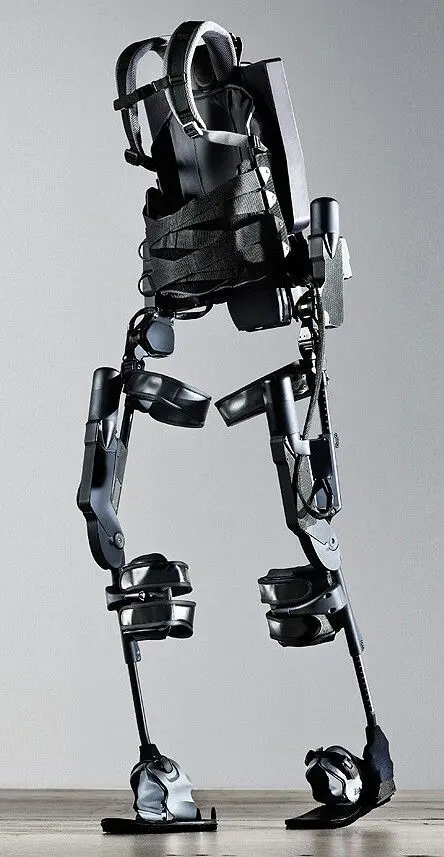
Safety testing remains limited. These are the first consumer exoskeletons powerful enough to alter human capabilities dramatically. Long-term effects on joints, muscles, and bones from regular use are unknown. Could muscles atrophy from over-reliance on mechanical assistance? Could joints deteriorate from unnatural stress patterns?
“We’re essentially beta testing on ourselves,” cautioned Dr. Williams. “The clinical trials for medical exoskeletons tracked carefully monitored patients. Now we’re talking about recreational users buying these online and wearing them hiking or running with no medical oversight.”
Price remains a barrier, though it’s dropping fast. The Dephy Sidekick at $4,500 is expensive but not unthinkable for serious athletes who already spend thousands on bikes, skis, or training equipment. Vigx hasn’t announced pricing for the π6, but industry estimates suggest $6,000-8,000 for the full system.
Companies like Ascentiz prioritize lightweight designs that preserve natural stride patterns rather than maximum power assistance. Their models weigh under three kilograms and provide subtle torque amplification—enough to reduce fatigue on long hikes without fundamentally altering biomechanics.
That philosophy reflects a key design tension. More powerful motors deliver greater performance gains but add weight and create less natural movement. Lighter systems feel better but provide smaller advantages.
The global market for exoskeletons could reach $8 billion by 2030, according to industry analysts. Much of that growth will come from industrial and medical applications—factories seeking to prevent worker injuries, hospitals helping patients recover mobility.
But athletic use represents the most visible and controversial frontier.
Professional sports leagues will eventually need clear policies. Does a baseball pitcher using an exoskeleton for strength training during off-season gain an unfair edge? What about a golfer wearing subtle assistance during tournament play?
The technology improves so rapidly that regulations struggle to keep pace. Exoskeletons demonstrated at CES 2026 are twice as powerful and half as heavy as 2024 models. By 2028, they’ll likely be even more capable and affordable.
College athletic programs are already wrestling with questions about whether to allow exoskeleton training. Some coaches view them as revolutionary tools. Others worry about creating economic divides—wealthy programs that can afford exoskeletons for all athletes versus underfunded teams that can’t.
The original target market—80 million wheelchair users worldwide—benefits regardless of sports controversies. Exoskeletons that let paralyzed people walk, climb stairs, and live more independently represent undeniable progress.
But once that technology becomes powerful enough and cheap enough for healthy athletes to gain measurable advantages, society faces difficult choices about fairness, accessibility, and what it means to push human limits.
For now, the exoskeletons remain legal curiosities. You can buy one, wear one hiking, and post videos of yourself conquering trails that would have destroyed your knees last year. You just can’t show up at the Boston Marathon wearing one and expect race officials to let you compete.
That boundary between personal use and competitive athletics will be tested soon. Some athlete somewhere will push the limits, either accidentally or deliberately. When that happens, sports governing bodies will need answers they haven’t yet formulated.
The technology won’t wait for those answers. Engineers at Vigx, Dnsys, and competitors are already developing next-generation models with more AI capabilities, lighter materials, and stronger motors.
The question isn’t whether exoskeletons will transform athletics. They already are, in training rooms and on recreational trails. The question is whether official competition will embrace that transformation or resist it.
Either way, you can hike up a mountain this summer feeling like you have superhuman legs. Whether you’ll ever race wearing them remains to be decided.


