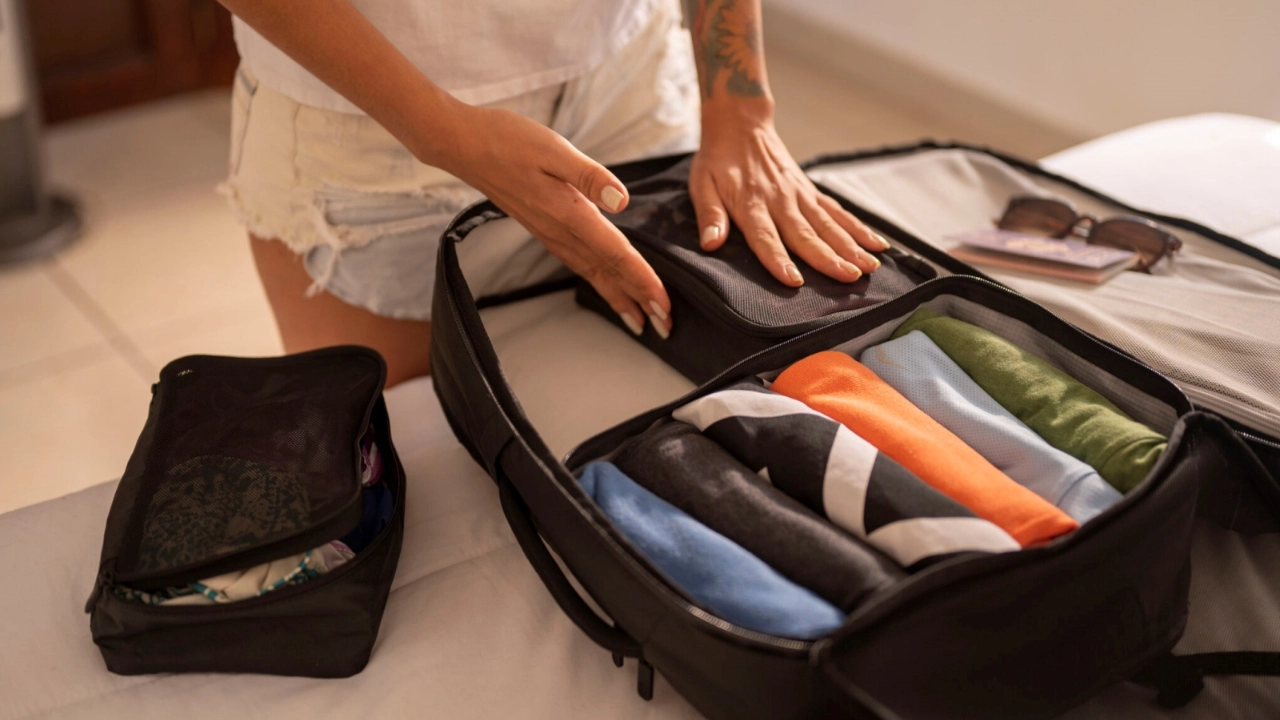


For years, traveling with only a carry-on was considered a preference — the habit of seasoned minimalists and budget-conscious backpackers. In 2026, the calculus has changed. A combination of rising checked baggage fees across every major U.S. carrier, increasingly strict gate-level enforcement of carry-on size limits, and the growing cost of travel overall has transformed the carry-on-only strategy from a lifestyle choice into a financially rational default. For travelers willing to pack deliberately, the payoff is immediate and measurable.
The Fee Landscape That Changed Everything
The financial case for carry-on-only travel has never been stronger — or more necessary to understand precisely. With the last U.S. airline holdout finally charging for checked bags as of mid-2025, all major U.S. carriers now charge checked baggage fees. United, American, Delta, Alaska, and JetBlue all charge approximately $35 to $40 for the first checked bag as of the end of 2025.
Southwest Airlines, which built its brand on free checked bags, discontinued that policy in May 2025. The airline now charges $35 for the first checked bag and $45 for the second. For a traveler making two round trips per year, that represents $140 in first-bag fees alone — before the second bag, before overweight charges, and before the sharply higher fees that apply when paying at the gate rather than in advance.
The gate-check penalty deserves particular attention. Gate-check fees run $35 to $65 depending on the carrier, substantially more than pre-paying for checked bags online. American and United charge around $40, while budget carriers can reach $75 to $100. This fee applies when a carry-on that does not fit the overhead bin must be checked at boarding — a scenario that has become more common as airlines have moved to stricter enforcement.
The Enforcement Reality in 2026
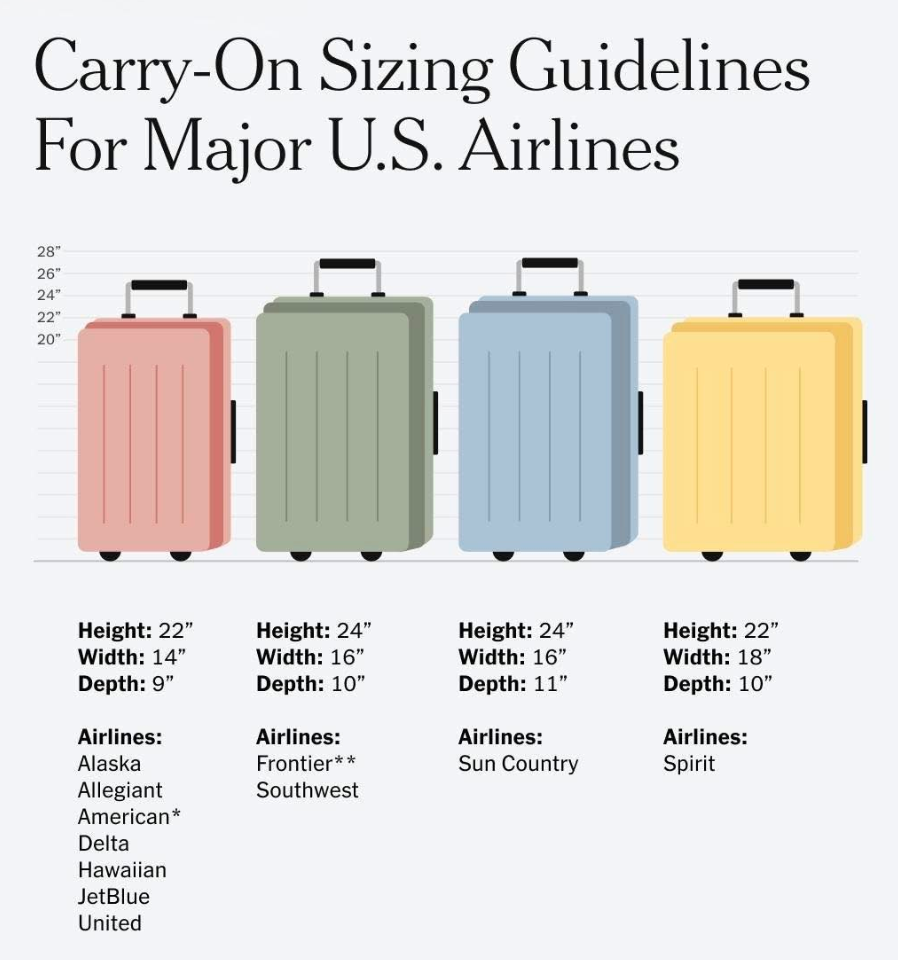
Understanding the fee structure is only half the equation. The other half is understanding what airlines are now measuring — and how. Most major U.S. airlines enforce the same carry-on limit: 22 x 14 x 9 inches including wheels and handles. This covers American, Delta, United, JetBlue, and Alaska. Southwest allows slightly larger bags at 24 x 16 x 10 inches. Budget carriers like Frontier and Spirit typically restrict carry-ons to around 18 x 14 x 8 inches for items that fly free under personal item policies.
The key development in 2026 is not the size limits themselves — those have remained largely stable — but their enforcement. Airlines are now measuring bags at the gate using automated scanners rather than relying on the honor system, and soft-sided bags no longer receive the leeway they once did. If a bag does not fit the metal sizing frame at the gate, it gets checked — regardless of prior trips on which the same bag passed without issue.
Travelers using bags with expansion zippers should note that gate agents have learned to spot expanded bags quickly. Even if a bag technically measures within limits, an overstuffed appearance can flag it for measurement. Packing in the non-expanded configuration is strongly advised.
There is also a meaningful distinction between carry-on bags and personal items that has sharpened in the current environment. Every airline allows one personal item in addition to a carry-on. Personal items must fit under the seat in front of the passenger, which means dimensions around 17 x 10 x 9 inches for most carriers. Backpacks, laptop bags, purses, and briefcases qualify. Topologica Used strategically, the personal item slot is where experienced carry-on-only travelers place their most frequently needed items — documents, electronics, medication — freeing the overhead bin bag for clothing and larger items.
The TSA Liquids Rule: What It Actually Says
No carry-on-only trip can be planned without a precise understanding of the Transportation Security Administration’s liquids regulation, which remains in full effect across all U.S. airports. The TSA states directly on its official website: travelers are allowed to bring a quart-sized bag of liquids, aerosols, gels, creams, and pastes in carry-on baggage through the security checkpoint. These are limited to travel-sized containers of 3.4 ounces (100 milliliters) or less per item. NerdWallet
Items with lithium batteries — including portable power bank chargers — must be carried in the carry-on bag, not in checked luggage. This also applies to rechargeable toothbrushes and cordless curling irons with lithium batteries. This is a safety regulation, not a preference — and failing to comply can result in items being confiscated at the checkpoint or bags being pulled for additional screening.
One important exception to the liquids limit applies at international arrival points. Duty-free liquids purchased internationally are allowed in carry-on baggage when traveling to the United States on a connecting flight, provided they are packed in a transparent, secure, tamper-evident bag by the retailer and do not show signs of tampering at screening.
The Definitive Carry-On Packing Framework
With the regulatory environment established, the practical question is what to pack and how to make it fit. The following framework is built around verified categories of essential items rather than product-specific recommendations.
Documents and identification. Important travel documents — passport, ID, boarding pass, insurance cards, and credit cards — should always remain in the personal item, not in the overhead bin bag. Indie Traveller For international travel, a photocopy of the passport stored separately from the original provides a recovery mechanism if the original is lost or stolen. As of May 7, 2025, a REAL ID-compliant driver’s license or a valid passport is required for all domestic flights within the United States. Budget Your Trip
Clothing strategy. The most effective carry-on-only packing relies not on limiting wardrobe choices but on selecting the right items. Buying quick-drying and odour-resistant clothing — such as those made from merino wool — means less laundry is needed and items dry more quickly when washed. Choosing solid toiletries like shampoo bars over liquids maximises the amount that can fit within the TSA-compliant quart-sized bag. Neutral colors that mix and match across outfits reduce the total number of pieces needed. The consistent advice from experienced carry-on travelers: wear the bulkiest items — boots, coats, heavier jackets — on travel days rather than packing them.
Toiletries. The TSA recommends packing items in layers — shoes one layer, clothes one layer, electronics one layer — and placing the 3-1-1 liquids bag in an easily accessible location for security screening. The quart-sized bag should be treated as a fixed constraint, not a starting point: identify the minimum liquid products genuinely needed and eliminate or replace the rest with solid alternatives before the bag is full.
Electronics and lithium battery compliance. Large electronics should be packed on the top layer of the carry-on for screening accessibility. The TSA also recommends taping a card with the traveler’s name and contact information on electronic devices. Given that lithium-battery items must travel in the cabin, their placement in the personal item — where they remain accessible — is generally more practical than storing them in the overhead bin bag.
Medication. Prescription medications should always travel in the carry-on, never in a checked bag. Packing slightly more medication than needed for the planned trip duration provides a buffer in case of return flight delays or unexpected extensions. The TSA permits medications in quantities exceeding 3.4 ounces and does not require them to be in the quart-sized liquids bag, though they may require additional screening.
International Travelers: One Additional Layer of Verification
For travelers flying internationally, carry-on rules require one further step that domestic itineraries do not: checking the policies of every carrier on the itinerary, not just the primary airline. Carry-on size limits vary by airline, and international limits can differ significantly from U.S. carrier standards. There is no one-size-fits-all approach — checking each airline’s specific policy before traveling is essential to avoid unexpected fees or gate-check situations. Many airlines are now more strictly enforcing carry-on weight limits, commonly 15 to 22 pounds (7 to 10 kg) on international routes. Sarasota Magazine This weight enforcement is largely absent from domestic U.S. flying but applies consistently across many European, Asian, and budget international carriers.
The Honest Trade-Off
Carry-on-only travel is not appropriate for every trip or every traveler without adaptation. Trips requiring formal wear, specialized equipment, or extended stays of more than two weeks without laundry access present genuine packing challenges that cannot always be resolved within a single overhead bin bag. The strategy works best when travelers honestly assess what they need — not what they might need — and build the packing list accordingly.
What the data makes clear is that the cost of not doing so has risen sharply. Round-trip checked baggage fees now cost between $70 and $80 at standard rates on major carriers — on top of the highest airfares passengers have seen in a long time. For frequent travelers, that figure compounds quickly across multiple trips and family members.
The overhead bin, enforced strictly and priced precisely, has become the most valuable 22 x 14 x 9 inches in modern travel. Knowing exactly how to fill it — and what the rules actually say — is now a foundational travel skill rather than an optional one.