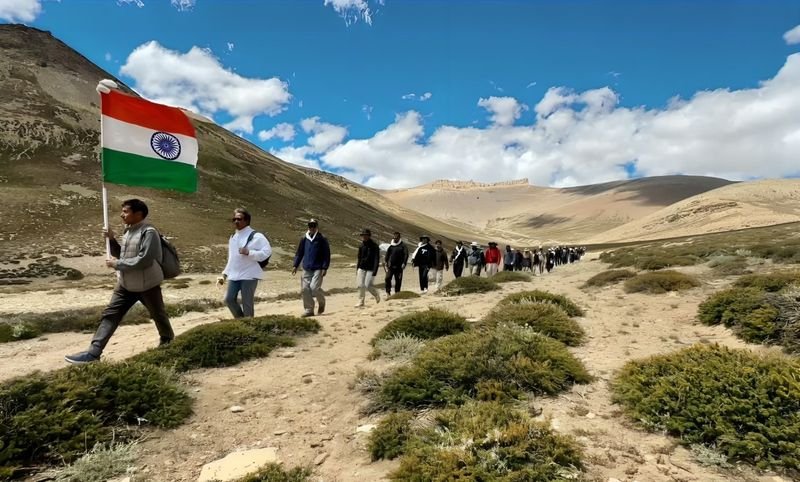


The Ladakh movement demanding constitutional safeguards, statehood, and Sixth Schedule protections has emerged as a focal point for broader environmental and social concerns across the Himalayan region in 2026, with leading activists and scholars warning that the region’s governance challenges are symptomatic of a wider ecological crisis that extreme weather events and large-scale infrastructure projects are accelerating, according to reporting by The Wire, Al Jazeera, Human Rights Watch, and Vision IAS.
The immediate political context of the movement — the release of climate activist Sonam Wangchuk from NSA detention on March 14, the planned territory-wide shutdown on March 16, and the unresolved Sixth Schedule demands — has been reported separately. The social and environmental dimensions of the movement, however, extend beyond the constitutional question.
The Development Pressures
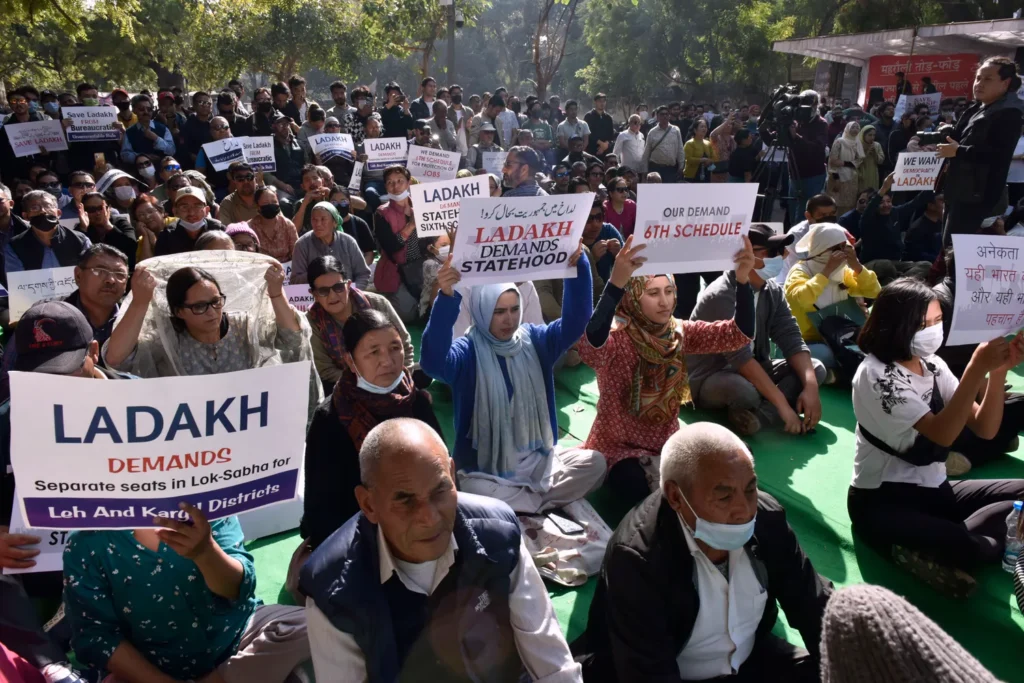
Ladakh received 525,000 tourists in 2023, placing what activists describe as unsustainable pressure on water resources in a high-altitude desert ecosystem, according to the research documents. Large-scale infrastructure projects under consideration or in planning — including a proposed 48,000-acre solar park and geothermal development in the Puga valley region — have raised concerns from local Pashmina herder communities about the destruction of traditional grazing lands, according to the research documents. Local governance bodies have lost authority over land and development decisions since Ladakh was reorganised as a Union Territory without a legislature in 2019, creating what activists cited in The Wire describe as a “governance vacuum” — a combination of high youth unemployment and the removal of democratic rights over local resources.
The Wider Himalayan Warning
Activists quoted in The Wire’s reporting on the movement describe the Ladakh situation as “symbolic of a larger crisis unfolding across the Himalaya,” in which extreme weather events, floods, and landslides are compounded by what they characterise as “reckless models of extractive development.” The Dharali floods in Uttarkashi in August 2025, which killed 69 people and displaced 115 families, are cited in the same reporting as evidence of the terrain’s extreme vulnerability to development-induced destabilisation. These activist assessments represent a political and advocacy position; they are not independent scientific findings and should be read accordingly.