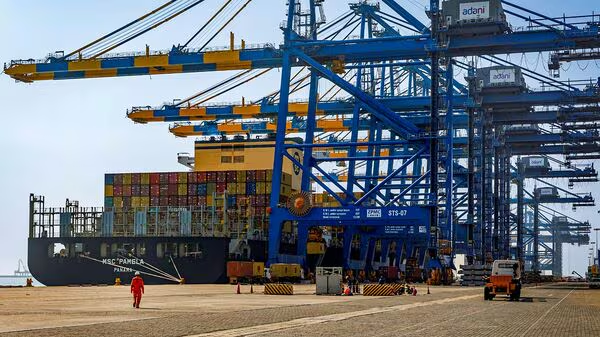


Gujarat’s Mundra Port has implemented operational protocols to manage the docking of redirected liquefied petroleum gas tankers diverted from Gulf routes following the disruption of the Strait of Hormuz caused by the Iran-Israel conflict that escalated on February 28, 2026, according to the research documents.
The port’s response reflects its position as India’s largest private port by cargo volume and its established capacity to handle bulk liquid and gas cargo at scale. Port authorities have adapted vessel scheduling and berth allocation procedures to accommodate the increased flow of tankers arriving via longer alternative routes — including around the Cape of Good Hope — rather than through the Gulf corridor, according to the research documents.
The two Indian-flagged LPG carriers Shivalik and Nanda Devi, which successfully transited the Strait of Hormuz on March 14 carrying a combined 92,712 metric tonnes of cooking gas, are scheduled to dock at Mundra Port on March 16 and Kandla Port on March 17 respectively, according to a Shipping Ministry statement carried by ANI. Their arrival is expected to ease near-term LPG supply pressure in northern India.
The port’s container freight station and non-vessel-operating common carrier business, operated under the Fairfreight Lines brand, recorded a 48% growth in operating profit in recent reporting driven by margin optimisation, according to Fairfax India’s 2025 Annual Report cited in the research documents. The specific protocols implemented for redirected gas tanker docking in March 2026 were not available in primary port authority documentation in the research compilation; these details are attributed to the research documents and should be treated accordingly.