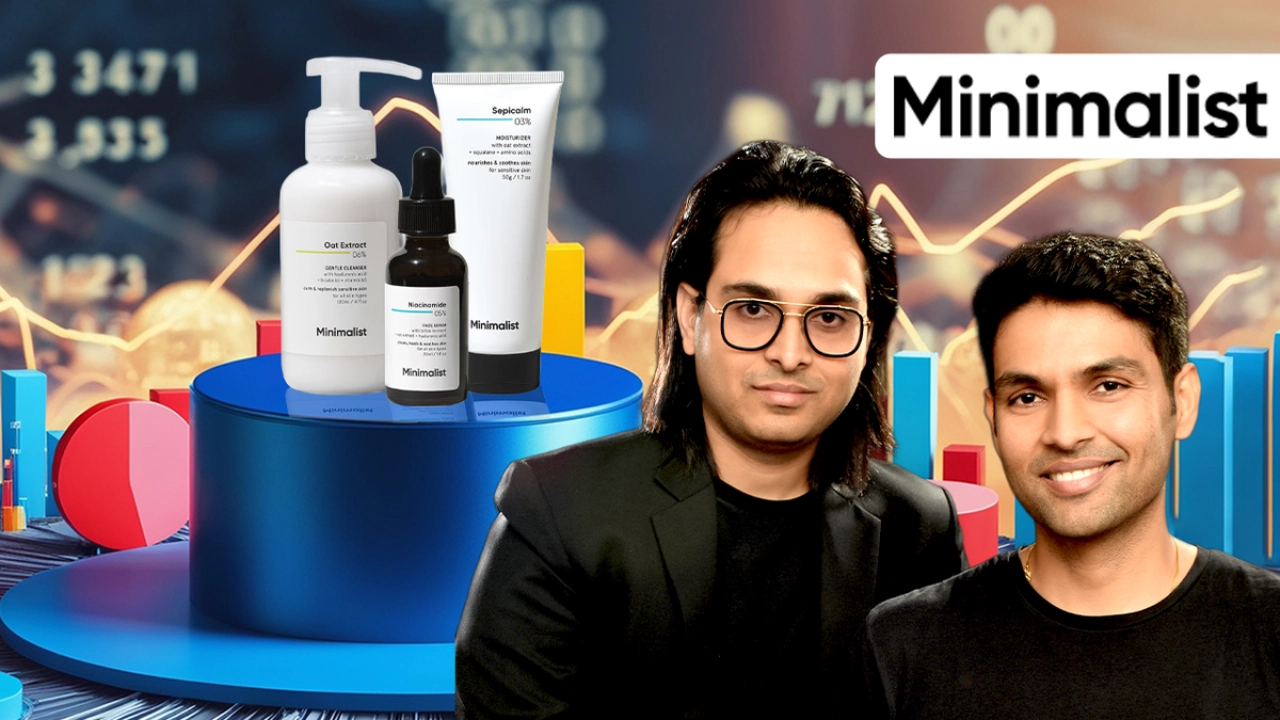


When Hindustan Unilever’s board approved the ₹2,706-crore acquisition of Minimalist’s parent company, Uprising Science Private Limited, in January 2025, the transaction did more than transfer ownership of a four-year-old skincare startup. It marked the most explicit acknowledgement to date from India’s largest fast-moving consumer goods company that the competitive threat from digital-first, direct-to-consumer brands had moved beyond a niche disruption into a structural shift in consumer preference — one that HUL’s existing portfolio could not address through organic means alone.
The acquisition, completed on April 22, 2025, after Competition Commission of India approval, represents the single largest D2C transaction in India’s consumer goods sector. Its terms — a valuation of ₹2,955 crore pre-money against annual revenues of approximately ₹500 crore — reflect the premium that patient investors and acquirers are willing to pay for brands that have achieved profitable growth in categories where legacy portfolios have struggled to resonate with younger consumers.
The Scale of the D2C Market
The Indian D2C market is projected to achieve a gross merchandise value of $30 billion to $35 billion by 2027, representing a compound annual growth rate of approximately 40 per cent between 2022 and 2027 — over three times the growth rate of the broader retail market and 1.6 times that of the e-commerce market over the same period, according to a report by Redseer Strategy Consultants. Worldbank
India currently hosts approximately 11,000 D2C companies, of which roughly 800 have secured external funding as of 2024. Over 60 per cent of new D2C customers are emerging from Tier 2 and Tier 3 cities, reflecting a fundamental expansion of the addressable market beyond the metropolitan consumer base that originally defined the category. The World Bank
The growth rate differential between D2C brands and traditional FMCG companies is most visible in premium and niche segments — clean beauty, science-backed skincare, men’s grooming, functional nutrition, and health-conscious snacking — where consumer willingness to experiment with unfamiliar brands has been high and where digital marketing has allowed new entrants to build awareness at a fraction of television advertising costs. In these specific categories, D2C brands have captured meaningful market share from legacy players, even as the mass market volumes in commoditised categories like detergents, soaps, and basic personal care remain dominated by established brands.
Case Study: Minimalist — Built on Transparency, Acquired for Strategic Fit
Minimalist was founded in 2020 by brothers Mohit and Rahul Yadav, who built the brand explicitly around ingredient transparency — disclosing exact concentrations of active ingredients such as niacinamide, retinol, and peptides on every product, at a time when most Indian skincare brands either obscured formulations or marketed on emotional rather than efficacy-based claims.

HUL’s CEO and Managing Director Rohit Jawa, speaking at the announcement, described the acquisition as “another key step to grow our Beauty & Wellbeing portfolio in high-growth premium demand spaces,” and said Minimalist’s brand was “built on science, product efficacy, and transparency.” The company had crossed an annual revenue run rate of ₹500 crore within four years of founding and had been profitable since inception. International Monetary Fund
Jawa described the acquisition as “a great example of making our portfolio future fit,” noting that Minimalist addressed segments of consumer demand for which HUL did not have an existing answer either from within its own portfolio or through a clear organic build strategy. HUL CFO Ritesh Tiwari said the company was acquired at a 5.9 times sales multiple, which the company characterised as competitive relative to comparable transactions. World Bank
The transaction was structured as an all-cash deal totalling ₹2,706.44 crore, comprising a secondary buyout of existing shareholders — including early backer Peak XV Partners, which is reported to have achieved approximately a 10x return on its original investment — and a primary infusion of ₹45 crore into the company. HUL will acquire the remaining 9.5 per cent stake from the founders within two years. Press Information Bureau
The Competitive Advantage D2C Brands Have Exploited
The structural advantages that D2C brands hold over legacy FMCG companies stem from the architecture of how they build and sell products — and how they collect and use information about the people who buy them.
A traditional FMCG company selling through distributors and kirana stores receives transactional data at the point of wholesale, not at the point of consumption. It knows what it shipped to which depot; it does not know which consumer bought which product, how frequently, in combination with what other products, or why. A D2C brand with its own website or app — or even one selling heavily through marketplaces that share first-party data — accumulates a direct and granular record of consumer behaviour that the traditional model structurally cannot replicate.
This data advantage compounds into a product development advantage: D2C brands with short development cycles of three to six months can iterate formulations, packaging, pricing, and positioning based on actual consumer feedback and purchase patterns, compared to the 18 to 24 month R&D and commercialisation cycles that characterise large FMCG organisations with legacy procurement, regulatory, and distribution systems. The World Bank
On marketing, the divergence is equally stark. HUL spent approximately ₹4,700 crore on advertising and promotion in FY25 — the overwhelming majority directed at television, which remains essential for mass-market brand maintenance. D2C brands in premium segments have built significant brand equity and customer bases through social media, content marketing, and influencer partnerships at a fraction of that cost, reaching digitally native consumers in formats and on platforms where legacy advertising spending is structurally less efficient.
The FMCG Counter-Strategy: Acquire, Invest, Replicate
The legacy companies have responded across three distinct strategic vectors: acquiring D2C brands that have built genuine consumer equities, launching digital-first sub-brands within their existing organisations, and investing in D2C startups at early stages to build option value.

HUL has explicitly described this acquisition as part of a portfolio transformation strategy toward what it calls “evolving and higher-growth demand spaces,” and has simultaneously proceeded with the demerger of its ice cream business — completed in February 2026 — to streamline the remaining portfolio around faster-growing categories including beauty and wellbeing. International Monetary Fund
Marico has pursued both acquisition and investment. The company acquired a majority stake in nutrition brand Cosmix in FY25 and has made investments in digital-first brands across categories as part of a stated strategy to build a portfolio of brands addressing premium, health-conscious consumers — a segment its flagship Parachute and Saffola portfolios do not fully serve.
Dabur has established a dedicated venture fund for early-stage D2C brands, with a stated corpus of ₹500 crore, explicitly acknowledging that organic innovation within its existing structure may not generate the speed-to-market that the D2C category rewards.
The Limits of the D2C Advantage
The competitive threat that D2C brands represent to legacy FMCG companies is real and growing — but it operates within structural constraints that the headline growth rates do not fully reflect.
Distribution at scale in India — reaching the estimated 12 million kirana stores that still account for the majority of FMCG volume — requires a physical supply chain that most pure-play D2C brands do not have and cannot build cheaply. The D2C penetration story is, for now, primarily an urban, digitally connected, premium segment story. The e-commerce market in Tier 2 and Tier 3 cities is expanding at approximately 23 per cent annually and is projected to reach ₹8.30 lakh crore by 2026, but the logistics infrastructure required to consistently serve these markets — cold chain, reliable last-mile, returns management — remains underdeveloped and structurally costly for brands without the distribution leverage of an HUL or Dabur. The World Bank
The acquisition of Minimalist resolves one of these constraints elegantly: HUL’s distribution infrastructure can now carry Minimalist products into retail channels that the brand could not efficiently access independently, while Minimalist’s direct consumer relationship and formulation transparency inform how HUL approaches the broader actives-based skincare opportunity. The transaction is simultaneously an admission of competitive pressure and a demonstration of how that pressure ultimately redistributes toward consolidation rather than sustained fragmentation — a pattern that the next phase of India’s D2C market is likely to replicate across multiple categories