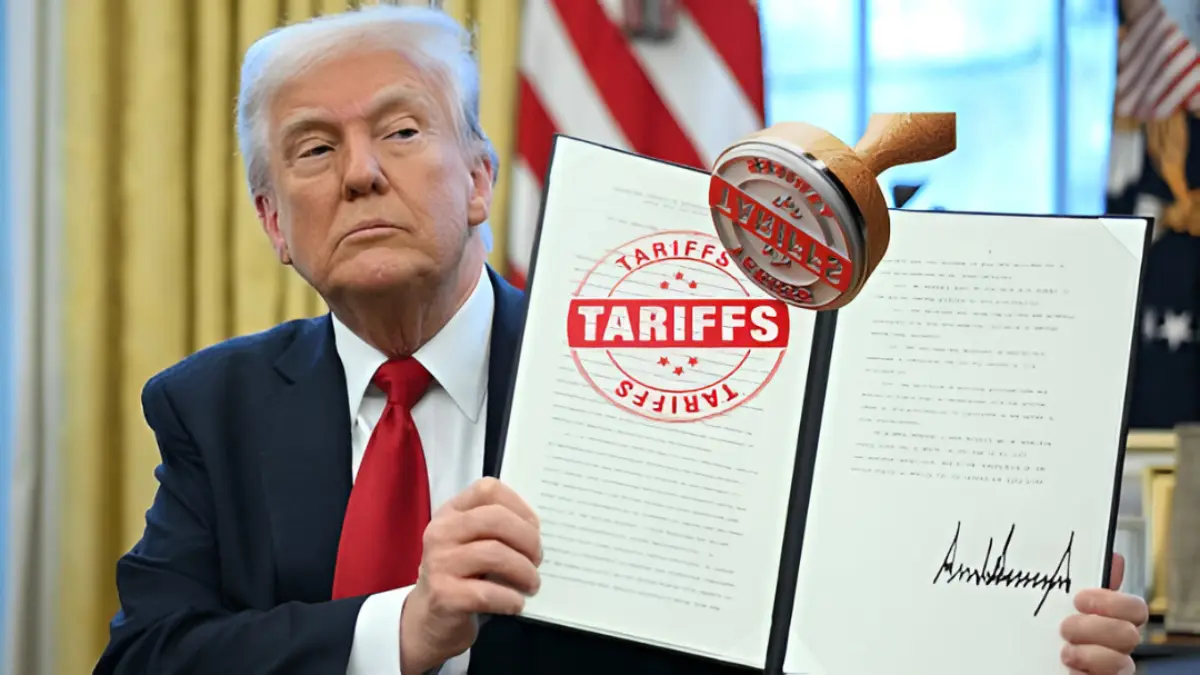


Donald Trump just weaponized trade policy to acquire Greenland. Europe isn’t playing along.
The US President announced tariffs on Denmark, Norway, Sweden, France, Germany, the United Kingdom, Netherlands, and Finland starting February 1, escalating from 10% to 25% by June unless they agree to American acquisition of Greenland. He posted the ultimatum on Truth Social on January 17 and doubled down during his Davos speech Tuesday, calling Denmark “ungrateful” while ruling out military force.
European leaders called it economic blackmail. UK Foreign Secretary Yvette Cooper labeled the move “unacceptable.” The European Union froze approval of a pending US trade deal. Stock markets dipped as investors processed the implications of a transatlantic trade war.
“Complete purchase or face the consequences,” Trump wrote in his Truth Social post. The tariffs target some of America’s largest trading partners, covering billions in annual imports from machinery to pharmaceuticals.
Denmark holds sovereignty over Greenland, but the island has home rule and controls most domestic affairs. Over 70% of Greenlanders oppose US control, according to recent polls. Danish officials insist any change must respect self-determination, a position Trump dismissed as obstruction.
The February 1 start date gives Europe less than two weeks to respond. The 10% initial tariff rate applies to all imports from the eight nations. If no deal emerges by June 1, rates jump to 25%. Trump hasn’t specified what counts as a “deal” beyond Greenland changing hands.
European diplomats met with Vice President JD Vance and Secretary of State Marco Rubio on January 19, seeking clarification on whether Trump would use military force. The President declined to comment that day, fueling anxiety across NATO. At Davos two days later, he ruled out invasion but offered no concessions on tariffs.
“We don’t need to use force,” Trump told the World Economic Forum audience. “Economic pressure works just fine.”
Protests erupted in Greenland and Denmark following the January 17 announcement. Demonstrators in Copenhagen waved Greenlandic flags and chanted slogans defending sovereignty. In Nuuk, Greenland’s capital, locals held signs reading “Not for Sale” in Danish and English. Social media showed images of the rallies spreading across Instagram and X.
Trump frames Greenland as essential for national security. The island sits between North America and Europe, offering strategic positioning for missile defense against Russia and China. Climate change is opening Arctic shipping lanes and exposing rare earth mineral deposits worth potentially trillions of dollars.
Military analysts agree Greenland holds strategic value. The US already operates Pituffik Space Base there, formerly known as Thule Air Base, which monitors ballistic missile launches and tracks satellites. Acquiring full control would eliminate reliance on Danish permission for expanded operations.
But using tariffs to force territorial transfer breaks with decades of American foreign policy norms. The United States hasn’t acquired territory through economic coercion since the 19th century. Allies reacted with shock that Trump would target NATO members over a demand most consider legally and morally indefensible.
“You don’t threaten friends,” German Economic Minister Robert Habeck told reporters. “This crosses every line.”
The eight targeted nations represent massive chunks of US trade. Germany alone exported over $150 billion in goods to America last year. The UK sent approximately $70 billion. Combined, the eight countries account for hundreds of billions in annual commerce.
A 25% tariff rate would devastate certain industries. European automakers, pharmaceutical companies, and machinery manufacturers depend on American consumers. Retaliatory tariffs from Europe would hit US agriculture, technology, and energy exports. Economists warn the escalation could trigger global recession.
Trump appears willing to accept those risks. His January 17 post didn’t mention economic consequences or acknowledge trade relationships. The message focused entirely on Greenland as a non-negotiable American priority. Advisors reportedly tried softening the language before publication but were overruled.
European NATO allies responded by deploying symbolic troop contingents to Greenland. Denmark sent additional forces to existing bases. Norway, Sweden, and Finland offered support units. The deployments amounted to a few hundred soldiers total but carried political weight as a show of solidarity.
Trump cited those deployments as justification for tariffs. “They’re militarizing against us,” he said at Davos, despite the forces being NATO members and traditional American allies. The logic painted defensive moves as aggression, flipping conventional security analysis.
Markets reacted negatively to the uncertainty. European stock indexes dropped 2-3% in trading following the Truth Social announcement. American futures fell slightly as investors calculated exposure to European supply chains. Currency markets saw the euro weaken against the dollar amid capital flight.
Business leaders at Davos expressed concern about supply chain disruptions. Executives from multinational corporations told reporters they can’t restructure operations on two weeks’ notice. A 10% tariff increase forces difficult choices about absorbing costs versus raising prices for consumers.
Trump’s 2019 interest in buying Greenland ended quickly after Danish Prime Minister Mette Frederiksen called the idea “absurd.” He canceled a planned state visit in protest. This time he’s leveraging presidential authority over trade policy to maintain pressure rather than accepting diplomatic rejection.
The revival coincides with increased focus on Arctic competition. China has invested heavily in Greenland’s mining sector, raising Western concerns about Beijing’s influence near North America. Russia has expanded military presence in its Arctic territories. American strategists view Greenland as crucial for countering both rivals.
Greenland’s population of roughly 57,000 people didn’t ask to become a geopolitical bargaining chip. Local officials have repeatedly stated they’re not interested in American governance. The island gained home rule from Denmark in 1979 and expanded autonomy in 2009, with many residents hoping for eventual full independence.
“We’re not Danish property to be traded, and we won’t become American property either,” said Greenlandic Premier Múte Egede in a statement last week.
The tariff announcement ignored Greenlandic voices entirely. Trump’s framing treats the island as something Denmark owns and can sell, despite the reality that Greenlanders control their own domestic affairs and would need to consent to any status change.
International law experts say forcing territorial transfer through economic pressure violates UN Charter principles. The United States has historically defended sovereignty and self-determination as core values. Using trade policy to acquire land from an ally contradicts those positions.
Trump’s critics argue the move damages American credibility more than it advances security interests. If the tariffs fail to produce a deal, the President faces a choice between backing down or following through with economic damage to allies and American consumers.
His supporters counter that previous presidents lacked courage to pursue vital strategic assets. They view Greenland as genuinely important for national defense and applaud willingness to use available leverage. Truth Social comments on the original post overwhelmingly praised the announcement.
#GreenlandTariffs trended on X following the January 17 post. Pro-Trump accounts celebrated “America First” priorities finally extending to territorial expansion. European users condemned what they called bullying and imperialism. The debate generated millions of impressions across platforms.
YouTube clips of Trump’s Davos speech addressing Greenland drew over one million views within 24 hours. Comments split between Americans supporting the pressure campaign and international viewers expressing disbelief. BBC coverage analyzing the tariff threat accumulated hundreds of thousands of views.
Reddit’s foreign policy forums dissected the legality and wisdom of the approach. Users debated whether economic coercion constitutes an act of aggression under international law. LinkedIn discussions focused on business impacts and supply chain vulnerabilities.
The European Union now faces difficult decisions. Retaliating with counter-tariffs escalates the conflict but shows strength. Negotiating appears to reward coercion. Doing nothing invites further pressure. EU trade ministers scheduled emergency meetings for this week to coordinate response.
NATO confronts even thornier questions. The alliance depends on collective defense commitments among members. Trump using tariffs against allies over territorial demands undermines trust that Article 5 mutual defense pledges remain reliable. Eastern European members worried about Russian aggression watch closely.
Polish officials privately expressed alarm that America might condition defense support on unrelated concessions. Baltic states wondered whether their sovereignty faces similar pressure if Trump decides he needs military bases or resources they possess. The precedent troubles smaller NATO members.
Trump returns to Washington facing Congressional skepticism about the tariff strategy. Republican senators from agricultural states worry about European retaliation hitting farm exports. Democrats called the Greenland push a distraction from domestic issues like inflation and immigration.
The President has broad authority to impose tariffs for national security reasons under existing trade law. Congress could potentially override him, but that requires supermajorities unlikely to materialize in the current political environment. Trump can probably implement the February 1 tariffs regardless of legislative opposition.
Whether he maintains them through June depends on multiple factors. Economic data will show impacts on inflation and growth. European responses could soften or harden positions. Public opinion might shift if grocery prices rise or diplomatic isolation deepens.
Polls currently show Americans divided on Greenland itself but skeptical of tactics that risk trade wars. Voters prioritize economic stability over territorial expansion. If tariffs increase consumer costs without producing security benefits, political pressure could mount.
Trump appears willing to gamble that Europe blinks first. He’s betting Denmark values trade access more than Greenland sovereignty, and that other targeted nations will pressure Copenhagen to negotiate rather than accept collective punishment. The calculation assumes allies won’t accept prolonged economic pain for principle.
European leaders insist they won’t cave to what they characterize as extortion. Statements from Copenhagen, Berlin, Paris, and London emphasized unity and rejection of coercion. Whether that resolve holds under actual tariff impacts remains unknown.
The February 1 deadline approaches rapidly. Businesses scramble to prepare for potential cost increases. Diplomats search for face-saving compromises. Greenlandic residents watch powerful nations debate their future without meaningful input.
Trump called his approach “smart negotiation” at Davos. European officials called it blackmail. Markets called it risky. Historians will eventually judge whether economic pressure for territorial acquisition marked effective statecraft or a watershed moment in transatlantic alliance breakdown.
For now, the tariffs loom. Ten percent in eleven days. Twenty-five percent in four months. And Greenland still not for sale.