

Few technological concepts have experienced the volatility of Web3 and the metaverse — concepts that attracted hundreds of billions of dollars in investment between 2020 and 2022, generated enormous speculative activity, and then faced a sharp correction in both valuation and mainstream attention. By 2026, the question is not whether Web3 and the metaverse are alive — both have active development communities and real deployed applications — but what, exactly, survived the collapse of the speculative cycle, and what the honest current state of each concept looks like.
Web3: The Infrastructure Is Real, The Mainstream Adoption Isn’t
Web3 refers broadly to a vision of internet services built on blockchain technology — decentralized applications, user-owned data, programmable digital assets, and financial systems that operate without central intermediaries. The underlying technology — smart contract platforms like Ethereum, layer-2 scaling solutions like Polygon and Optimism, decentralized finance protocols — continues to be developed and used. Ethereum’s transition to proof-of-stake consensus in 2022 substantially reduced its energy consumption, addressing one of the major criticisms of blockchain technology.
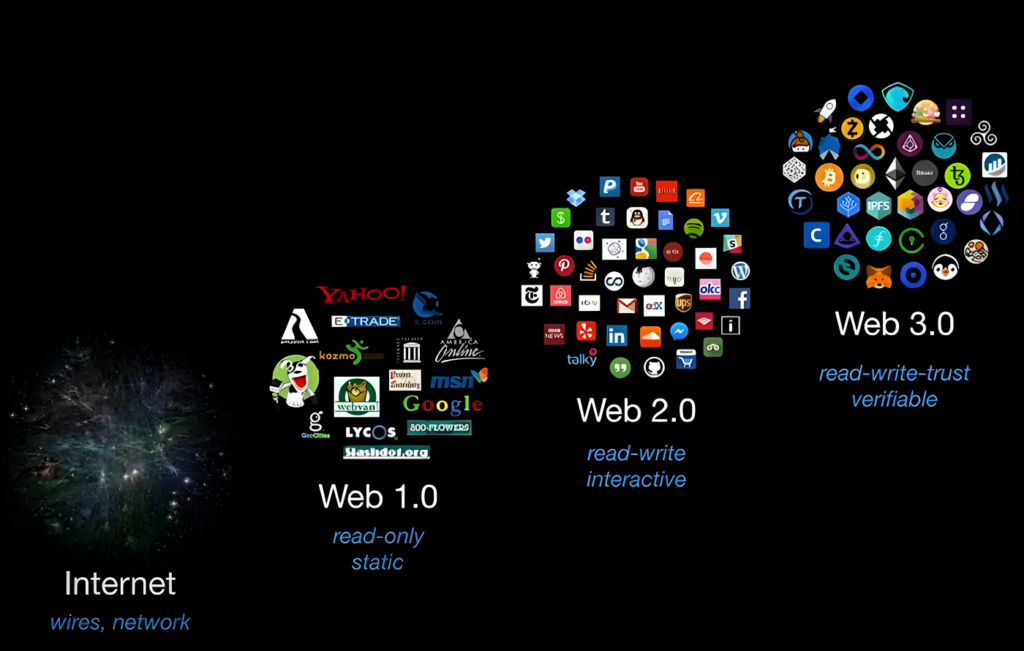
Decentralized finance applications processed hundreds of billions of dollars in transactions in 2025, according to on-chain data from blockchain analytics platforms. Non-fungible tokens, which represent ownership of unique digital assets on a blockchain, collapsed from their 2021-2022 speculative peak but continue to be used in specific applications including digital art provenance, gaming item ownership, and ticketing. The infrastructure has matured significantly since the speculative peak, with better developer tools, improved security practices, and more reliable cross-chain bridges.
What has not materialized is mainstream consumer adoption of Web3 applications as a replacement or significant alternative to Web2 services — search engines, social platforms, cloud storage, digital payments. The user experience complexity of managing cryptographic keys and wallets, the prevalence of scams and security exploits in the space, and the absence of Web3 applications that offer compelling utility advantages over existing alternatives have collectively prevented the mainstream transition that proponents projected.
The Metaverse: Mixed Reality Over Virtual Reality
The term “metaverse” has been largely abandoned by major technology companies in favor of more specific language about mixed reality, spatial computing, and extended reality. Meta’s shift of resources from its heavily promoted metaverse vision toward AI has been the most visible retreat, though the company continues developing hardware (the Quest headset line and its Ray-Ban Display glasses) and operating virtual environment platforms.
What has survived and grown is the mixed reality category — devices and applications that overlay digital information on physical environments rather than creating fully immersive virtual worlds. Apple’s Vision Pro, Samsung’s upcoming Android XR glasses, and Meta’s Ray-Ban Display product line represent different points on a continuum of extended reality hardware that is commercially available in 2026. Enterprise applications of virtual and mixed reality for training, design visualization, and remote collaboration have continued to grow in verticals including manufacturing, healthcare training, and architecture.
Fully immersive virtual worlds as a mainstream social and commercial environment — the vision articulated most prominently by Mark Zuckerberg in 2021 — have not materialized at scale. Gaming environments like Roblox and Fortnite function as persistent social spaces for younger demographics, but these predate the “metaverse” framing and operate through conventional displays rather than immersive hardware.
The honest assessment in 2026 is that both Web3 and the metaverse contain real technology producing real use in specific domains, while the broader vision of paradigm-shifting consumer behavior change has not occurred on any timeline that matches the claims made at the speculative peak. The hype is not dead — it has normalized into a more accurate picture of what these technologies actually do.