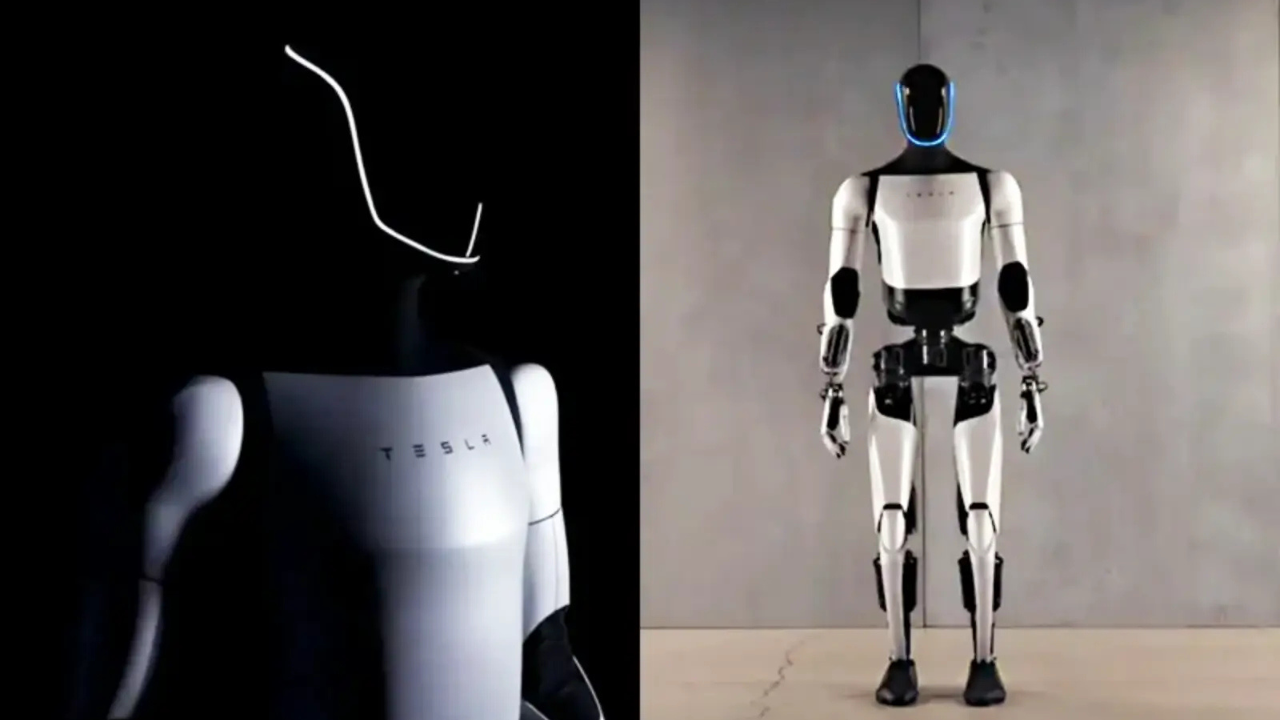


The humanoid robot industry arrived at CES 2026 with something it had largely lacked in previous years: deployments. Not polished stage demonstrations under controlled conditions, not renders of imagined futures, but functioning machines working — however imperfectly — in real factory environments. Tesla’s Optimus robots were operating inside its own Gigafactory. Agility Robotics’ Digit units were deployed in a commercial agreement with Toyota Motor Manufacturing in Canada. Boston Dynamics’ Atlas robots entered pilot programs at Hyundai factories in Europe. The shift from demonstration to deployment marks a qualitative change in the state of the industry, even as the gap between current capabilities and the ambitious roadmaps published by manufacturers remains substantial and well-documented.
Tesla Optimus: The Biggest Name With the Most Caveats
Tesla’s Optimus program is the most closely watched in the field, driven by CEO Elon Musk’s repeated public claims that humanoid robots will eventually exceed Tesla’s automotive business in economic value. The gap between those projections and independently verifiable current performance is significant and worth examining precisely.
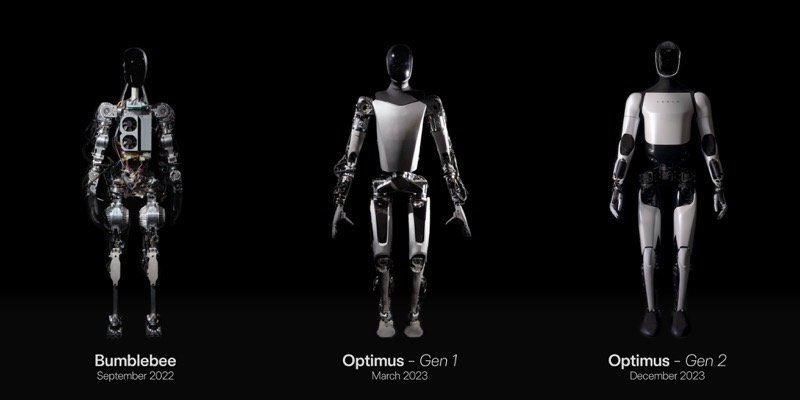
As of February 2026, Gen 3 production of Optimus has begun at Tesla’s Fremont factory. However, on the Q4 2025 earnings call, Musk confirmed that no Optimus robots are currently doing “useful work” — they are deployed for learning and data collection only. There are no pre-orders, no public waitlist, and no announced public sales date. Consumer sales are targeted for the end of 2027, though that timeline has shifted multiple times.
The Gen 3 designation refers primarily to an upgraded hand design. The “Gen 3” update specifically involves upgraded hands with 22 degrees of freedom and 50 actuators — not a complete new robot body. The body remains the Gen 2 design. Tesla is repurposing its Fremont factory lines that previously produced Model S and Model X vehicles for Optimus manufacturing, and is reportedly constructing a dedicated production facility at Gigafactory Texas. China’s export restrictions on rare earth metals, imposed in response to US tariff policy, could affect Optimus production, as the robots rely on rare earth magnets for movement and handling features. Tesla has reportedly sought an export license to continue importing the necessary components.
Musk has stated production targets of approximately 5,000 units for 2025 — primarily for internal factory use — with 50,000 units targeted for 2026 and substantially higher volumes thereafter. Independent observers note that Tesla Optimus has no external customers yet, all projections are internal, and there are no independent benchmarks, factory uptime metrics, or verified external deployment data to corroborate the company’s stated progress. The Washington Post, in reporting on Optimus, previously noted that Tesla has a documented history of announcing product timelines that subsequently extend significantly.
Figure AI: The Competitor With Verified Enterprise Contracts
Figure AI, the San Jose–based robotics startup, has followed a different path from Tesla. Rather than relying on a founder’s public platform to build anticipation, Figure has focused on demonstrating capability in partnership with established industrial customers and securing documented commercial agreements. The company’s Figure 01, and subsequently Figure 02 and the newer Figure 03, are designed explicitly for warehouse and manufacturing automation at higher price points than Tesla’s aspirational $20,000 to $30,000 target.
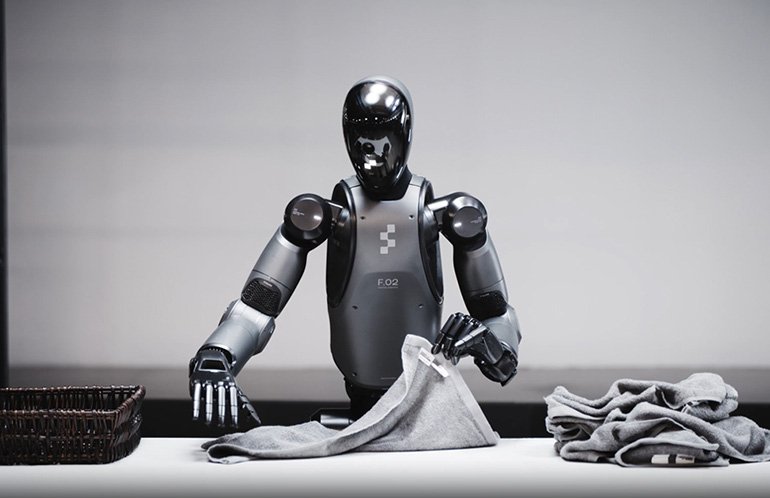
Figure’s robots carry estimated prices in excess of $100,000, reflecting the current cost reality of precision humanoid hardware. The company has partnered with BMW Group for manufacturing applications. Unlike Tesla’s primarily internal deployment model as of 2026, Figure’s enterprise-first strategy has produced documented third-party deployments, though the scale of those deployments remains limited and the robots’ performance in uncontrolled environments has not been independently verified in detail.
The Broader Field: China’s Scale Advantage and Agility’s Real Deployment
China’s humanoid robot industry had over 140 manufacturers and more than 330 models in development in 2025, with the country’s 15th Five-Year Plan accelerating investment in physical AI through 2030. Chinese companies including Unitree and Agibot were the top shippers of humanoid units in 2025, with projections for tens of thousands of units in 2026.
The most credible example of actual commercial deployment as of early 2026 belongs not to Tesla or Figure but to Agility Robotics. Agility’s Digit robot moved from prototype to commercial warehouse work in 2025, with Amazon using Digit in its fulfillment centers as part of its broader robotics strategy. The scale remains limited and the Robots-as-a-Service model Agility uses means unit economics are structured differently from outright sale, but the deployment represents documented commercial use in real logistics environments.
What These Robots Can and Cannot Do
The honest assessment of current humanoid robot capabilities is that they can reliably perform structured, repetitive tasks in semi-controlled environments — moving boxes, sorting parts, carrying loads between defined points. They cannot navigate the unpredictable complexity of a real home environment, perform dexterous manipulation of arbitrary objects, or exercise the judgment required for most non-routine tasks. Robots like Boston Dynamics’ Atlas are built for research and showcase extreme agility, but available humanoid robots target warehouse automation with high-end hardware and limited availability, not the general-purpose home and factory use that Tesla’s roadmap envisions.
The $20,000 to $30,000 price point that Tesla projects for mass production is aspirational rather than current. Current manufacturing costs for Optimus are estimated at $50,000 to $100,000 per unit, with initial commercial units likely to be priced between $100,000 and $150,000. The cost reduction to sub-$30,000 depends on manufacturing scale that has not yet been achieved.
The industry forecast of 500,000 or more humanoid units operational by the mid-2030s represents a credible trajectory if current technical progress continues and cost curves follow historical patterns for manufactured electronic devices. The more immediate claim — that humanoid robots will be doing useful household work for ordinary consumers within two to three years — requires a level of autonomous capability and reliability that, by Elon Musk’s own Q4 2025 earnings call admission, the technology has not yet achieved.