


There is a specific quality that distinguishes a travel book capable of genuinely changing a reader’s relationship with the world from one that merely describes it. It is not length, or critical acclaim, or sales figures. It is the capacity to make the reader feel, with physical urgency, that the life being described on the page is available to them — that the road, the mountain, the foreign city, the open sea exists not just for the person who wrote about it but for anyone willing to leave. The ten books below have demonstrated that capacity across decades of readers, multiple continents of origin, and formats ranging from memoir to novel to expedition account. Each has been selected not for completeness of a canonical list but for the specific quality of the departure it produces — the moment when the reader closes the cover and reaches for a map.
1. On the Road — Jack Kerouac (1957)
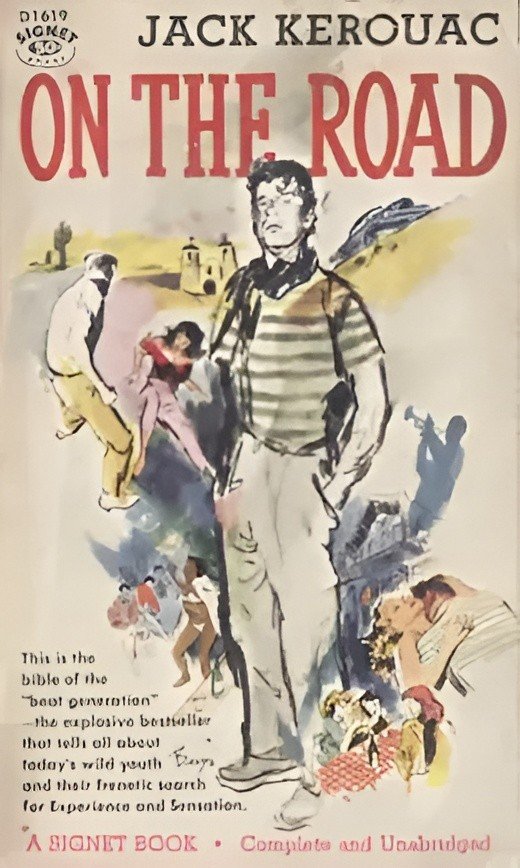
No book in the 20th century did more to establish the road as a legitimate subject of serious literature — or to convince a generation that movement itself was a form of meaning. With its smoky, jazz-filled atmosphere and its restless, yearning spirit of adventure, On the Road left its mark on the culture of the late 20th century, influencing countless books, films, and songs. Kerouac’s prose is remarkable both for its colloquial swing and for the pure lyricism inspired by the American landscape — the backroads and the black-tar roads that curve among the mournful rivers. Now acknowledged as a modern classic, it remains a thrilling and poignant story of the road less travelled.
The book’s specific gift to subsequent travel literature is not its content — two young men driving across mid-century America — but its argument: that the journey, conducted with full attention, is as valuable as any destination it approaches. That argument has never gone out of print.
2. Into Thin Air — Jon Krakauer (1997)
Krakauer was a journalist assigned to cover a commercial Everest expedition in May 1996 when a catastrophic storm killed eight climbers in a single afternoon. The book he wrote afterward is simultaneously the definitive account of that disaster and one of the most compelling arguments ever made for why human beings seek extreme places. Despite being a true story about a misbegotten group of tourists attempting to climb the summit of Mt. Everest, Into Thin Air often leaves even fine novels in the literary dust. Each of the characters is brought alive by Krakauer’s careful descriptions as they make their way upward, with their backstories carefully woven throughout so that when the climax arrives, the effect is horrifying, sad, exhilarating and satisfying all at the same time. The research Krakauer did to write the book places him in the pantheon of great narrative non-fiction writers.
Into Thin Air is not a book that makes Everest attractive. It is a book that makes the impulse toward extreme terrain comprehensible — and in doing so, it has sent more readers toward mountains of every height than any guidebook.
3. Eat, Pray, Love — Elizabeth Gilbert (2006)

Elizabeth Gilbert traces her decision to quit her job and travel the world for a year after suffering a midlife crisis and divorce, a journey that took her to three places in her quest to explore her own nature and learn the art of spiritual balance. The book has been a cultural flashpoint since publication — simultaneously beloved by millions and contested by critics who find its approach to non-Western cultures insufficiently rigorous. What is not contested is its impact: it encourages solo female travel in a way that few books before or since have matched, and has sent an identifiable wave of readers to Italy, India, and Bali specifically. Its significance in the wanderlust library is not aesthetic. It is demographic — it opened long-term independent travel as a concept to an audience that the genre had not previously served.
4. The Alchemist — Paulo Coelho (1988)

Technically a novel rather than a travel book — the story of a Spanish shepherd boy who travels from Andalusia to the Egyptian desert in pursuit of a recurring dream — The Alchemist occupies a distinct position in the wanderlust library because its argument is philosophical rather than geographical. This story, dazzling in its powerful simplicity and inspiring wisdom, is about an Andalusian shepherd boy named Santiago who travels from his homeland in Spain to the Egyptian desert in search of a treasure buried in the Pyramids. What starts out as a journey to find worldly goods turns into a discovery of the treasure found within. Lush, evocative, and deeply humane, the story of Santiago is an eternal testament to the transforming power of our dreams and the importance of listening to our hearts. The book was written in only two weeks, yet has inspired so many and been translated into over 67 languages. Its specific gift to readers contemplating departure is not the journey it describes but the permission it grants: that following an interior compass, however irrational it appears to others, is a legitimate form of navigation.
5. A Walk in the Woods — Bill Bryson (1998)

A classic in the making and one of the top-rated travel books on the internet, A Walk in the Woods tells the story of one man’s effort to hike the magnificent Appalachian Trail, which spreads from Georgia to Maine. It documents the towns along the route well and offers a historical perspective, but it also shares Bill’s personal anecdotes and journey notes. Bryson is the most consistently accessible voice in contemporary travel writing — capable of making terrain that most readers will never visit feel immediately, physically present. His specific contribution to the wanderlust genre is the demonstration that the writer does not need to be heroically equipped or athletically exceptional to pursue extraordinary places. He is, throughout the book, entirely ordinary and frequently underprepared. That accessibility is precisely the quality that has made this one of the most effective departure-inducing books in the genre.
6. Wild — Cheryl Strayed (2012)

Inspiring, and genuinely true, Wild follows a woman who fights against all odds and learns about herself along the way. It documents her decision to hike the Pacific Crest Trail with not a real clue what to do. That underpreparation — which Strayed documents with complete honesty, including the physical damage it produced — is paradoxically the book’s most powerful argument for departure. It demonstrates that the prerequisite for a transformative journey is not competence but commitment. The book’s specific legacy in travel literature is the acceleration of long-distance hiking as a mainstream activity: PCT thru-hiker numbers increased measurably in the years following publication, a documented literary-to-behavioral pipeline that few books in the genre have produced.
7. Seven Years in Tibet — Heinrich Harrer (1952)
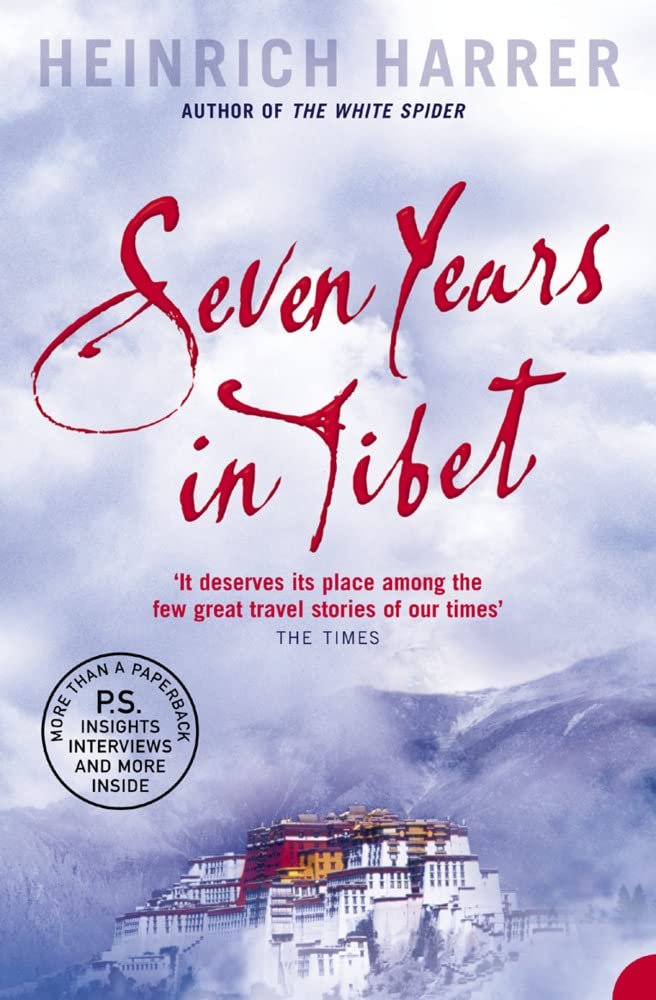
Seven Years in Tibet is an epic adventure classic and travel memoir by Heinrich Harrer, written in 1952. Harrer is among Europe’s first travelers to visit Tibet and meet the Dalai Lama, and his captivating memoir tells about his trip — the everyday life of Tibetans, which is by no means an easy one, comes to light in this optimism-filled, inspiring book. The book’s significance in the wanderlust library is partly historical — it documented a Tibet that no longer exists in the form Harrer encountered it — and partly perennial: it is one of the most complete accounts of genuine cultural immersion ever written by a Western traveler, covering seven years rather than the weeks or months that most travel memoirs span. The scope of that immersion, and the depth of cultural understanding it produced, represents a standard that subsequent travel writers have measured themselves against.
8. The Living Mountain — Nan Shepherd (written c. 1945, published 1977)
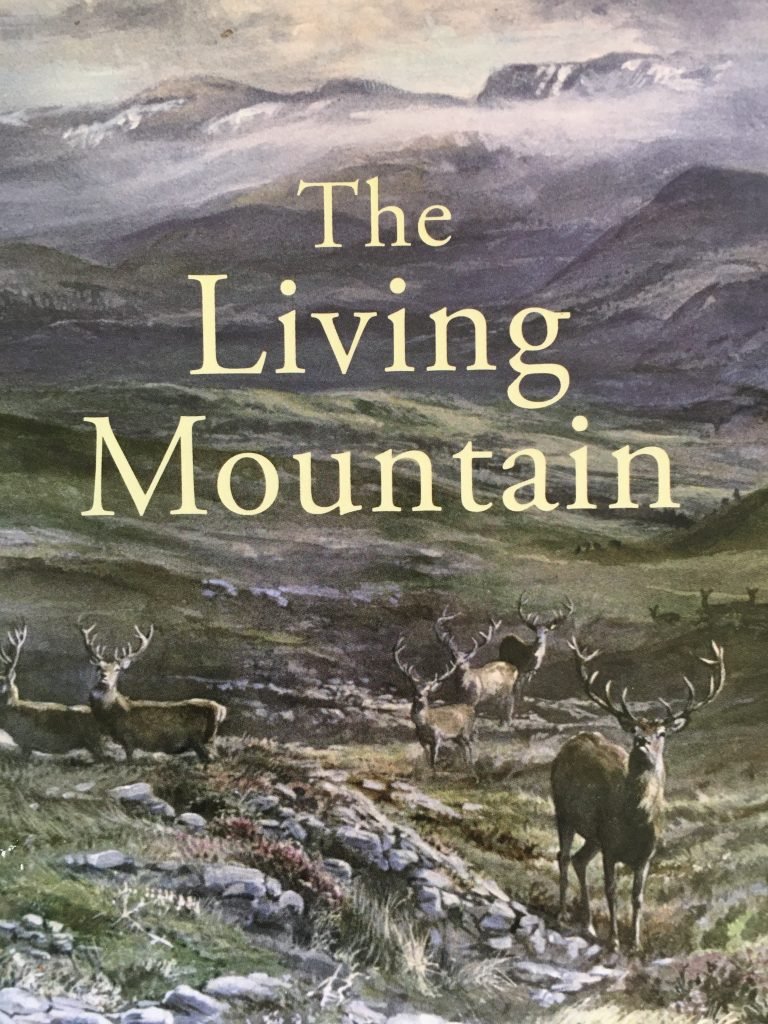
Nan Shepherd’s manuscript was composed during World War II and lay untouched for almost four decades, nearly lost to time, before it was finally published. In the decades since, audiences and critics of all generations have embraced it as a classic, an enduring testament to the magnificence of mountains and our communion with the environment. It is reissued in 2025 with a fresh introduction by Jenny Odell. Shepherd’s book is not a narrative of ascent or conquest — it is a sustained meditation on what it means to inhabit a landscape at depth rather than pass through it. Written about Scotland’s Cairngorm plateau, it is the purest literary argument for slow, attentive travel that the English language has produced, and its influence on contemporary nature writing and mindful travel literature is pervasive. It does not send readers to specific places. It changes how they inhabit wherever they go.
9. In Patagonia — Bruce Chatwin (1977)
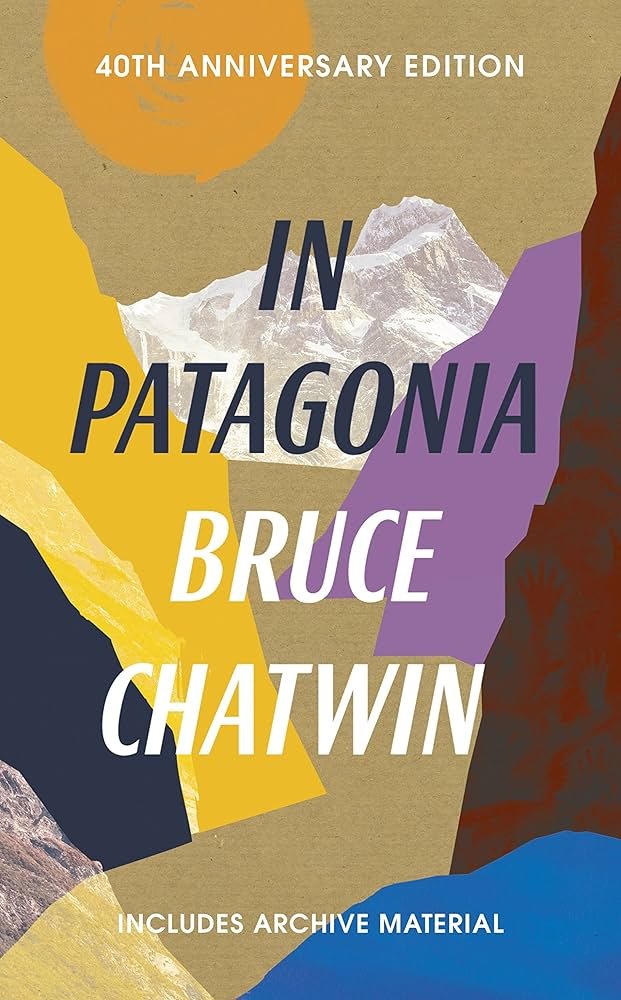
Chatwin traveled to southern Argentina and Chile in 1974 to find a piece of brontosaurus skin his grandmother kept in a cabinet — a journey that produced one of the most formally innovative travel books of the 20th century, combining personal narrative, embedded history, and portraits of the extraordinary human beings who ended up at the end of the world. Its influence on travel writing as a form is difficult to overstate: it demonstrated that a travel book could be as structurally inventive as the best literary fiction while remaining grounded in documented place and verifiable fact. Its influence on actual travel behavior is equally concrete — Patagonia as a destination for independent travelers was substantially shaped by the reading audience that Chatwin’s book created and sent south.
10. Nomadland — Jessica Bruder (2017)
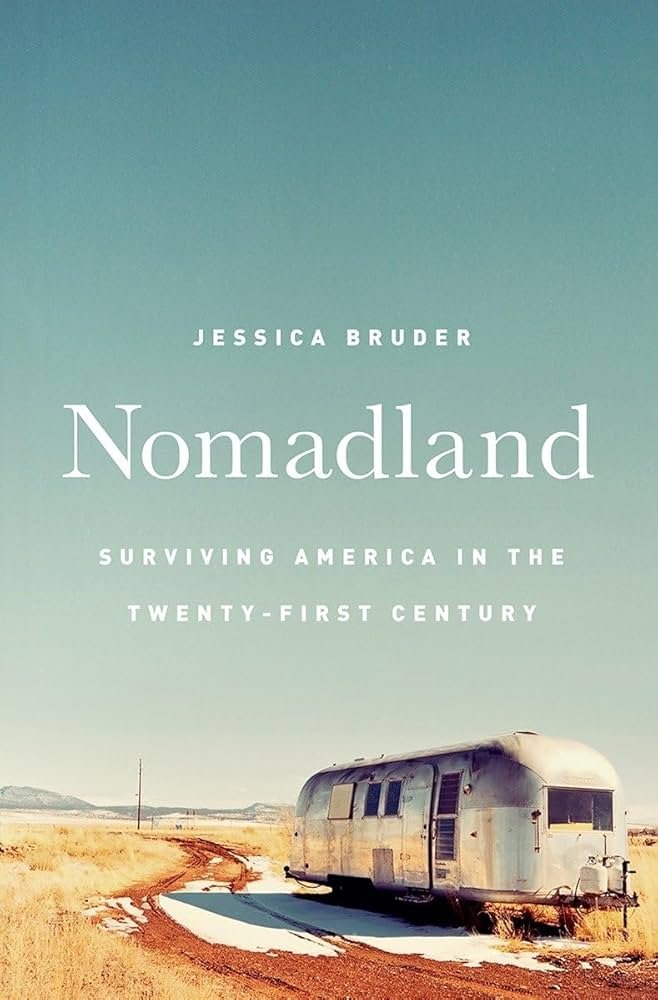
In Nomadland, Bruder tells the stories of Americans who, after losing jobs or homes, live on the road in vans, RVs, and converted trucks. This intimate and eye-opening book shines a light on a hidden world of modern nomads and will inspire readers to consider what it means to seek freedom in unconventional ways. Its position in a wanderlust library is distinct from the nine books above because it does not romanticize the road — it documents, with journalistic rigor, the economic conditions that have driven a significant population onto it. Its effect on readers has nonetheless been the same as the most aspirational travel literature: a fundamental reconsideration of the relationship between a fixed address and a meaningful life. That it achieves this through reportage rather than personal adventure is precisely what makes it the most important travel book of the past decade — and the most honest argument in this list for the proposition that mobility, chosen or compelled, reveals what settled life conceals.
The Common Thread
Across formats, decades, and geographies, these ten books share one structural characteristic: they each create, in the reader, a problem that only movement can solve. The problem is not logistical — it is existential. Kerouac makes stillness feel like a failure of attention. Krakauer makes the absence of challenge feel like a failure of nerve. Shepherd makes the absence of deep looking feel like a failure of perception. The books do not tell readers where to go. They make staying, in the same place, with the same assumptions, in the same unexamined life, feel like the riskier choice. That is the specific function of the wanderlust library — and these ten volumes perform it as well as any literature in print.