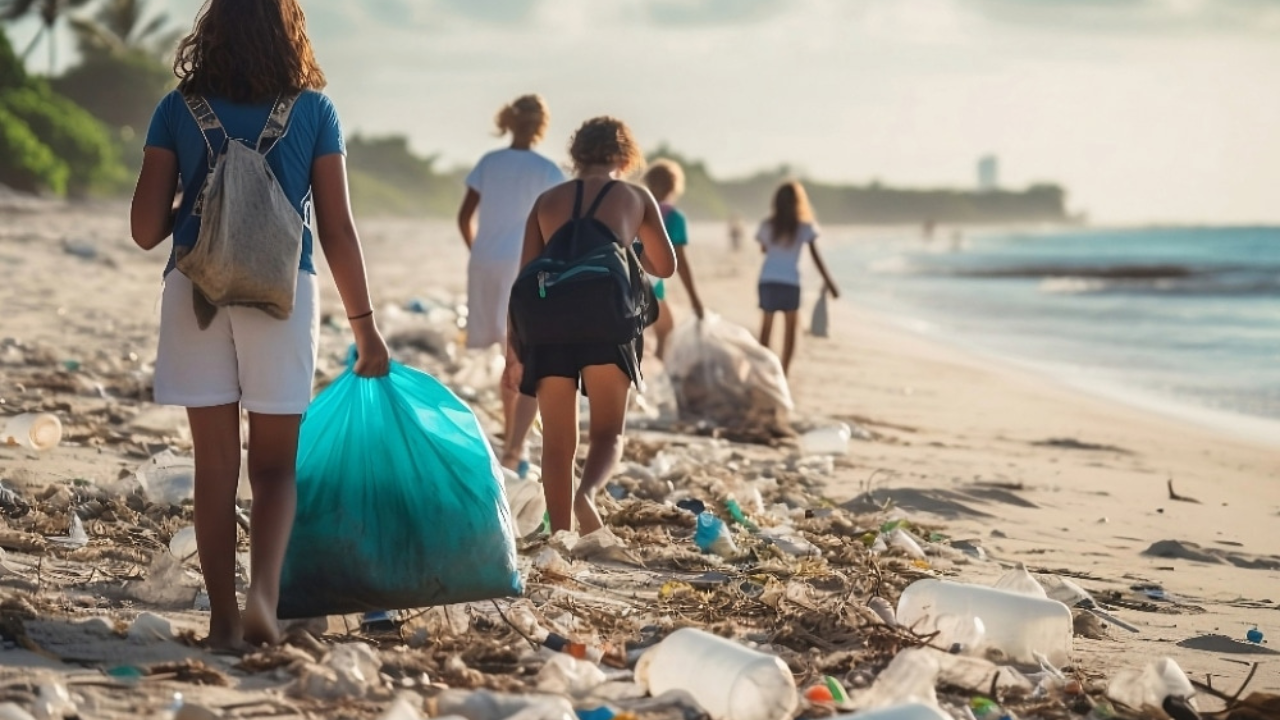


The appeal of combining travel with purposeful contribution is genuine, growing, and well-documented. The global volunteer tourism market was estimated at $848.9 million in 2023 and is expected to reach $1.27 billion by 2030, growing at a compound annual growth rate of 6.1%, driven by increased global awareness of social and environmental challenges and rising interest in meaningful travel experiences. Over 40% of market growth is attributed to young travelers under 30 years of age, and approximately 55% of global volunteer tourists are female participants.
Behind those figures, however, lies a sector that the United Nations, UNICEF, ECPAT International, and peer-reviewed academic literature have documented as capable of causing serious harm — not despite good intentions, but through them. Understanding both the genuine value and the documented risks of voluntourism is not an academic exercise. It is the prerequisite for any traveler who wants their contribution to help rather than harm.
The Market Reality: Growth Alongside Growing Concern
In 2023, volunteer tourism was worth approximately €725 million, and it is projected to grow more than 6% annually through 2030, according to Grand View Research. In Europe alone, the market is expanding by 4.6% per year. According to the Dutch Centre for the Promotion of Imports, Europeans aged 15 to 29 still account for a substantial portion of the estimated 1.6 million people who volunteer abroad each year.
The demographic expansion of voluntourism is notable. A growing number of post-family travelers — those over 50 who have more time, more resources, and an appetite for immersive experiences — are embracing voluntourism. This segment is forecast to grow nearly 8% annually through 2030, and tour operators have responded with dedicated trips tailored to older adults, ranging from childcare volunteering in Nepal to conservation initiatives at a puma sanctuary in Argentina.
The cost of participation has created its own barrier and ethical dimension. The average fee for a one-month volunteer program ranges from $2,000 to $5,000, according to a 2024 report from the UNWTO. These costs typically cover accommodation, food, and a donation to the hosting project, but they can deter potential volunteers, particularly those from lower-income countries. The financial architecture of most commercial voluntourism — in which the paying volunteer is the customer and the community is the product — is the structural tension that much of the criticism of the sector addresses directly.
The Documented Harm: What Peer-Reviewed Research and UN Bodies Have Found
Any responsible treatment of voluntourism must engage directly with the body of evidence documenting harm caused by poorly designed, unregulated, or commercially driven programs. This is not a fringe critique. It is the position of the United Nations, UNICEF, ECPAT International, and peer-reviewed journals across multiple disciplines.
Voluntourism — the practice of combining travel with volunteer work — has become increasingly popular, particularly among young people from the Global North seeking meaningful, short-term experiences in the Global South. Despite often being motivated by good intentions, voluntourism raises complex ethical questions about global inequality, power imbalances, colonial legacies, and the unintended consequences of short-term, unskilled intervention in vulnerable communities.
The orphanage tourism dimension is the most extensively documented harm in the voluntourism literature and requires direct, unambiguous treatment. The rising demand for orphanage placements among foreign volunteers has, in some cases, encouraged the institutionalization of children to sustain the industry. This troubling trend, described by some researchers as the creation of orphans, reflects how market logic can distort child welfare. Contrary to assumptions held in the Global North, the large majority of children in orphanages have at least one living parent. Institutionalization is frequently driven not by abandonment but by poverty and lack of access to basic services. Some institutions even pressure families to give up their children under the guise of providing better opportunities.
Orphanage voluntourism serves as a critical mechanism to attract and retain international donors by facilitating direct contact between children and current or prospective donors. The popularity of funding and volunteering in orphanages has spurred demand for institutionalizing children, sometimes met through active recruitment and placement of children in contravention of legal gatekeeping measures and in violation of children’s rights and best interests. This has been documented as a significant issue in at least 37 countries.
The Office of the United Nations High Commissioner for Human Rights has warned that unregulated voluntourism trips provide an avenue for offenders to access vulnerable children, posing threats and harm to children’s physical, emotional, and cognitive development. Volunteers in unregulated programs are usually short-term, unskilled, and have no previous experience — and are placed in settings with no supervision and no criminal background checks.
According to a United Nations report from the Special Rapporteur on the sale and sexual exploitation of children, voluntourism must be regulated and monitored to protect children from exploitation and sexual abuse, with the post-pandemic tourism surge having increased risks in largely unregulated volunteer tourism settings.
The broader structural critique extends beyond orphanage settings. Critics argue that poorly planned voluntourism efforts can lead to unintended consequences including neglect of local needs, undermining of local economies by providing free labor in roles that would otherwise employ local workers, and the exacerbation of existing inequalities. Some travel companies have been accused of using voluntourist packages for their own profit rather than out of any regard for the people they are meant to be helping.
The Effective Programs: What Responsible Voluntourism Actually Looks Like
The documented harms of voluntourism do not delegitimize the concept — they define the standards that legitimate programs meet and illegitimate ones do not. The distinction between these categories is specific, verifiable, and consequential.
Responsible organisations follow child safeguarding policies, avoid orphanage tourism entirely, and do not allow short-term unsupervised contact with children. Good projects are honest about the skills required, provide training and support, and do not invite unqualified volunteers to perform sensitive tasks such as medical procedures or counselling. The organisation should explain clearly where funding goes — which portion supports local partners and which covers administration or marketing.
Responsible Travel stopped selling orphanage volunteer holidays more than a decade ago after evidence showed children were being placed in institutions unnecessarily to attract well-meaning tourists. Sarah Faith, senior values writer for Responsible Travel, notes that citizen science trips — holidays where participants contribute to ongoing scientific research — represent one of the most credible current forms of voluntourism. Examples include entering data on seabirds spotted during an Arctic expedition cruise into a research app, or collecting freshwater samples for inclusion in a global environmental DNA databank.
UNESCO’s World Heritage Volunteers initiative runs camps where travelers can participate in restoring historic sites across 41 countries. The EU-funded European Solidarity Corps sends thousands of young people abroad each year on placements lasting from two weeks to a year, with clear rules on training, support, and child protection. Participants receive preparation, mentoring, and sometimes financial support, and organisations must respect quality standards. In January 2024, GVI launched Climate Action-specific programs in partnership with research institutions, focusing on data collection and marine ecosystem restoration. In March 2024, Plan My Gap Year achieved B Corp Certification, validating its commitment to social and environmental performance, transparency, and accountability.
The Skills-Match Imperative: Why What You Bring Matters More Than Your Willingness
One of the most consistent findings in voluntourism research is that skills-matched placements generate community benefit while unskilled short-term placements frequently do not — and can actively harm. Projects Abroad announced in October 2024 a strategic shift towards more skilled volunteering roles, prioritizing placements for professionals and qualified individuals — an institutional response to the documented evidence that unskilled short-term volunteers frequently consume more organizational resources in training and supervision than they contribute in productive work.
The practical implication for volunteers is direct: a doctor who spends two weeks staffing a rural health clinic delivers verifiable value. A gap-year student who spends two weeks caring for children in an orphanage — with no child development training, no language skills, and no criminal background check — does not, and may cause harm. The question every prospective volunteer must ask before booking is not whether they want to help but whether the specific help they can provide is actually what the community needs, in a form that a local worker could not provide more effectively and sustainably.
Ethical concerns, particularly around the commodification of poverty, remain a significant challenge in volunteer tourism. The industry is largely unregulated, meaning that the quality of programs and the genuine benefit to communities varies enormously. The absence of regulation means that the due diligence burden falls on the volunteer. A program that passes ethical scrutiny and a program that fails it can be marketed in nearly identical language — and distinguishing between them requires asking specific questions that most booking processes do not prompt.
The Verification Framework: Questions to Ask Before Booking
The framework for evaluating a voluntourism program before committing time and money to it has been developed through both academic research and practitioner experience, and the questions it generates are specific enough to produce meaningful differentiation between programs.
Does the program require skills or qualifications that match the tasks? A construction project that welcomes unskilled volunteers without providing professional supervision is unlikely to produce structures that meet safety standards — and the cost of correcting substandard work often falls on the community after the volunteers have departed.
Does the program have a minimum duration that reflects genuine community benefit? Longer stays with modest lifestyles usually have less impact than frequent short trips. The concept of slow voluntourism — staying longer, learning local languages, and supporting grassroots initiatives — aligns better with genuine community benefit than the short-term, high-turnover model that commercial voluntourism has normalized.
Does the program involve direct unsupervised access to children? Responsible organisations follow child safeguarding policies that include criminal background checks for all volunteers working with children, mandatory training in child protection principles, and supervised rather than unsupervised contact. Any program offering direct access to children without these protocols should be avoided regardless of how it is presented.
Is the program led by the community it claims to serve? The most meaningful cultural programs are those built with care by local communities, ensuring each element adds value to both the visitor and the people who call the destination home. Externally designed programs parachuted into communities without genuine local ownership do not provide authentic impact — they provide a performance of it.
Does the program disclose its financial model transparently? The organisation should explain clearly where funding goes — which portion supports local partners and which covers administration or marketing. A program that charges $3,000 for a month’s placement but cannot account for where that money goes relative to direct community benefit is not meeting the transparency standard that ethical voluntourism requires.
The Alternatives: When Not Volunteering Is the Better Choice
For travelers whose skills, duration, and language capacity do not meet the threshold for skills-matched placement, there are verified alternatives that generate genuine community benefit without the risks of poorly matched voluntourism.
Choosing locally owned accommodation, restaurants, and tour operators directs spending to community members rather than international chains — a form of economic voluntourism that requires no placement, no application, and no minimum duration. Purchasing directly from artisans, farmers’ markets, and community cooperatives provides sustainable income to producers without the intermediary markup that tourist shops apply. Donating directly to locally led NGOs — after verifying their credentials through Charity Navigator, GiveWell, or equivalent databases — provides financial support without the overhead costs that commercial voluntourism programs build into their fees.
Some vacation rental platforms now offer options for travelers to book holidays run by charities, where profits go directly back into community projects — a model that captures the purposeful travel impulse without requiring the volunteer to deliver a service they may not be qualified to provide.
The Honest Accounting
Voluntourism at its best — skills-matched, community-led, appropriately supervised, transparently funded, and of sufficient duration to generate genuine impact — is among the most meaningful forms of travel available. The programs that meet those standards exist, are growing in number and quality, and deliver documented benefit to both volunteers and host communities.
Voluntourism at its worst — unskilled, short-term, commercially driven, and operating without child safeguarding protocols — has been documented by the United Nations, peer-reviewed research across multiple disciplines, and a growing coalition of child protection organizations as capable of causing serious harm to the communities and children it presents itself as serving.
The gap between those two descriptions is not bridged by good intentions. It is bridged by the specific, verifiable questions that prospective volunteers ask before they book — and by the willingness to walk away from programs that cannot answer them satisfactorily.