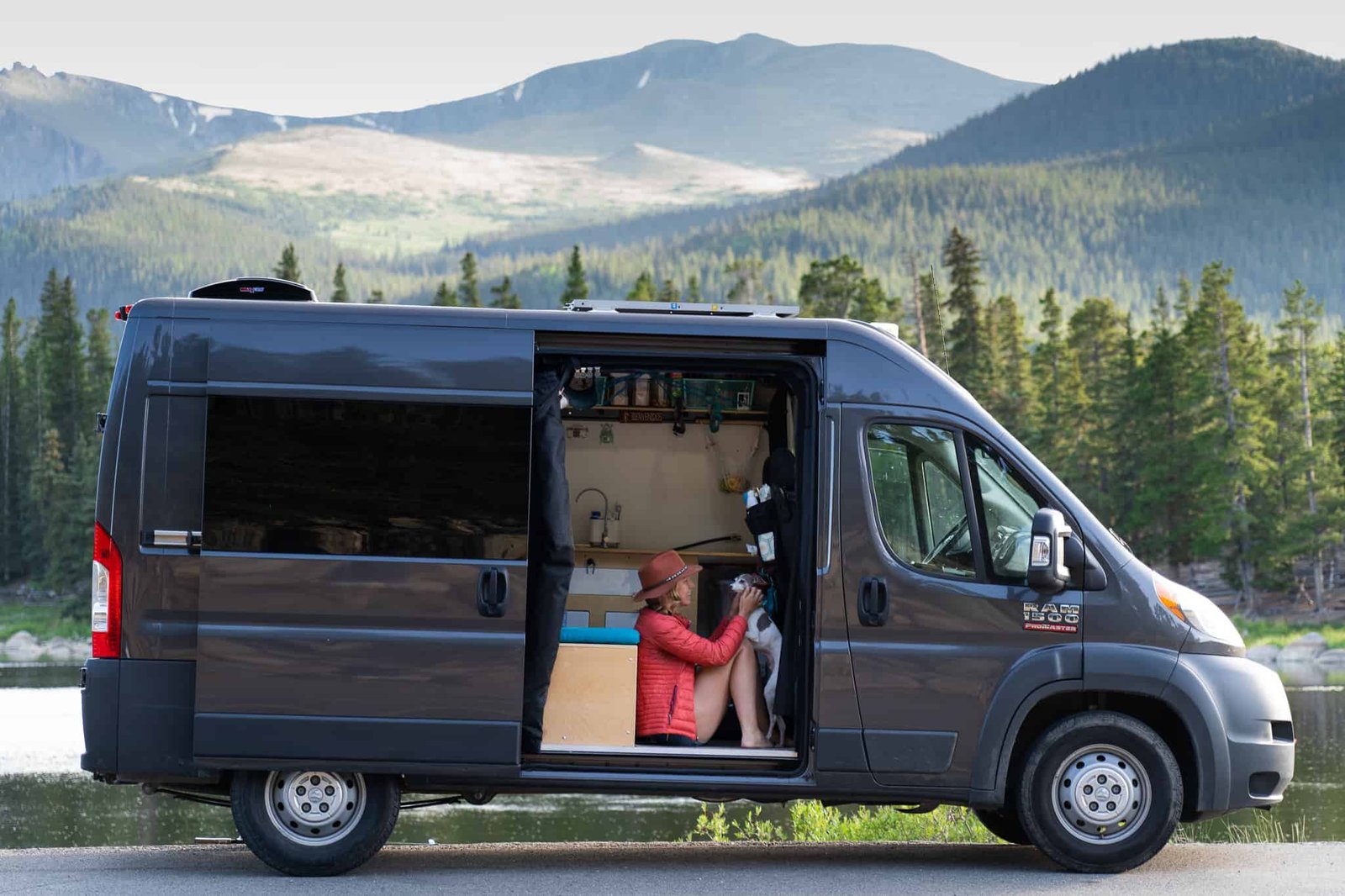


The appeal of full-time van and caravan living is not difficult to understand. No landlord, no fixed address, no lease renewal anxiety, no commute. Wake up in a national forest on Monday, a coastal bluff on Wednesday, a mountain meadow by the weekend. The imagery is real — those places exist, those mornings happen, and millions of people who have done it describe it as among the most formative experiences of their lives. The problem is not that the appeal is false. It is that the presentation of that appeal is systematically incomplete, and the gap between the curated version and the operational reality is wide enough to end the lifestyle for a significant proportion of people who attempt it.
Understanding van life and caravan living accurately — with its genuine advantages and its documented costs, physical, financial, and psychological — is the only basis on which a decision to pursue it can be made soundly.
The Scale of the Movement: Growth, Demographics, and a Significant Shift
The van life movement has expanded substantially since its pre-pandemic baseline. As of 2019, around 140,000 people were living in a van or other vehicles full time in the United States. Since COVID-19, the number has increased significantly — the pandemic accelerated interest in the lifestyle as many realized they could work from anywhere, with remote work becoming widespread during lockdowns. he Van Life Foundation survey indicates participation grew to 4.1 million Americans by 2023, a 22% increase from 2021, and the Van Life Community Survey 2024 shows membership in related groups grew 28% year-over-year to 1.2 million members.
The broader recreational vehicle market reflects similar momentum. The global caravan and motorhome market was valued at $59.67 billion in 2024 and is projected to reach $117.50 billion by 2033, growing at a compound annual growth rate of 7.82%. As of 2024, there are an estimated 11.2 million RV-owning households in the U.S., with roughly one in five U.S. households expressing interest in purchasing an RV in the future.
However, a counternarrative has emerged in parallel with this growth that deserves honest acknowledgment. Cramped living quarters and the unsustainability of permanently living at work and travel have proven to be an immense undertaking that most people do not have the time and money for — a correction to the expectation gap that the pandemic-era surge in interest created for many people who attempted full-time van living without adequate preparation. The data suggests the lifestyle is not declining — it is maturing, with a clearer-eyed cohort replacing the aspirational first wave.
The Financial Reality: Upfront Costs, Monthly Expenses, and the Number Nobody Posts
The financial case for van life rests on a specific claim: that it costs less than conventional housing. The data partially supports this — with important qualifications.
The upfront investment is the first number that separates van life planning from van life reality. In 2023, van life startup costs averaged $45,000 for a full build-out including vehicle purchase and conversion. The range is wide: van conversion costs range from under $1,000 to well over $40,000, with DIY conversions taking anywhere from a few months to over a year. A used cargo van purchased for $15,000 with a basic $8,000 DIY conversion represents the accessible lower end. A professional 2023 Mercedes Sprinter conversion with solar, a shower, and hardwood finishes can exceed $150,000.
Monthly expenses, once on the road, run in a range that most people do not anticipate when they first encounter the lifestyle on social media. Van life costs range from $800 to $2,000 per month depending on lifestyle choices and travel habits, with fuel at $200 to $600 per month, food at $250 to $1,000, vehicle insurance at $100 to $180, health insurance at $200 to $500, and camping fees at $0 to $900 based on whether free public land camping or premium sites are used.
Most Americans spend $1,600 to $2,200 monthly on housing including rent, utilities, insurance, and maintenance. The cost of living in a van per month often lands in a similar range, just distributed differently across categories — rent is eliminated but fuel costs appear, utility bills are gone but campground fees replace them, home maintenance is replaced by vehicle repairs that frequently cost more than fixing a leaky faucet. The total often evens out, but the unpredictability takes getting used to.
The vehicle repair variable is the most financially dangerous item on that list. A breakdown in rural Montana costs significantly more to fix than the same problem in a home city. Having $5,000 to $8,000 available for immediate repairs can mean the difference between a minor inconvenience and a major financial disaster. While van life can be less expensive than traditional living, unexpected costs like vehicle repairs and healthcare can create significant financial stress. A major mechanical failure — transmission, engine, or electrical system — on a conversion van in a remote location can cost $3,000 to $8,000 at a specialist shop, and these failures do not announce themselves in advance.
According to Nomad List data, 73% of van lifers save 15 to 30% more on housing costs annually compared to traditional renting, averaging $12,000 in annual savings. That figure is real for practitioners who camp primarily on free public land, cook their own meals, and drive moderate distances. It does not describe van lifers who stay regularly at paid campgrounds, eat out frequently, and cover high mileage.
The Genuine Advantages: What Van Life Actually Delivers
The advantages of full-time van and caravan living are substantive and documented across both financial and experiential dimensions.
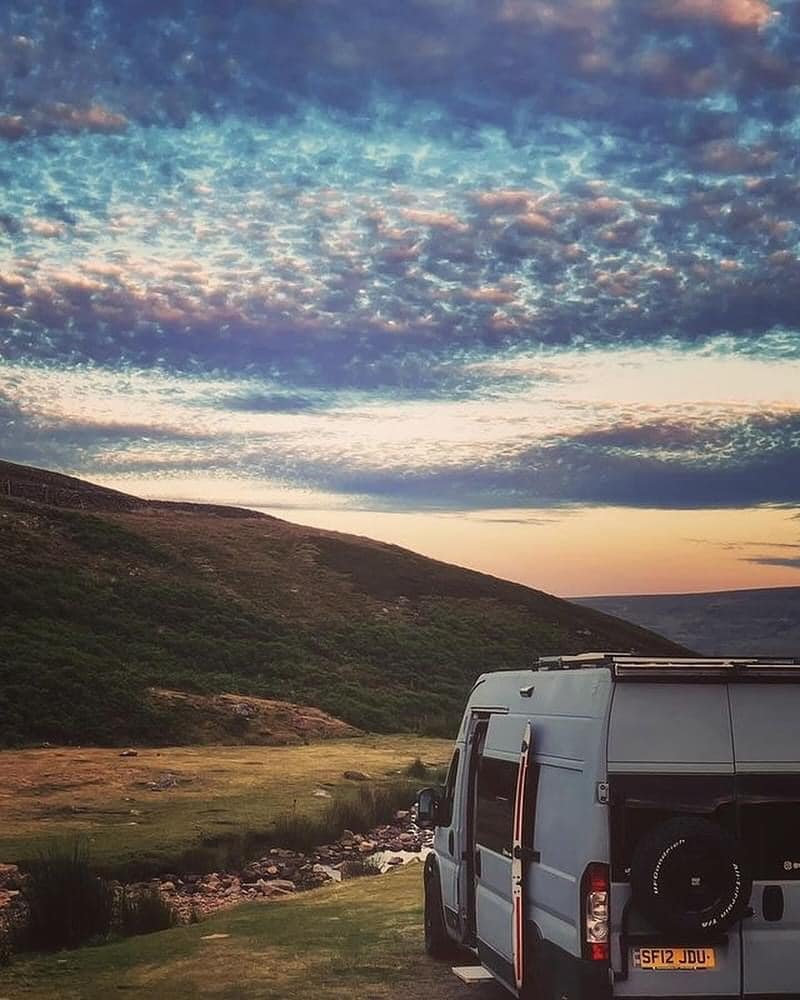
Housing cost elimination is the most immediate financial benefit, and for people living in high-cost urban areas, the contrast is stark. A person paying $2,500 per month for a one-bedroom apartment in a major metropolitan area who transitions to van life on free Bureau of Land Management land is reallocating that money entirely — even after fuel, food, and vehicle costs are accounted for.
Technology has made off-grid living sustainably obtainable. Battery systems from manufacturers like EcoFlow now allow campervans to be completely self-sustaining — wherever parked, whether in the city or the mountains, comfortable living is possible without being plugged in. Self-contained composting toilets remove the requirement for RV dump stations, and boondocking apps provide real-time information on free camping spots, allowing spontaneous location decisions that reservation-dependent travel cannot replicate. U.S. Travel Association
Geographic freedom is the advantage most consistently cited by long-term practitioners. The ability to follow seasons — avoiding summer heat by moving to elevation, avoiding winter by migrating south — means van lifers can optimize their environment in ways that fixed-address living cannot. Colorado, California, Florida, Oregon, and Washington attract the highest concentrations of van lifers due to their natural environments and weather profiles that support the lifestyle across multiple seasons.
The simplification of possessions — forced by space constraints — is reported by a substantial proportion of long-term van lifers as a benefit that was not anticipated but became among the most valued aspects of the transition. Living in 60 to 80 square feet eliminates the accumulation dynamic that most conventional housing supports, and the reduction in maintenance, cleaning, and organizational overhead is real and measurable in time as well as money.
The Challenges That Social Media Systematically Underrepresents
The documented challenges of full-time van and caravan living cluster around three categories: social isolation, logistical friction, and physical constraint.
Isolation is the challenge most consistently identified as the primary reason people leave the lifestyle. One of the most significant challenges is the potential for isolation and loneliness. While the freedom to roam is liberating, it can also lead to a lack of consistent social interaction, which can negatively impact mental health. The transient nature of van life can make it difficult to form lasting relationships, leading to feelings of isolation and loneliness.
The physiological consequences of loneliness are well-documented in the medical literature and apply to van lifers as directly as to any other isolated population. The long-term health consequences of loneliness and insufficient social connection include a 29% increased risk of heart disease, a 32% increased risk of stroke, and a 50% increased risk of developing dementia in older adults, according to the U.S. Surgeon General. Van life communities — both online and at physical gatherings — exist specifically to address this gap, and practitioners who actively build and maintain community connections report substantially better outcomes than those who attempt the lifestyle in social isolation.
Logistical friction compounds daily in ways that fixed-address living resolves invisibly. Navigating the maze of local regulations and restrictions on overnight parking or camping is an ongoing challenge. Weather extremes pose a significant hurdle — from scorching heat to freezing cold, the climate can impact both comfort and safety, and insulating a van properly becomes crucial while condensation is an ongoing issue.
Basic hygiene infrastructure requires active management that conventional housing provides automatically. A gym membership — Planet Fitness and Lifetime Fitness are the most popular options among van lifers — provides access to showers at a cost of approximately $16 to $70 per month per person. Mail forwarding, vehicle registration, health insurance access, banking, and medical care all require deliberate systems that fixed-address residents take for granted.
The lack of stability and routine, while exciting for some, can be stressful for others. The unpredictability of life on the road can lead to feelings of insecurity and anxiety. Without a fixed routine or a stable living environment, some individuals may feel ungrounded and disoriented. This is not a universal experience — many van lifers report that the routine of daily life on the road provides more structure than they anticipated. But it is a documented pattern that affects a measurable proportion of full-time practitioners, and dismissing it as a personality weakness misrepresents what the research shows.
Connectivity: The Infrastructure That Has Changed What Is Possible
One dimension of van life that has genuinely transformed in recent years is connectivity — and with it, the viability of remote work from the road. In 2024 alone, two new iterations of Starlink redefined connectivity on the road. Battery systems like EcoFlow now allow campervans to be completely self-sustainable, and self-contained toilet systems no longer require trips to RV dump stations — removing the two infrastructure dependencies that most limited full-time van living in earlier years. U.S. Travel Association
Most serious van lifers carry data plans from two to three different carriers to ensure coverage in remote areas, adding signal boosters, external antennas, and backup devices — at a total connectivity cost of $180 to $280 monthly just for internet access. Starlink’s RV and mobile plans have reduced this complexity significantly for practitioners in covered areas, providing reliable broadband at locations where cellular data previously failed.
The Honest Assessment: Who It Works For and Who It Does Not
The van life and caravan lifestyle is not universally suited to everyone who is attracted to it, and the honest assessment of fit requires evaluating several specific factors that enthusiasm cannot substitute for.
The Van Life Census 2024 reports 33% of full-time van lifers are couples without children and 36% travel solo, with 24% of participants being parents traveling with children under 18. 68% of van lifers are aged 25 to 44, with Millennials comprising 52% of the total population. The lifestyle disproportionately works for people without school-age children in fixed educational systems, people with location-independent income, and people whose social needs can be met through periodic community rather than consistent proximity to a fixed social network.
The financial case is strongest for people who would otherwise pay high urban rents, who can generate income remotely, who are comfortable with mechanical self-sufficiency or have the budget to outsource it, and who have an emergency fund specifically sized for vehicle failure rather than general emergencies.
The van life trend is not disappearing — it is recalibrating. The lifestyle persists and grows among practitioners who entered it with accurate expectations and adequate preparation. It continues to disappoint those who entered it with the expectations that a well-curated Instagram feed provides. The sunrise is real. So is the repair bill. Planning for both is the only version of this decision that holds up past the first mechanical failure on a remote road at dusk.