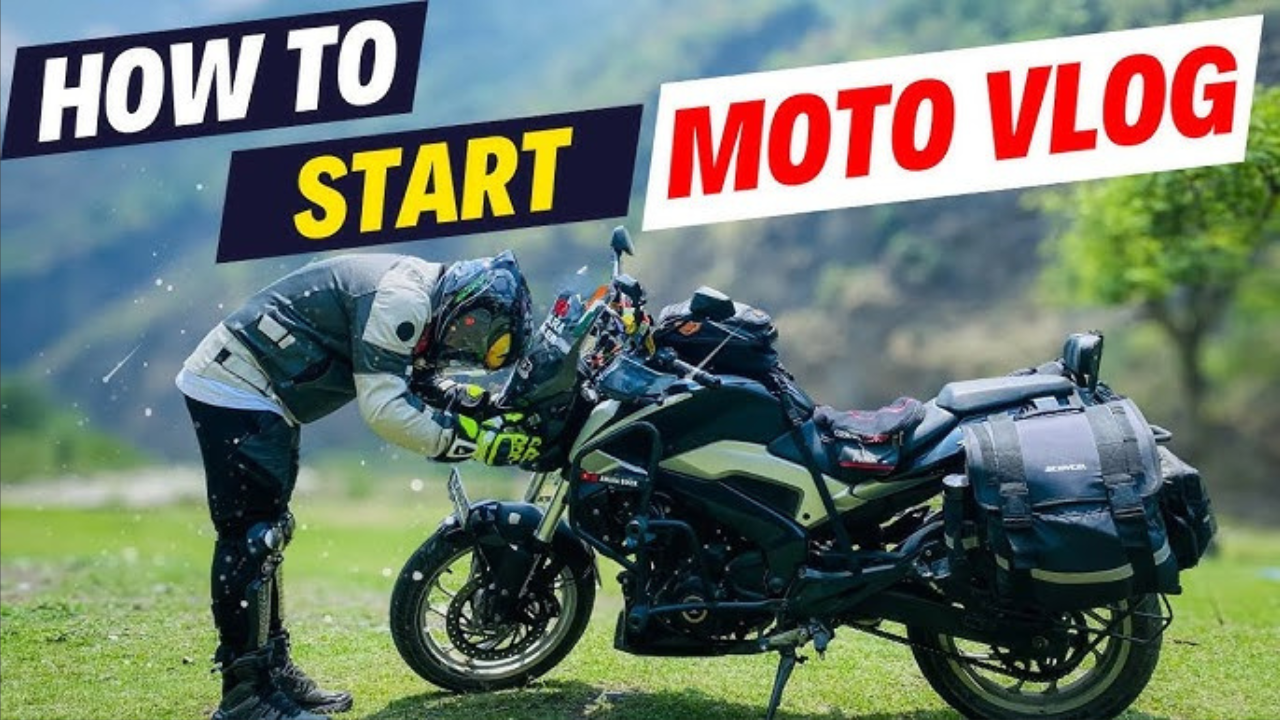


Moto vlogging sits at the intersection of two demanding disciplines: safe motorcycle riding and competent video production. The barrier to entry has dropped significantly in recent years — camera quality has improved dramatically, stabilization technology has matured, and editing software has become more accessible. What has not simplified is the decision architecture a new moto vlogger faces: which camera, which mount position, how to solve the wind noise problem that destroys more moto vlog audio than any other single factor, and how to navigate a legal landscape around helmet-mounted cameras that varies by state and country. This guide addresses each of those questions with verified technical information rather than marketing copy.
The Camera Decision: Three Platforms, Different Strengths
The action camera market for moto vlogging in 2026 is dominated by three platforms, each with a documented performance profile that suits different content priorities.
The GoPro Hero13 Black represents the most established option in the segment. The Hero13 Black delivers 5.3K video at 60fps and 4K at 120fps with 10-bit color and HLG HDR for enhanced dynamic range and color depth. Its updated HyperSmooth stabilization and slow-motion features remain among the best in the industry, and a built-in GPS geotagging function returned after being absent on the Hero12 Black. GoPro also introduced a magnetic mounting system on the Hero13 that speeds up the mounting and dismounting process — a practical advantage for riders who switch between helmet and bike mounts frequently. The Hero13 also supports Bluetooth audio connectivity, allowing direct wireless pairing with external microphones or Bluetooth headsets — a meaningful addition for riders who want cleaner voice audio without physical cable management.
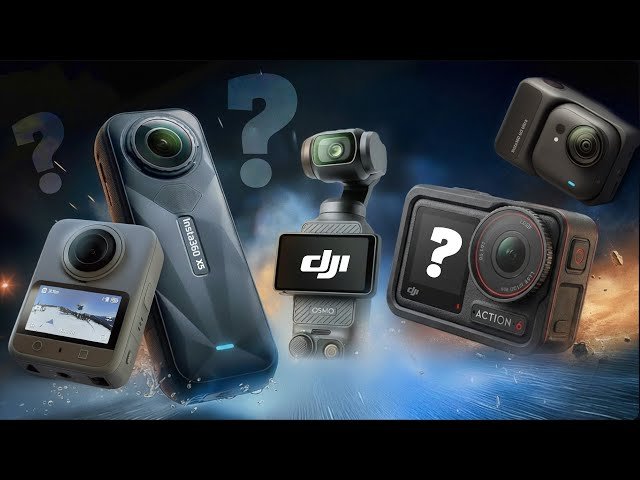
The Insta360 Ace Pro 2 occupies a different position. The Ace Pro 2 keeps the 1/1.3-inch Leica sensor but improves image processing for enhanced dynamic range and color accuracy in varying light. It records up to 8K and offers RAW and JPG support, along with manual controls for shutter speed and ISO. Its magnetic mounting system makes attachment to helmets and bikes considerably simpler, and FlowState stabilization has been upgraded to smooth out bumpy road surfaces. Battery life is slightly improved and the camera is rated IPX8 waterproof without requiring a separate case.
For riders who prioritize editorial flexibility above all else, the Insta360 X5 introduces a fundamentally different workflow. The X5 is capable of filming in 8K 360° video at 30fps, 5.7K at 60fps, and 4K at 120fps with dual 1/1.28-inch sensors and a triple AI chip system. Its PureVideo mode uses AI-powered noise reduction for superior low-light performance, and the 2,400mAh battery delivers up to 185 minutes of 5.7K recording with rapid 80% recharge in 20 minutes. The practical advantage of 360 capture for moto vlogging is the ability to film in all directions simultaneously and choose framing in post-production — a workflow that eliminates the need to choose a camera angle before the ride begins. U.S. Travel Association
The trade-off is post-production complexity. 360 cameras add an extra level to the editing process — reframing must be done in the manufacturer’s app or a compatible editor before footage can be used in standard video timelines. If a rider does not want to edit at all, a traditional action camera like the GoPro may be the better fit.
For budget-conscious beginners, the Akaso V50X provides 4K/30fps video with reliable electronic image stabilization, two rechargeable batteries supporting up to 180 minutes of recording, and an adjustable field of view from 70 to 170 degrees — meeting the baseline technical requirements for moto vlogging without flagship pricing.
The Legal Reality of Helmet-Mounted Cameras
This is the section most moto vlogging guides omit or understate. The legal status of helmet-mounted cameras in the United States is not straightforward, and riders who assume federal silence means universal permission are operating on an incomplete understanding of the regulatory framework.
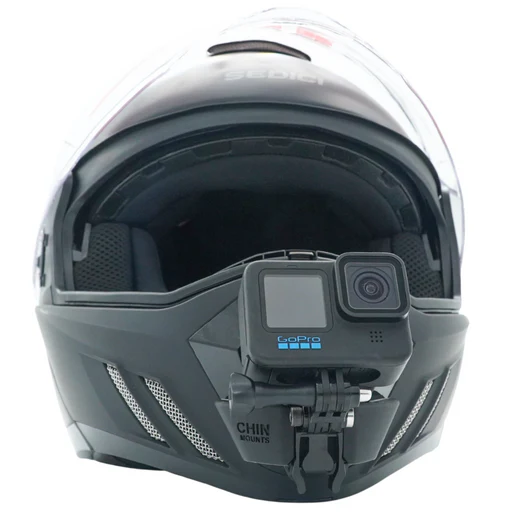
The U.S. Department of Transportation’s Federal Motor Vehicle Safety Standard 218 sets a rule that no rigid projection should extend more than 5 millimeters — 0.20 inches — from a helmet’s surface. Because most cameras and mounts exceed that measurement, a helmet with a camera attached is technically not compliant with FMVSS 218. This standard is designed to prevent snag points that could catch on objects in a crash and increase injury risk.
The enforcement picture complicates this further. DOT standards apply nationally, but not every state enforces them the same way, creating a patchwork of rules. A helmet camera might be fine in one state, tolerated in another, and ticketed in states with stricter helmet laws. California maintains a unique position because it has both a mandatory helmet law and enhanced traffic enforcement. State guidelines follow the 5mm rule, a GoPro protruding from a helmet makes it technically non-compliant, and fines of $250 are possible. California evaluates helmet accessories to determine if they create safety risks.
Helmet-mounted action cameras are broadly legal in many places when mounted without altering certified safety equipment and when recording complies with local audio and privacy laws. The key legal and safety risk mitigation is to use non-invasive, manufacturer-approved mounts, follow local statutes on recording and vehicle equipment, and treat helmet integrity as paramount. Permanently drilling, cutting, or using adhesives that change structural integrity can make a helmet noncompliant and illegal for road use.
For international riders, the legal landscape shifts further. In Germany and across much of Europe, attaching accessories that alter certified helmets may conflict with ECE certification requirements. India has laws restricting audio recording without consent, with major cities like Mumbai maintaining strict rules around data sharing. Thailand requires visible signage when recording in public. Riders traveling internationally should verify helmet camera regulations in each country on their itinerary before departure.
Mount Positions: What Each Angle Delivers
Camera placement is the most consequential creative decision a moto vlogger makes after choosing a camera, because it determines the visual language of the entire channel.
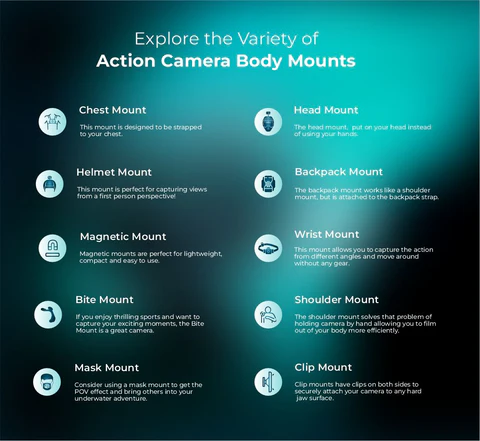
The chin mount is the most popular position among moto vloggers because it provides an angle that appears almost as if filmed from the rider’s eyes, giving viewers the most realistic riding experience. It also has a practical audio advantage: a microphone placed inside the helmet near the chin bar is shielded from direct wind exposure by the helmet structure itself.
Top mounts offer a centered, high view of the road but increase wind drag and raise the camera’s exposure to direct airflow. Side mounts are balanced and easy to install but create an off-center angle that some viewers find disorienting over extended viewing. Chin mounts provide the most immersive first-person perspective but installation requires more attention to alignment.
For bike-mounted cameras, attaching to the tail or luggage rack using a U-bolt style mount captures group formations, chase rider perspectives, or the shifting scenery behind. A low dashboard mount framing the instruments and road ahead works well for voiceovers, bike reviews, or tutorial content where hands and instruments are visible. U.S. Travel Association Multi-camera setups — pairing a helmet-mounted camera with a bike-mounted second angle — produce the narrative flexibility that distinguishes professional moto vlog content from single-angle footage.
The Wind Noise Problem: Why It Happens and How to Solve It
Wind noise is the defining technical challenge of moto vlogging audio, and it is the problem that destroys more footage than any other single factor. Understanding why it occurs is the prerequisite to solving it.
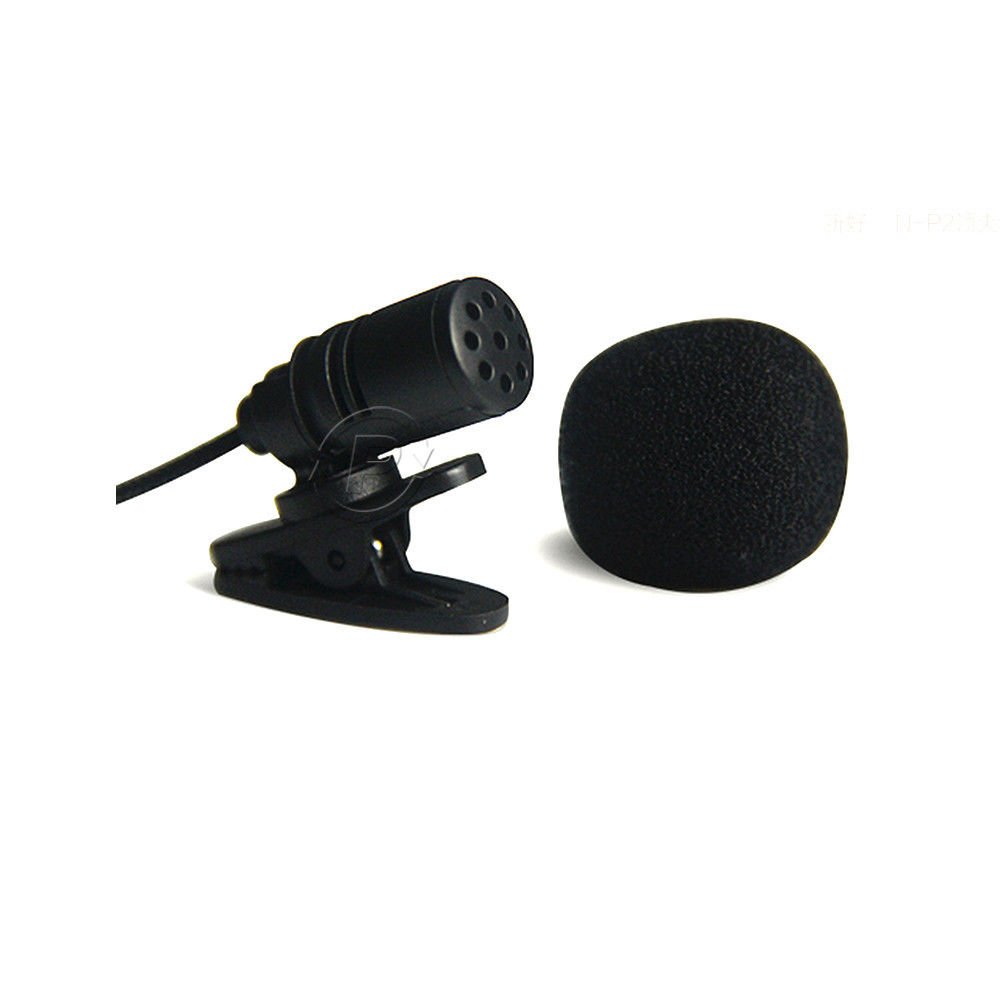
In most cases, wind noise in moto vlog audio is caused by poor microphone choice. Lavalier microphones are designed to be clipped to a shirt or jacket and pick up speech in a controlled environment from approximately 6 to 12 inches from the mouth. When a lavalier mic is placed in 60mph wind, the open areas designed for sound wave entry catch air directly — creating turbulent vortices that overwhelm the signal regardless of foam windscreen application. Standard foam windscreens are designed to stop a stray breeze or breath, not sustained 60mph airflow. Dense foam sufficient to block highway-speed wind will do so at the expense of audio quality and volume.
The most reliable solution for voice-priority moto vlogging is a Bluetooth communication system paired directly with the camera. Pairing a camera with a motorcycle Bluetooth headset from Sena or Cardo provides the clearest voice audio for commentary-driven content, because the microphone is positioned close to the mouth inside the helmet and the Bluetooth system’s noise cancellation is tuned specifically for motorcycle use. U.S. Travel Association The trade-off, documented consistently by experienced moto vloggers, is that Sena-type microphones tune aggressively for voice frequencies at the expense of engine and exhaust sounds — which matters for riders whose content depends on capturing bike audio authentically.
Tucking a microphone inside the cheek pad at the closest point to the mouth uses the pad itself as a natural wind shield. This method has been reported to maintain usable audio quality at over 100mph with straight pipe exhausts, because the pad keeps the microphone away from the shell and acts as a physical barrier against direct wind exposure.
Post-production audio processing — using software such as Audacity or GarageBand to remove unwanted noise, balance audio levels, and integrate background music — provides a secondary layer of correction that no field setup fully eliminates the need for. For riders focused on engine and exhaust sound rather than voice commentary, positioning a microphone behind a fairing, or using a compact external audio recorder in a backpack with a microphone placed in the middle of the back with a deadcat windscreen, captures engine audio with less wind interference than helmet-mounted configurations.
The Stabilization Baseline and Resolution Decision
For new moto vloggers, two technical parameters generate disproportionate confusion: how much stabilization is needed, and what resolution to shoot in.
On stabilization, the current generation of action cameras — GoPro HyperSmooth 6.0, Insta360 FlowState, DJI RockSteady — have raised the floor high enough that hard-mounted cameras on handlebars or bike frames produce usable footage without additional mechanical stabilization on most road surfaces. The DJI Osmo Action 5 Pro features up to 4 hours of extended battery life and ultra-stable 360-degree HorizonSteady, with voice control enabling hands-free operation — an advantage when wearing gloves at speed.
On resolution, the practical guidance aligns with the platform reality. Shooting in 4K at 60fps provides sharpness and flexibility in post-production for most moto vlog use cases. 1080p remains adequate for most viewers watching on phones, and chasing 6K or 8K specifications adds file size and editing demands without proportional viewer benefit for standard social media distribution.
Starting Lean: The Honest Beginner Framework
The technical ceiling of moto vlogging equipment is high. The practical entry point is considerably lower. New moto vloggers do not need to start with a multi-camera setup. A chin mount or chest mount paired with a single action camera set to Auto mode, with QuickCapture enabled for immediate recording at power-on, provides a fully functional starting configuration. Experimenting with settings and modes becomes relevant once the rider has accumulated enough footage to understand what they actually want to capture. U.S. Travel Association
The investment priority for any budget should be: camera first, audio second, additional mount positions third. A technically strong camera with poor audio produces content that viewers consistently rate lower than the reverse. Wind noise, specifically, is the fastest way to lose an audience that the footage itself would otherwise retain.