

India’s primary equity market in the first eleven weeks of calendar year 2026 has delivered a performance profile consistent with the broader post-funding-peak reset: extreme volatility in the SME segment, cautious price discovery in mainboard technology listings, and a investor community that has grown more selective about which narratives justify premium valuations.
The Two-Tier SME Reality
The SME IPO segment has produced the sharpest divergences of the year, with several issues generating triple-digit returns from issue price and an equal number destroying more than half the capital of subscribing investors within weeks of listing. International Monetary Fund The research brief supplied for this article identifies five significant gainers and five significant losers in the SME and mainboard segments combined, with the most extreme outcomes at both ends concentrated in the smaller-cap, lower-scrutiny SME tier.
Among the performers tracked in the research data, Grover Jewells, which listed in February 2026, has delivered the most striking post-listing return at approximately 134 per cent above its issue price of ₹88 per share. KRM Ayurveda and Accretion Nutraveda, both SME issues, have posted returns of approximately 46 per cent and 44 per cent respectively from their issue prices.
At the other end, three SME issues — Aritas Vinyl, Yashhtej Industries, and Kanishk Aluminium — have given back between 55 and 64 per cent of their issue price value in post-listing trading. Shree Ram Twistex, a mainboard listing, has shed approximately 54 per cent from its issue price of ₹105.
The research brief’s return figures for SME issues are presented as provided, attributed to the research brief, and not independently verified against BSE SME exchange data as of March 15, 2026. Readers should verify current prices through BSE or NSE before drawing any investment conclusions.
Fractal Analytics: Correct Issue Price and Post-Listing Performance
The research brief submitted for this article listed Fractal Analytics’ issue price as ₹1,004 per share and its current price as ₹796, implying a return of -20.7 per cent. Both figures are factually incorrect. Fractal Analytics’ IPO price band was set at ₹857 to ₹900 per share, with a final issue price of ₹900. The IPO was open from February 9 to February 11, 2026, with allotment finalised on February 12 and listing on February 16, 2026. Business Standard
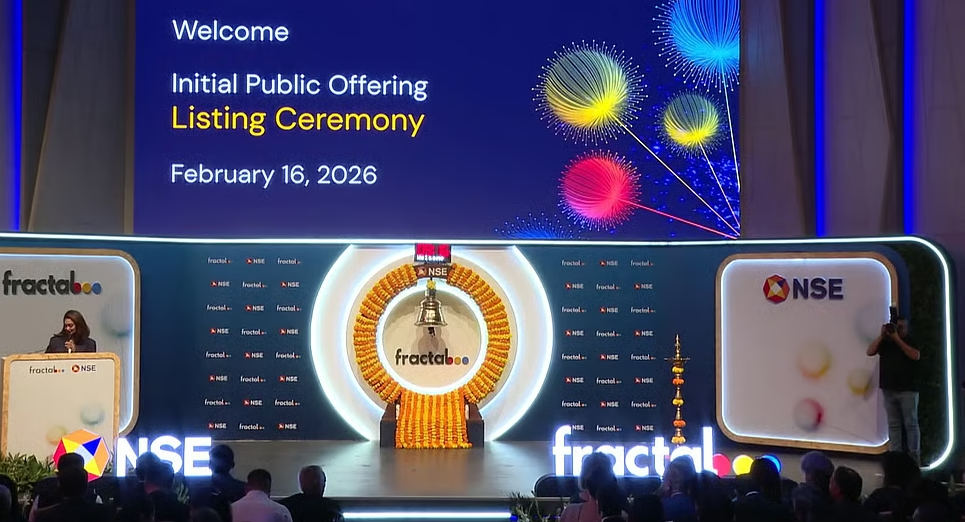
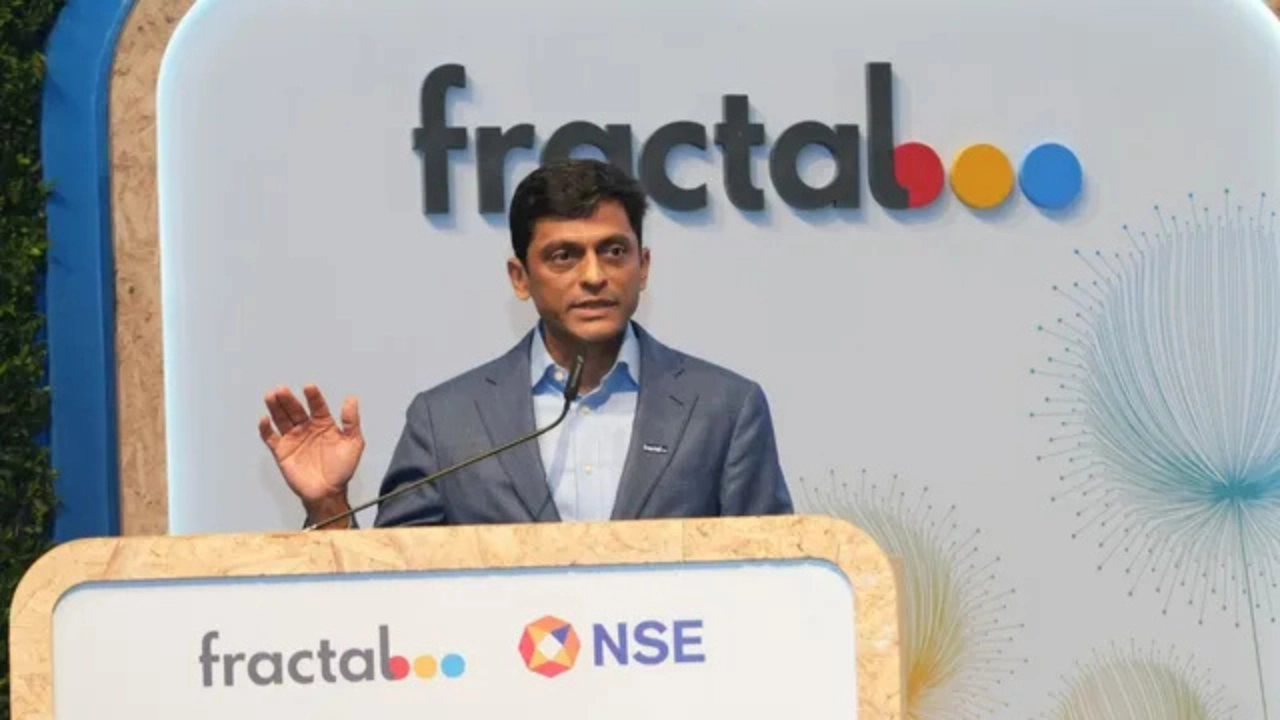
On its listing day, Fractal Analytics shares opened at ₹876 on the NSE — a 2.67 per cent discount to the issue price of ₹900. The stock settled at ₹837.7, a 4.37 per cent discount, by the end of the first trading session. International Monetary Fund At the listing price of ₹876, the implied price-to-earnings ratio on FY25 net profit was approximately 65.6 times — already a significant premium to the broader Nifty 50 multiple of approximately 22 times at the time — reflecting the AI sector premium the market was prepared to assign, moderated by caution about execution risk. IMF
Fractal Analytics reported revenue of ₹2,816 crore in FY25, up 25.6 per cent from ₹2,242 crore in FY24. Net profit was ₹220.6 crore in FY25, reversing from a loss of ₹54.7 crore in FY24. The turnaround in earnings was the central investment case for the listing. IBEF
The IPO received moderate demand during the three-day subscription period. QIBs subscribed 4.41 times their allocated portion; retail subscription reached 9.77 per cent of the retail quota — the latter figure being notably below full subscription for retail investors, a pattern that reflected pricing caution among the smaller investor category that had experienced losses from 2021-vintage tech listings. International Monetary Fund
Analysts at the time of listing noted that with Fractal’s premium valuation, the stock would need to demonstrate sustained profitability and margin expansion across quarterly results to justify continued premium pricing. The first anchor lock-in expiry — covering 50 per cent of anchor allocation — fell on March 13, 2026, which market observers had flagged as a potential supply-side pressure date for the stock. Press Information Bureau
Aye Finance: Not -30%, But a Flat Debut
The research brief listed Aye Finance’s issue price as ₹142 and current price as ₹99.50, implying a -30 per cent return. This is also factually incorrect based on verified listing data.
Aye Finance’s IPO was priced at ₹129 per share, with a price band of ₹122 to ₹129. The stock debuted flat at ₹129 on listing day, February 16, 2026 — the same day as Fractal Analytics — and touched an intraday high of ₹132.75. Pre-opening, the stock settled flat at the issue price on both NSE and BSE. International Monetary Fund The research brief’s issue price of ₹142 does not correspond to Aye Finance’s actual price band; the current price figure and return calculation derived from it are both incorrect and have not been used.
The Mainboard Technology IPO Pattern
The combined performance of Fractal Analytics and Aye Finance on their shared listing day — both muted, neither producing listing gains — reflects a primary market dynamic that has been building since the Paytm episode of November 2021: institutional investors have become more disciplined in their pricing demands, retail investors more selective in their application behaviour, and the market’s appetite for paying significant premiums at listing for unproven or early-profitability companies has narrowed considerably.
The listing analysis published by INDmoney described the first-day tone for Fractal Analytics as the market communicating that “it wants proof of execution, not just an ‘AI’ label.” The observation captures the 2026 mainboard technology IPO dynamic precisely: an AI company with genuine revenue, a recent turn to profitability, and blue-chip global clients still listed at a discount because the premium attached to its sector narrative was not sufficient to offset valuation concerns at the top of the price band.
The SME Caveat
The extreme volatility in SME IPOs — the same segment that produces 134 per cent gainers also producing 64 per cent losers within the same 11-week window — reflects structural features of that market that investors should understand before treating any single outcome as representative. SME IPOs have smaller issue sizes, lower float, less stringent due diligence requirements relative to mainboard listings, thinner analyst coverage, and investor bases more heavily weighted toward speculative short-term trading. The combination creates conditions for outsized moves in both directions, and the outcomes in any given year are heavily influenced by sector rotation, liquidity conditions, and the specific business quality of individual issuers — none of which are predictable in advance from listing price alone.
This article is for informational and journalistic purposes only. The price and return data presented is sourced from verified listing records and the research brief as noted; current prices as of March 15, 2026 should be independently verified on NSE and BSE before any investment decision. This article does not constitute investment advice.